
October 28, 2026 | Buying
Moving From a Semi to a Detached Home in Toronto’s West End: The Gap Just Got $166,000 Smaller
Most people believe a down real estate market is the time to sit tight and wait it out. For West End families ready to buy a bigger house, that thinking could cost you the best window you’ll see in years.
Yes, now is a strong time to move from a semi to a detached home in Toronto’s West End. In the latest West Toronto numbers from September 2026, semi-detached and row homes are up 1% year over year, while detached homes are down 8%. That means the price difference between what you sell and what you buy, what we call the Upsize Gap, has narrowed by roughly $166,000 in a single year, based on average sale prices.
Your semi is holding its value. The detached home you want has come down in price.
That’s especially good news if you own a semi in Bloor West Village, High Park or The Junction. Semis line so many of the streets here, and they’re always in demand. Strong schools, walkable shopping strips, the Bloor subway line and High Park close by are exactly why so many first-time buyers and young families aspire to buy their first home in these neighbourhoods.
That steady demand for entry level homes in prime West End pockets is what helps your semi hold its value, even when the wider market softens.
If you’ve been thinking about selling your semi to buy a detached, or wondering whether a bigger house in Toronto’s West End is finally within reach, this is the moment to run the numbers. Moving from a semi to a detached home hasn’t been this attainable in years.
A softer market is an opportunity, if you know how to use it. Read: How to Buy Smart in Toronto’s West End When Prices Are Down.
We’re Kathy Essery and Pavlena Brown of Nested Real Estate, and we’ve been selling home in Toronto’s West End since 2012. The families who upsize successfully in a softer market all do one thing differently. They stop looking at one transaction and start looking at both.
Why Is a Down Market a Good Time to Buy A Bigger House?
When prices soften, most homeowners only see half the picture. They see that their own home might not sell for what it would have at the peak, and they decide to wait. But if you’re selling and buying in the same market, a softer market works in your favour when the home you’re buying has come down more than the one you’re selling.
That’s exactly what’s happening in the West End right now. Here’s what TRREB’s September 2026 numbers show for the West End (districts W01 and W02):
| September 2026 | Semi/Row Houses | Detached Houses |
|---|---|---|
| Average selling price | $1,302,450 | $1,767,931 |
| Year-over-year change | +1% | -8% |
| Quantity sold | 25 | 36 |
| Average days on market | 13 | 10 |
A down market is when upsizing makes the most sense. The difference between a semi and a detached is smaller than it’s been in years, and for families who’ve been waiting to make the move, that matters more than what any one house sells for. A bigger home that felt out of reach a year ago might actually work now.
Keep an eye on days on market, too. Detached homes are selling in 10 days on average, faster than semis. Even with prices down, the best ones, especially in sought-after school catchments like Runnymede Public School and Humberside Collegiate, are still selling quickly and often in multiple offers. Prices have softened, but the demand for great homes hasn’t, so the opportunity is there, but it won’t last forever.
What Is the Upsize Gap, and Why Does It Matter?
The Upsize Gap is the difference between the average price of a semi and the average price of a detached home in the same market. It’s the number that actually determines whether upsizing is within reach, far more than the price of either home on its own.
Working backward from the year-over-year changes, here’s how the Upsize Gap has shifted in Toronto’s West End:
| Property Type | A Year Ago (est.) | Today |
|---|---|---|
| Average semi/row | $1,289,554 | $1,302,450 |
| Average detached | $1,921,664 | $1,767,931 |
| Upsize Gap | $632,110 | $465,481 |
That’s about $166,000 less to bridge for the same move. Your semi gained roughly $13,000 in value while the average detached home dropped by more than $150,000. For a family that’s been waiting for the right moment to buy a bigger house, this is it.
How Do You Calculate Your Equity When Moving From a Semi to a Detached?
Your equity is what’s left from the sale of your current home after the mortgage and selling costs are paid. That number, minus your buying costs, becomes the down payment on your detached home. Here’s how to run it.
Step 1: Start with your likely sale price. Not the peak price, not what your neighbour got two years ago. A realistic number based on current West End sales. A local real estate agent can show you recent comparable sales so you’re planning around the right number.
Step 2: Subtract your selling costs. Commission, legal fees, and moving costs. Full-service commission typically runs 5 percent in Toronto, and many agents offer a discount when you buy and sell with them. Before you settle on a number, read The Real Cost of Selling in Toronto’s West End so the smaller costs don’t catch you off guard.
Step 3: Subtract your remaining mortgage balance. What’s left is your net equity.
Step 4: Subtract your buying costs. In Toronto, you pay both the Ontario and the Toronto municipal land transfer tax, plus legal and closing costs. What remains is your down payment.
Here’s what that looks like using September 2026 average prices, assuming a 4.5% commission (a common discount when you buy and sell with the same agent) and an example mortgage balance of $500,000:
| Selling Your Semi | Amount (Average Semi Price) |
|---|---|
| Sale price | $1,302,450 |
| Commission (4.5%) | -$58,610 |
| Legal, moving and other costs (est.) | -$10,000 |
| Remaining mortgage (example) | -$500,000 |
| Net equity | $733,840 |
| Buying Your Detached | Amount (Average Detached Price) |
|---|---|
| Purchase price | $1,767,931 |
| Ontario + Toronto land transfer tax | -$63,667 |
| Legal and closing costs (est.) | -$5,000 |
| Down payment available | $665,173 |
| New mortgage needed | $1,102,758 |
Now run the exact same math at last year’s prices. The new mortgage comes out to roughly $1,275,000. That’s about $172,000 less you’d need to borrow today for the same upsize. And because the purchase price is lower, your land transfer tax drops by more than $6,000 too.
One more thing worth knowing. Homes over $1.5 million require at least 20 percent down, since they don’t qualify for mortgage default insurance. In the example above, the down payment comes in well above that threshold, which is typical for West End families who’ve owned their semi for several years.
Your numbers will be different, and that’s the point. We walk every upsizing client through this exact calculation, with their real mortgage balance and a realistic sale price, before they ever list.
A Bigger Home and a Better Neighbourhood
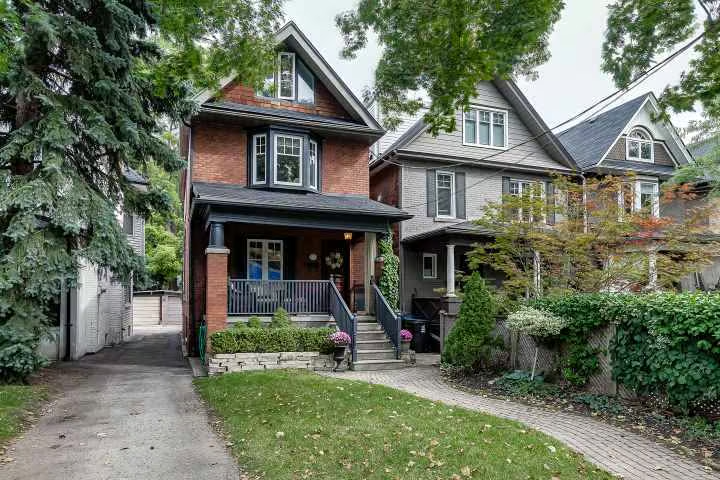
One of our recent clients did exactly this. As first-time buyers in 2019, they bought a renovated semi close to a busy street. They compromised on location to get into the market, and chose a home that was already done so they wouldn’t have to worry about fixing things. It was the right call at the time.
Fast forward seven years, and we helped them find a large 2.5 storey semi- detached home in a much better location. They weren’t just upsizing their home. They were upgrading their neighbourhood too.
That’s what a market like this one makes possible. When the Upsize Gap narrows, the extra room in your budget doesn’t have to go only toward square footage. It can go toward the street, the lot, or the neighbourhood you’ve always wanted.
For a lot of the families we work with, that means selling a semi in Bloor West Village, High Park or The Junction and moving into a detached home in Swansea, Roncesvalles, or right back in Bloor West Village. Swansea is quiet and leafy, with High Park and Rennie Park just down the street. In Roncesvalles, you’re a short walk from the cafés and shops on Roncesvalles Avenue, with High Park at the end of the road. And for families who stay in Bloor West Village, it’s the same strip they already love, just with a lot more room at home.
What Should You Look for in a Detached Home When Moving From a Semi?
Most families who move from a semi to a detached home stay for a long time, often well over a decade. Our clients tell us the same thing again and again: this is the forever home, and they’re not moving again. And when you add up land transfer tax, real estate fees and moving costs, a move like this can easily cost $150,000 to $200,000, which makes choosing the right home matter even more. This purchase is less about what you need this year and more about what will still work as your family grows.
We’ve written a full guide on that thinking: What to Look For in a Forever Home in Toronto’s West End.
When it comes to the detached home itself, a few things matter most for semi owners making this move:
The lot, not just the house. In the West End, the land is what holds its value over time, so the lot matters as much as the house on it. A wider lot means a wider footprint, wider rooms and windows on all four sides, which is one of the biggest day-to-day differences between a semi and a detached. It also gives you room to grow, whether that’s a side drive, a bigger garden or an addition down the road.
Parking and the driveway. A private drive, a garage, or laneway access is worth more over the long term than almost any interior finish. Mutual drives are common in many West End homes, and not all of them fit today’s cars. Just because a listing says parking, don’t assume it’s easy to use, so check it with your own car before you buy.
The bones before the finishes. Many detached homes in Swansea, Bloor West Village, and Roncesvalles are 80 to 100+ years old. Foundation, roof, electrical, and plumbing matter more than a recent kitchen, especially in a market where you have more room to negotiate.
Room to grow without moving again. A basement with good ceiling height, a main floor that can flex, and space to extend if you ever need to. The point of moving to a bigger house is not having to do it twice.
Should You Buy First or Sell First When Moving From a Semi to a Detached?
For most West End families, the answer is to treat it as one move with two sides, not two separate decisions. The goal is to buy and sell in the same market, so whichever comes first, the other should follow close behind. If you buy first, your semi should be ready to list within 10 to 14 days of your purchase closing.
If you sell first, negotiate a longer closing, often 60 to 90 days, so you have time to find the right detached without rushing.
Which way to lean comes down to your own situation. If you’re looking for something specific, like a certain street, a wide lot or a private drive, buying first usually makes more sense, since the right detached home may not come up on your schedule. The good news for semi owners is that well-located semis in Bloor West Village, High Park and The Junction are always in demand, which takes some of the risk out of selling second.
If your semi has something working against it, like a busy street or tricky parking, or if you’re not comfortable carrying two mortgages even briefly, selling first is often the safer call.
Take Advantage Of The Market and Focus on The Bigger Picture
The families who make this move well aren’t the ones who wait for their semi to sell at peak prices. They’re the ones who see that a softer market lowered the price of the home they actually want, by far more than it affected the home they’re leaving. According to TRREB’s September 2026 Market Watch, the average West End detached home is down 8% year over year while semis are up 1%, and that’s what has shrunk the Upsize Gap by roughly $166,000.
A softer market also gives buyers something they haven’t had in years: room to negotiate. Conditions on financing and inspection are back on the table, there’s more time to make a considered decision, and fewer homes are going in bidding wars. For a purchase you plan to stay in for a decade or more, that breathing room is worth a lot.
Toronto’s market moves in cycles, and the West End has always recovered. Detached homes here sit on land that’s limited and in steady demand, and when prices climb again, the gap between a semi and a detached tends to widen with them. Families who wait for certainty usually find the window has closed by the time it arrives. Detached homes are already selling in 10 days on average, which tells you the well-priced ones aren’t sitting for long.
Look at both transactions. Run the real numbers. The gap is smaller than it’s been in years.
If you’re starting to wonder what the Upsize Gap looks like for your own home, we’d love to walk you through it. Get a property evaluation or book a buyer consultation with Kathy and Pavlena.
Yes. In September 2026 West End numbers, semi and row homes are up 1% year over year while detached homes are down 8%. That has narrowed the price gap between an average semi and an average detached home by roughly $166,000, based on the average selling price of semi and detached homes.
As of September 2026, the average semi or row home in the West End is selling for $1,302,450, and the average detached home for $1,767,931. That’s a gap of about $465,000, down from roughly $632,000 a year ago.
Start with a realistic sale price for your semi, then subtract commission, legal and moving costs, and your remaining mortgage balance. From that net equity, subtract land transfer tax and closing costs on your purchase. What remains is your down payment on the detached home.
Toronto buyers pay both the Ontario and the Toronto municipal land transfer tax. On a $1,800,000 home, the combined total is roughly $64,950. A lower purchase price also lowers your land transfer tax.
Not necessarily. What matters is the difference between what you sell and what you buy, not either price on its own. Right now, the detached home you’d buy has come down far more than your semi, which works in your favour.
Buying or Selling in the West? We Can Help!
Thinking about making a move? Click here to get in touch and request a Buyer or Seller consultation.