

August 10, 2026 | Buying
What to Look For in a Forever Home in Toronto’s West End
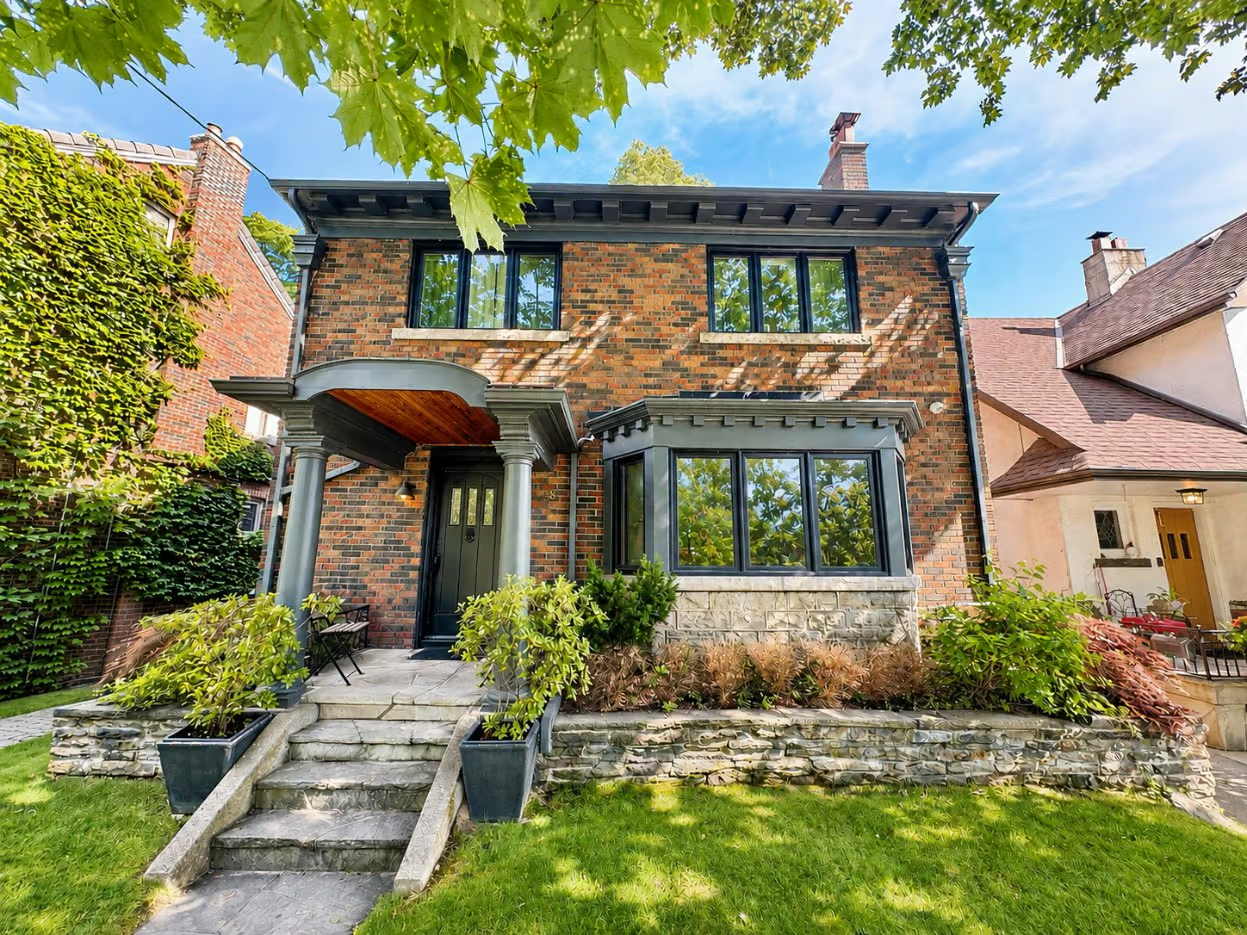
A forever home is not defined by square footage or price point. It is defined by foresight. The most common mistake buyers make is shopping for what works today: the right number of bedrooms for the kids they have now, the commute that makes sense for the job they have this year.
A forever home asks a different question entirely. Not what works now, but what still works decades from now. So what should you actually look for in a forever home in the West End?
Four things matter most, and everything else is negotiable:
Flexibility for life stages you have not reached yet, a layout that can absorb change without forcing a move, a location that holds its value because the fundamentals are strong, and a neighbourhood you genuinely want to grow old in, not just grow up in.
We’re Kathy Essery and Pavlena Brown of Nested Real Estate, and we’ve spent over a decade as Toronto’s West End specialists, from Bloor West Village to Roncesvalles to The Junction and beyond, helping buyers make exactly this kind of decision. We have seen firsthand which choices age well and which ones quietly become regrets five or ten years in.
Buy for the Family You Will Become, Not Just the One You Have
The traditional path used to be simple. Buy a starter home, build equity, move up when you outgrow it. More buyers are skipping that step entirely, and for good reason. Every move costs money in land transfer tax, legal fees, and the emotional toll of uprooting a life you have built. A forever home absorbs change instead of forcing another transaction.
This is where multigenerational flexibility matters more than most buyers expect going in. Aging parents who may eventually move in. Adult children who come back home for a few years before they are fully on their own. A finished basement with a separate entrance, or a layout that could support a secondary suite down the line, is not a luxury feature. It is future-proofing.
Homes across Bloor West Village, High Park, and Baby Point that offer this kind of flexibility consistently hold their value better than ones that do not, because the buyer pool for that flexibility never shrinks.
Moving with your family? Here are a few more posts you might find helpful:
- What to Look For in a Family Home: Our Expert Tips
- The Ultimate Guide to Buying a Home When You Have Kids
- How to Get Your Kids Involved When Selling or Buying a New Home
A Layout That Can Grow With You
Square footage is not the same thing as flexibility. A large home with a rigid layout can feel more limiting over time than a smaller home that adapts. Look for homes with rooms that can serve more than one purpose: a main floor office that could become a bedroom, a basement that is unfinished but has the ceiling height and access to become a real living space later, a backyard with room to extend if that ever becomes the plan.
The character homes that define so much of the Bloor West Village, Swansea, and the wider West End, the semis and detached homes with deep lots and good bones, often have more long-term flexibility built in than buyers realize on a first walkthrough.
That is exactly the kind of thing a neighbourhood specialist should be pointing out to you, because it changes which homes belong on your shortlist.
We’ve helped countless homeowners in the West End find the perfect home for their family. In that time, we’ve seen it all. Learn from the past by reading How to Avoid Making Move-Up Homebuyer Mistakes.
What Should You Never Compromise On in a Forever Home?
Some things can be renovated, upgraded, or added later. A handful cannot, and they are exactly where buyers get talked out of their own better judgement when they fall for a home that checks every cosmetic box.
Location, down to the street. Neighbourhood matters, but it is not the whole picture. The specific street, and where the home sits on it, matters just as much. A home a five minute walk from a subway line lives differently than one fifteen minutes away, even within the same neighbourhood. A quiet, tree-lined street ages differently than one with heavy through traffic. Get the neighbourhood right and still get the street wrong, and you will feel that mismatch for thirty years.
Proximity to green space and daily life. Parks like High Park or The Humber River are not a seasonal bonus. They are part of daily life for decades, through strollers, dogs, teenagers who need somewhere to go, and eventually grandchildren. The same goes for being a genuine walk from a grocery store, a coffee shop, a pharmacy. These are not amenities you enjoy for a year or two. They are the texture of daily life for as long as you live there, and they cannot be added after closing.
Real, easy parking for one or two cars. This sounds practical rather than emotional, and that is exactly why buyers underweight it. A home without easy parking is a home that gets harder to live in over time, not easier, as families grow, as visiting becomes more frequent, as mobility needs change. It is one of the most common regrets we hear from sellers who are leaving a home they otherwise loved. Parking is important.
These three are not preferences. They are the difference between a home that fits your life and one your life has to keep adjusting around.
Here are a few more posts to help you refine your property search:
- Cost of Renovations: Read Before Buying or Selling an Older Home!
- What Property Features Actually Matter When Buying a Home?
- Red Flags to Look For When You’re on the House Hunt
How Do You Know If a Home Will Still Work in 20 Years?
You will not know by looking at the kitchen. You will know by asking yourself harder questions than the ones most buyers stop at. Will this layout still serve you when your kids are teenagers, not toddlers, or can it be made to work with the kind of changes that do not mean moving. Will this neighbourhood still feel right when you have to offer support for your parents. Will this street still be a place you want to come home to after the new finishes are not new anymore.
Ready to find a home that actually fits your next 20 years? See how our step by step buying process works.
A forever home is not about stretching your budget to buy the biggest house you can find. It is about aligning your lifestyle, your long-term plans, and the realistic trajectory of your family with a home that will not force your hand later. The buyers who get this right are rarely the ones swept up by a beautifully staged open house. They are the ones who walk through asking where they actually want to be in thirty years, then work backward from that answer to decide if this is the house that gets them there.
That is the real test. Not whether you can picture yourself loving this home today, but whether you can picture yourself never having to leave it.
Frequently Asked Questions
Look for flexibility for life stages you have not reached yet, a layout that can adapt without major renovation, a location with strong long-term fundamentals, and proximity to green space, daily amenities, and easy parking. These factors matter more than square footage or price point.
Ask whether the home still makes sense in twenty or thirty years, not just today. Consider whether the layout can absorb life changes like aging parents or adult children returning home, and whether the location’s core fundamentals, such as walkability and green space, will hold steady over time.
Buying a forever home avoids the cost and disruption of multiple moves, including land transfer tax and legal fees each time. It also allows buyers to build equity in one place over decades rather than resetting with every move.
Not necessarily. A forever home is defined by long-term fit, not the age of the building. Newer builds and character homes can both serve as forever homes, depending on layout flexibility and location.
Ready to find your forever home? Book a buyer consultation and let’s talk about which West End neighbourhoods actually support long-term living.
Download The Buying Guide
Buy smarter in Toronto’s West End. Download our Buying Guide today.