


September 10, 2026 | Selling
The Real Cost of Selling in Toronto’s West End Nobody Tells You About

Now that the fall real estate market has started in Toronto’s West End, this is exactly the math worth running before you start thinking of a home sale.
Selling in prime pockets of the West End is different, because there’s a level of expectation you need to hit before a buyer with real purchasing power will even take you seriously. These pockets are pricey, and buyers who shop here are picky.
If a house looks slapped together, buyers know it. The smart ones will read it as an opening to lowball you, and plenty more will just scroll past without a second look. Homes in Bloor West Village, Baby Point, Roncesvalles, Swansea, and High Park that are well prepared, well marketed and well priced don’t linger. Many of them are fielding multiple offers.
It’s not too late to sell your home this season. The fall market runs from September to mid-December, and getting a home ready and sold in that window is very achievable.
Here’s what most sellers get wrong about the cost of selling a home in Toronto’s West End: it’s never one number. It’s commission split between both agents, improvements, staging, marketing, a pre-list inspection, and closing costs, and most sellers only see the full picture once it’s too late to plan around it.
Some of these costs are covered by your listing agent, we’ll break down exactly which ones below. Here’s the full number, before you list.
What does commission actually cover when you sell in the West End?
This is the biggest expense of selling a home, but if you hire an experienced agent with the right listing package, one that focuses on staging and marketing, they pay for themselves with a higher sold price. You get what you pay for. No offence to your cousin from Oshawa, but selling in prime West End pockets isn’t the same game.
Not hiring a local agent who understands the nuances of this particular market means walking away from tens of thousands of dollars, if not hundreds. We see this all the time: unprepared homes, the wrong pricing strategy, or little marketing turn a listing stale in these pockets.
Selling commission typically runs anywhere from 4.5 to 5 percent, and that includes 2.5 percent that goes to the buyer’s agent. The exact rate depends on what’s included in the service. Here’s what that looks like on paper: on a $1.5 million sale at 4.75 percent, that’s roughly $71,250 in total commission, with about $37,500 of it going to whichever agent brings the buyer. That’s not a fee your listing agent pockets alone. It’s the cost of getting your home introduced to the right buyer.
At Nested, Kathy Essery and Pavlena Brown have been selling real estate in Bloor West Village, Baby Point, The Junction, High Park and Roncesvalles since 2012, and this is the exact math they walk every seller through before a listing goes live.
Wondering what your West End home could sell for this fall? See how we price, stage and market West End homes to sell.
Should you make improvements before you sell?
This is the second biggest cost of selling, but it’s money that comes back to you. Repairs, minor upgrades and decluttering are the work that changes how a buyer sees your home the moment they walk in. Treat this as an investment, not a sunk cost.
Not all improvements have the same return, and not all agents give the right advice. This is a learned skill that comes from years of neighbourhood knowledge, but also renovation knowledge. So before you trust your agent’s list of what to fix, ask where that knowledge actually comes from.
Done right, home improvements in the West End make the home more attractive, shorten days on market, and return more at sale than they cost to do.
What does staging actually cost sellers?
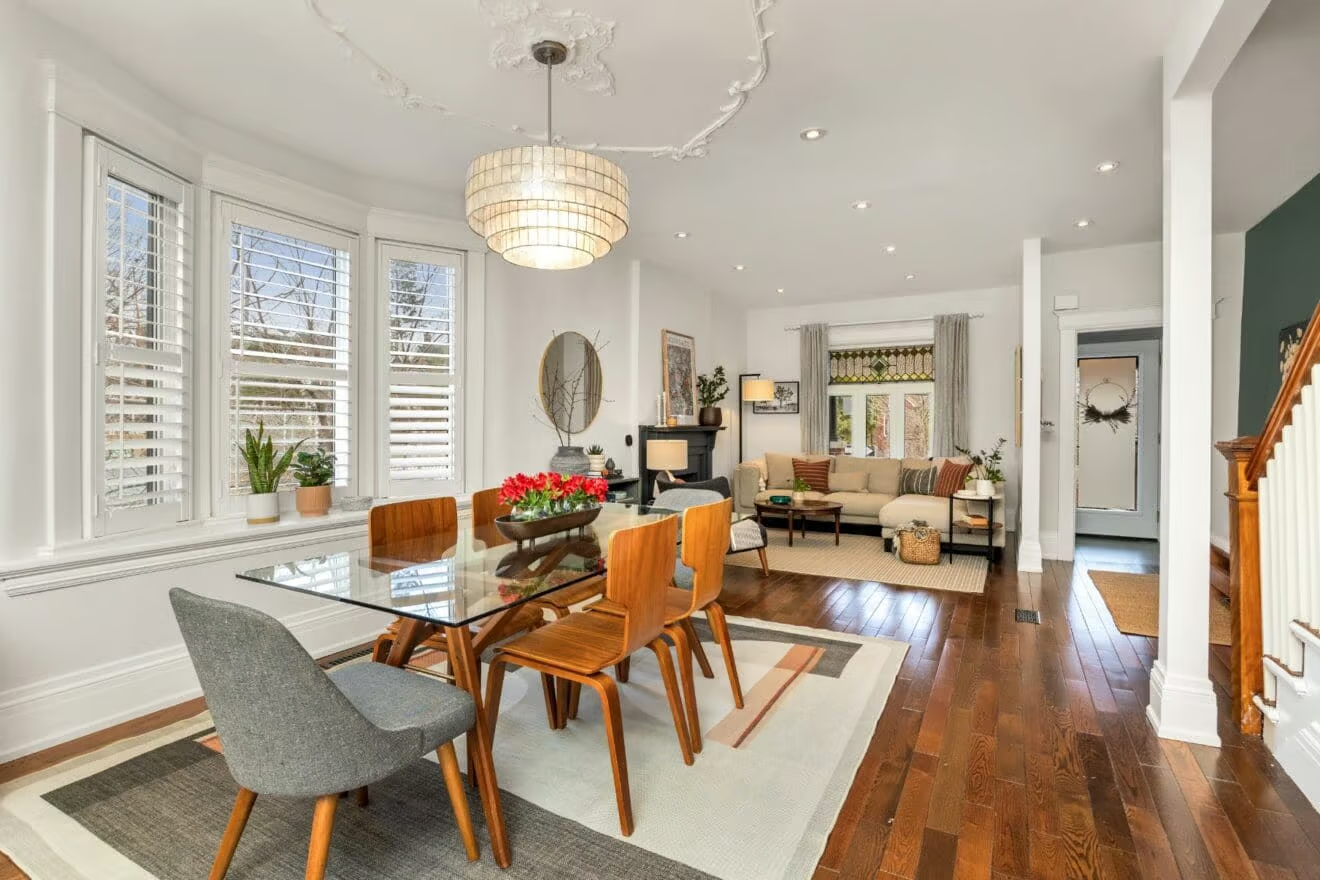
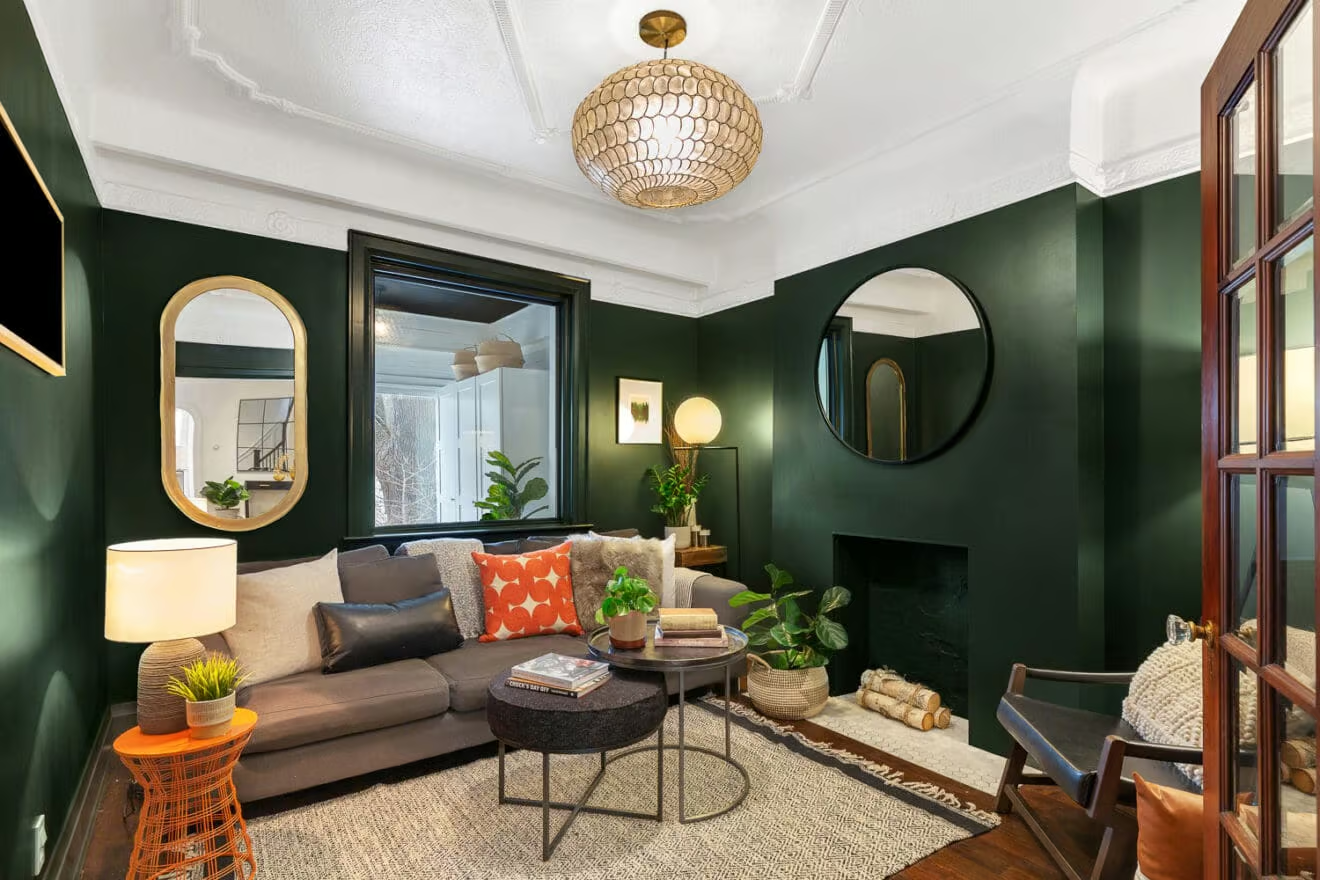
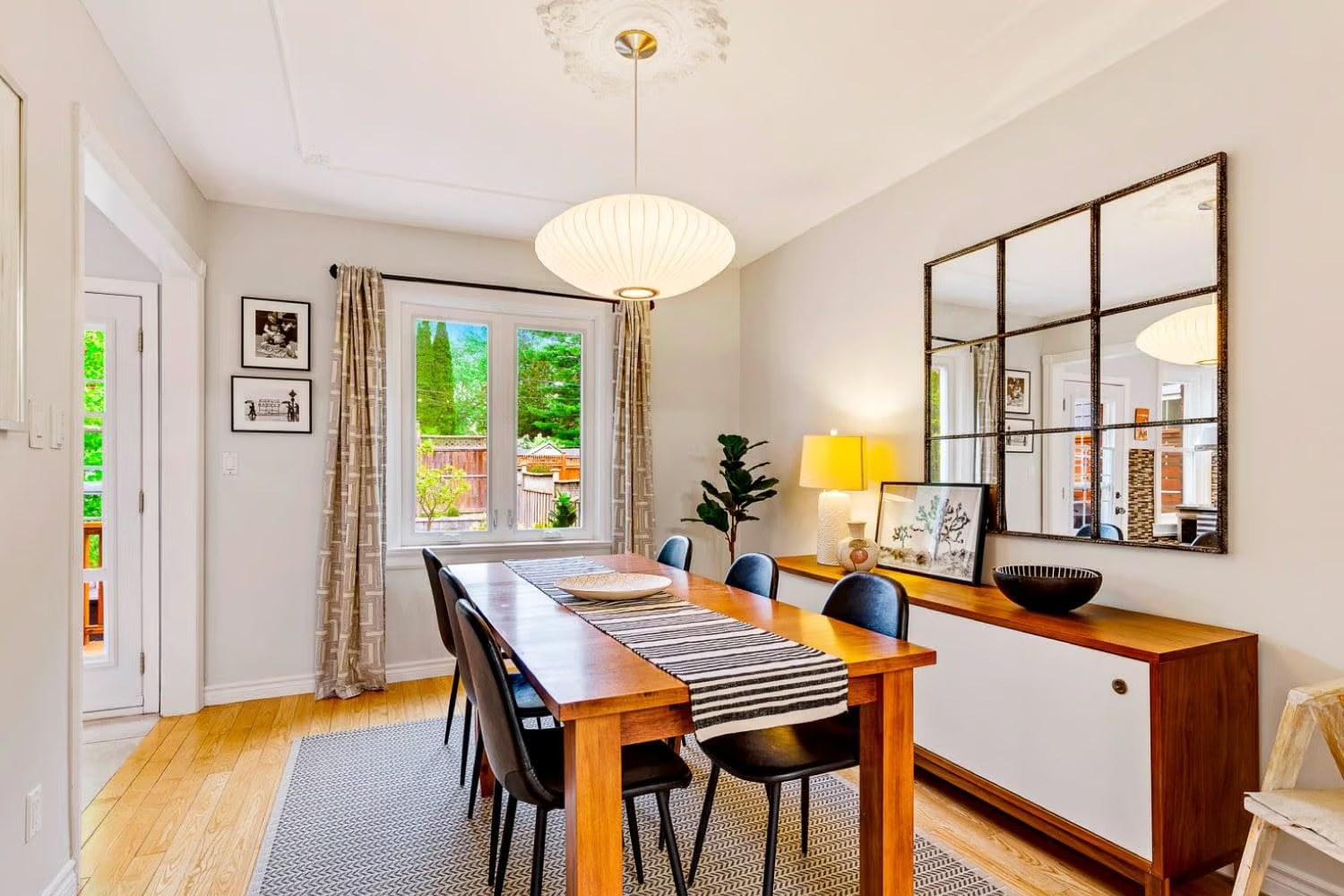
There’s staging, and then there’s staging that actually makes an impact. Home staging only works when it’s done with purpose and tailored to your home and your buyer. Period. Many agents charge separately for professional staging, and that can run anywhere from $5,000 to $15,000 depending on the size of the home. Some West End teams include staging in their commission, but the question still stands: what’s the quality, and how much value will it actually add?
Not all staging is created equal. Before you choose an agent who includes staging in their listing package, which is a real saving on selling costs, scroll through their past listings and see the work for yourself. If it doesn’t impress you, it won’t impress your buyer.
At Nested, staging is included in the selling fee. Our in-house stager walks through your home room by room and builds a plan tailored to the space and the buyer it needs to attract, nothing generic, nothing pulled off a shelf. It’s the same considered approach on every listing, not a stripped-down version of it.
Even with staging included, sellers should budget for a storage locker, somewhere to move items that need to leave for staging along with anything you’ve been decluttering but still want to keep.
Curious how staging and marketing actually work when you list with Nested? Reach out and book a seller consultation.
Where do you stay while your home is staged and shown?
Moving out for a couple of weeks has become one of the common realities of selling successfully in the West End, and understanding why makes it far less of a shock when your agent brings it up. With the right listing and pricing strategy, the goal in prime West End pockets is to sell within 7 to 10 days of listing. Staging inventory has to stay pristine, and pristine and lived-in don’t go together.
It’s also genuinely disruptive to live in a property while it’s actively being shown, expect multiple showings a day, and the home needs to stay spotless for every one of them.
Budget for being out of the home for 12 to 14 days to cover staging setup and your time on market. Sellers handle this a few different ways:
- Staying with family for those two weeks
- Treating it as a reason to take a short vacation while the work happens without them
- Booking a short-term rental through Airbnb or another platform for that window
Whichever option fits, it’s a real cost that belongs in your math alongside everything else.
What goes into marketing a West End home?
In the age of digital marketing, hiring an agent who isn’t a digital expert to sell your home is a mistake that can cost you real money. A sign on the lawn and a listing on realtor.ca stopped being enough a long time ago. Creating momentum and competition among buyers doesn’t happen by accident, it comes from exposing your property across more platforms, backed by paid advertising that grows your funnel of potential buyers.
Good marketing used to be a differentiator. Now it’s the baseline. Most buyers do their research online before they ever book a showing, which means a listing’s first impression happens on a screen, not on your doorstep.
Photography, video and floor plans are the pieces beyond staging that make a listing look considered instead of generic, and they’re the backbone of a boutique marketing plan built around your specific home. A property website with real photography, a written description that helps a buyer picture themselves in the space, and a social campaign that builds interest before the listing even goes live all do work a lawn sign can’t.
Big-box teams pump out listings all season long, following the same formula regardless of the house, and West End buyers notice the difference. It’s worth noting that these marketing costs should always be paid for by the agent, not billed back to the seller.
Selling a home in Toronto’s West End takes more than a listing and a lockbox. Download our free West End Selling Guide.
Why get a pre-list home inspection?
The idea that a buyer can order their own inspection if they want one might work in the suburbs. In desirable pocket like Bloor West Village, Roncesvalles, High Park, a pre-list inspection is the baseline, especially when your pricing strategy is built to attract multiple offers. Buyers here want information, not assumptions, and a seller who doesn’t provide it is the one who looks like they’re hiding something.
A pre-list inspection typically costs $600 to $650, and it should be paid for by the agent as part of their listing package. What it protects you from is bigger than the cost: a nasty surprise mid-negotiation that either kills the deal or hands the buyer leverage to chip away at your price.
What closing costs should West End sellers budget for?
Beyond commission and home improvements, here’s what to plan for:
- Legal fees ($1500-$2000)
- Airbnb costs while home is on the market (varies but budget for 14 days)
- Moving costs ($1500 plus)
- Storage locker fees, if you’re staging or decluttering ahead of listing ($500 plus / month)
- Land transfer tax on your next purchase, if you’re buying at the same time as selling (this isn’t a cost of the sale itself, but it belongs in your overall math)
So what actually lands in your pocket?
Add it all up: commission, staging, marketing, inspection, improvements, and the time you’re out of the house, and the number that lands in your pocket is rarely the one sellers had in their head when they decided to list. It’s worth noting that staging, marketing and a pre-list inspection should already be covered by a full-service agent, so the real math for most sellers comes down to commission, improvements, and time.
Here’s the part worth remembering: the two most expensive line items, commission and improvements, are also the two that should come back to you, in a higher sale price and a faster, cleaner sale. In pockets like Bloor West Village, Roncesvalles Village, High Park, Swansea, and Baby Point, we can’t stress this enough. How well you prepare your home is what decides whether that money actually comes back to you.
That’s not a reason to worry about the cost of selling. It’s the reason to understand it before you do. Sellers who run this math upfront price with their eyes open, prepare properly, and walk away from closing without a single number that surprises them.
The real out-of-pocket costs for sellers are commission, home improvements, home, closing costs, accommodation during the sale and storage fees. If home staging is not included in the listing fee, this will be an added cost.
Staging, marketing (photography, video, floor plans), and a pre-list inspection should all be covered by a “full-service realtor” as part of their fee, not billed back to you separately. At Nested, all three are built into our selling fee, staging alone can otherwise run $5,000 to $15,000 depending on the size of the home when it’s charged separately.
Yes. Total selling commission is typically split between the listing agent and the buyer’s agent, with roughly 2.5 percent of a standard 4.5 to 5 percent commission going to whichever agent brings the buyer.
Yes, especially in the West End, where buyers expect a pre-list inspection and can be put off when one isn’t provided. It typically costs $600 to $650, and a full-service realtor should cover that fee rather than passing it on to you.
Yes, when they’re the right ones. Repairs, minor upgrades, and decluttering change how a buyer sees your home the moment they walk in, and done well, they shorten your time on market and return more at sale than they cost to do. Not every improvement pays off equally, which is why that advice should come from an agent with real neighbourhood and renovation knowledge, not a generic checklist.
Buying or Selling in the West? We Can Help!
Thinking about making a move? Click here to get in touch and request a Buyer or Seller consultation.