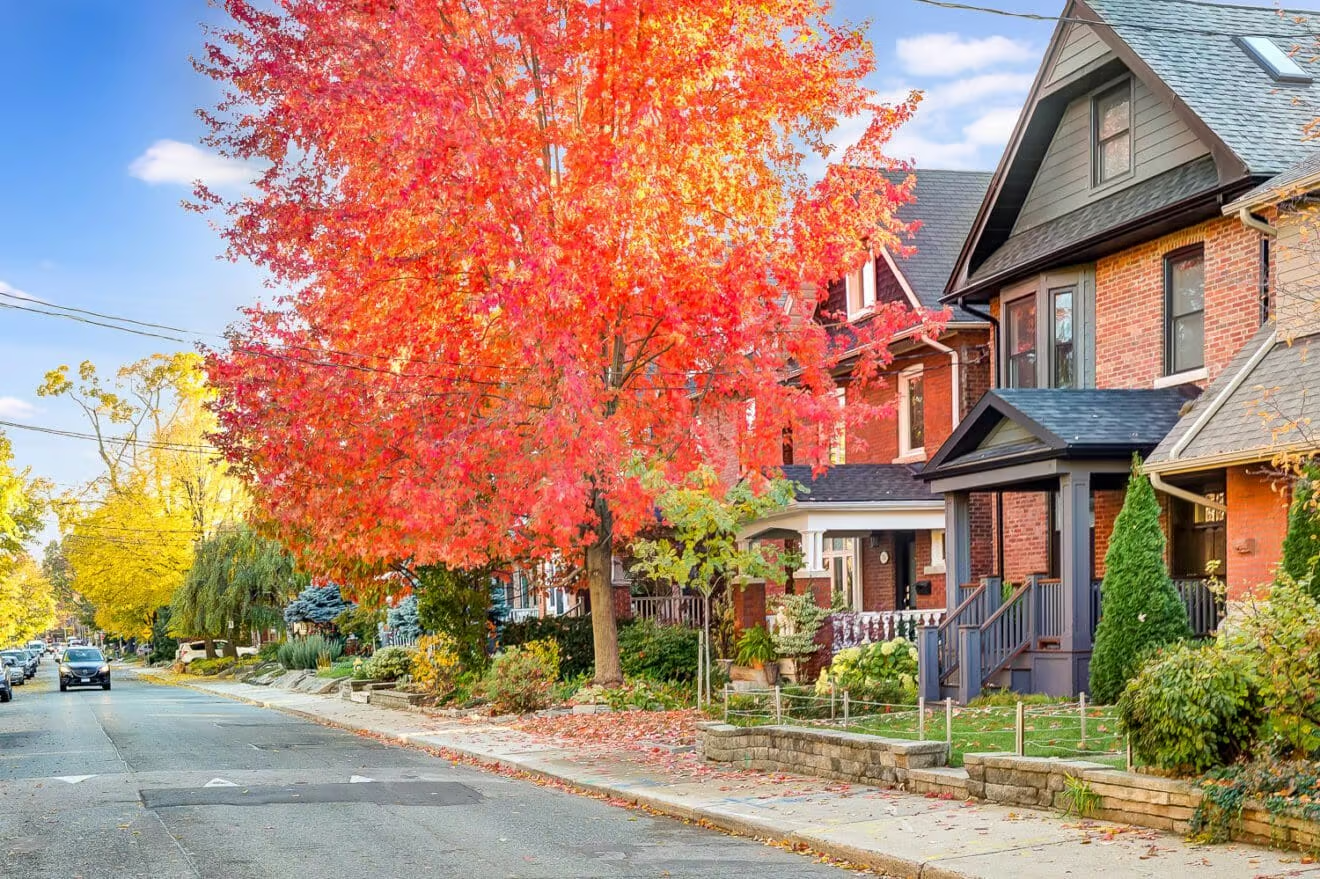


Most people discover Sunnylea by accident. They’re cutting through on the way somewhere else, they turn down one of the wide, tree-lined streets, and they slow down. That happens a lot here. A West End neighbourhood bordered by the Humber River valley to the east and Royal York Road to the west, Sunnylea has the kind of quiet that’s increasingly hard to find this close to the city. The river is steps away. The trees have been growing for sixty years. The homes are the kind that were built to last, and mostly have.
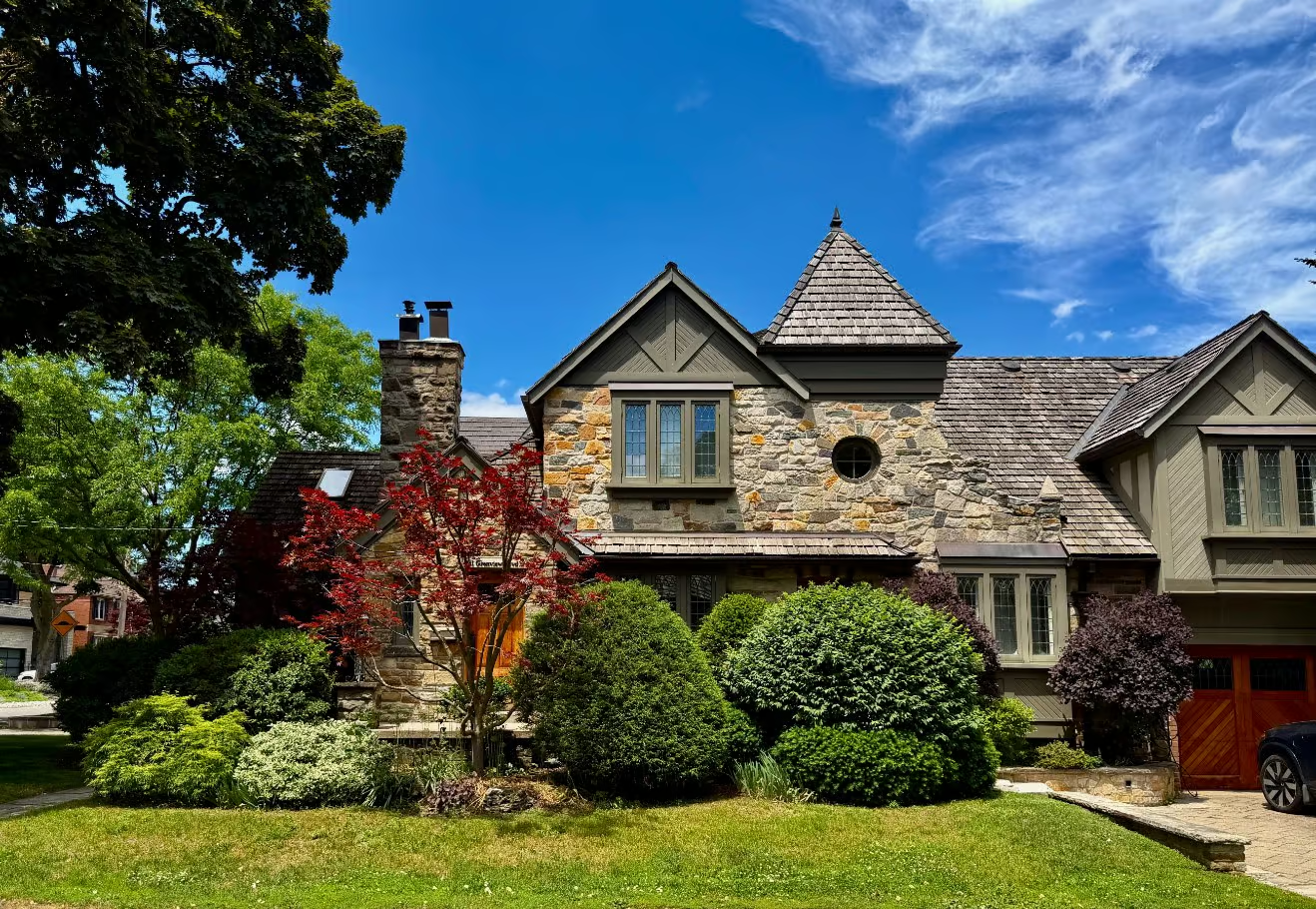
The neighbourhood was, developed primarily in the 1940s and 1950s as Toronto expanded westward after the war. That era left its mark in the best possible way: generous lots, cohesive streetscapes, and a residential scale that zoning has largely protected ever since. Étienne It’s bordered by Bloor Street to the North, the Humber River to the East, Berry Road and Norseman Street to the South and has an irregular border just west of Islington. Some of the landmarks here include Mimico Creek, Park Lawn Park and Fairfield Park. For a neighbourhood this close to the Bloor subway line, it’s a remarkable thing to have on your doorstep.
Buyers who find Sunnylea tend not to leave. That’s not a cliché. It’s reflected in the numbers: turnover is low, demand is consistent, and the people here know what they have. What draws buyers here is rarely one thing. It’s the combination: the lot sizes, the calm, the schools, the trail access, and a residential character that feels genuinely protected. Sunnylea doesn’t try to compete with the louder pockets to the east. It doesn’t need to.
The History of Sunnylea
The neighbourhood takes its name from the Sunnylea school, which has anchored the community across two buildings. When enrolment outgrew the original schoolhouse, a new Sunnylea Public School was designed by renowned Toronto architect John B. Parkin and opened on Glenroy Avenue in 1942. The original building was demolished, and its site became what is now Sunnylea Park. Unlike many of its West End neighbours, Sunnylea didn’t grow from a pre-existing village or commercial corridor. It was planned as a residential community from the outset, and that intentionality is still visible today. The streets are generous and the lots are well-proportioned. Mature trees line almost every block, a legacy of decades of established growth that newer neighbourhoods simply can’t replicate. The Humber River valley forms the eastern boundary, and Mimico Creek runs through the western side, giving the neighbourhood a natural geography that has kept its character intact and shielded it from the kind of intensification that has reshaped other parts of West Toronto.
Sunnylea has never been flashy. It’s always been subtle. And in a city where genuine residential calm is increasingly hard to come by, that’s become exactly the right thing to be.
Types of Homes for Sale in Sunnylea
Sunnylea real estate is dominated by solid, well-built post-war detached homes. Bungalows or small two storey brick homes are the defining housing type here, many of them on generous lots with deep backyards, attached garages, and original details that have been carefully maintained or thoughtfully updated. Two-storey detached homes also appear throughout, often with additions that reflect the way families have grown into these properties over the decades.
Semi-detached and townhomes are largely absent from Sunnylea proper. The residential character is protected by the neighbourhood’s natural geography and established zoning. For buyers who want a detached home with room to breathe in the West End, Sunnylea consistently delivers options that are harder to find in busier pockets to the east.

What Do Homes Cost in Sunnylea?
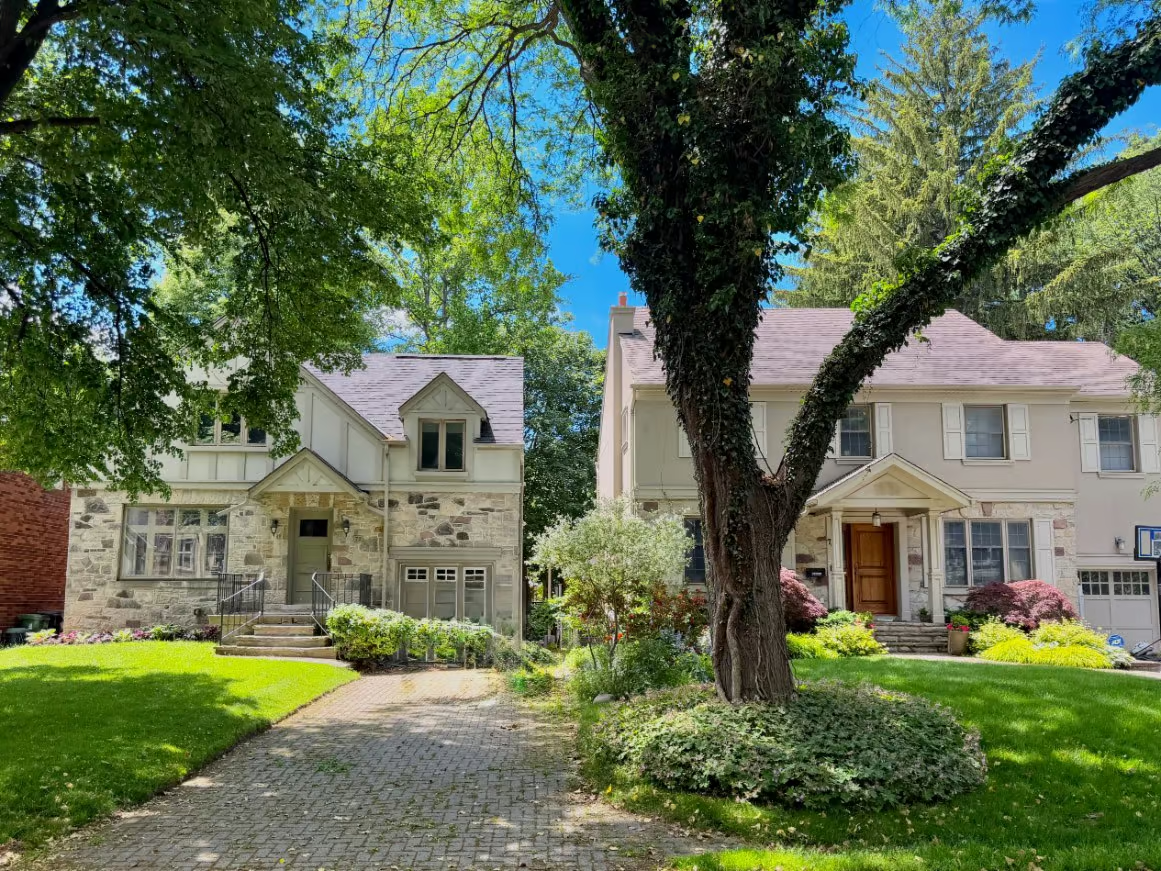
What defines Sunnylea today is evolution on generous bones. Many of the original post-war homes have been replaced or significantly rebuilt, and the neighbourhood now reflects a mix of modern new construction and traditional-style custom builds sitting alongside the remaining originals. The architectural variety is wider than it once was, but the lot sizes and street widths that made Sunnylea desirable in the first place remain unchanged. Buyers come for the land, the location, and the scale — and what gets built on it tends to reflect that ambition.
Sunnylea is one of the few remaining West End neighbourhoods where bungalow buyers can still find generous lots with room to build up or out. That combination of footprint and location is increasingly rare in Toronto’s west end. It sits in a pricing tier that reflects its attributes: larger lots, detached homes, strong schools, and genuine residential calm within reach of the Bloor subway line. In 2026, detached homes in Sunnylea typically trade in the $1.6M to $3M++ range, depending on the depth of renovation, lot size, and proximity to the green space and Bloor st. Even Bungalows on premium lots have cleared $2M when the presentation and positioning are right.
Sellers in Sunnylea who invest in professional staging and strategic preparation consistently outperform market averages. The buyers here are discerning and financially strong. Meeting their expectations for presentation is not optional. It’s the starting point.
Living in Sunnylea
Daily life in Sunnylea is defined by its greenery and its quiet. With Humber River to the east, offering one of the most beautiful trail systems in the city, with access to kilometres of walking and cycling paths through the river valley. Residents use it year-round. It’s not just an amenity. It’s part of the rhythm of life here.
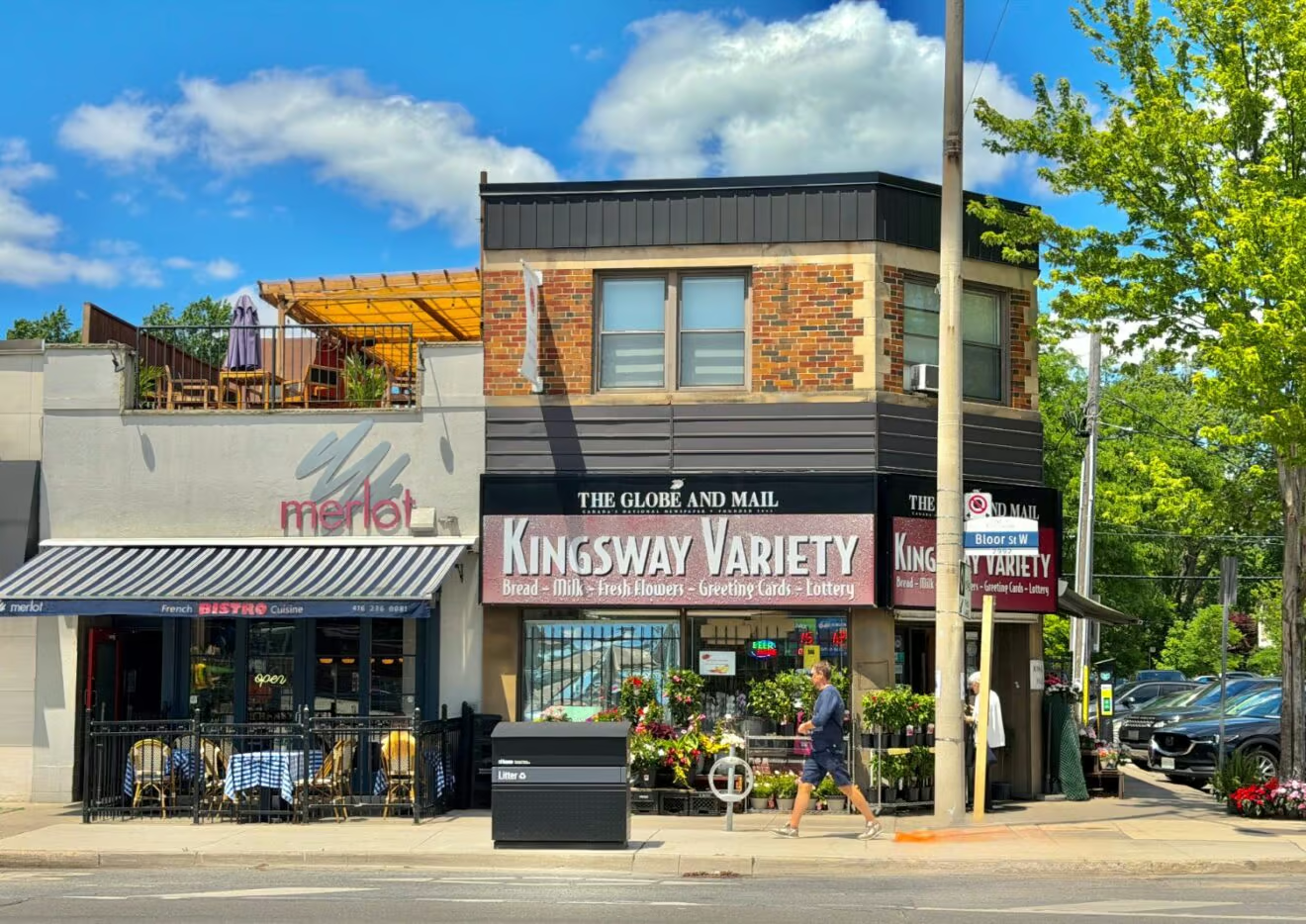
The main shopping is a short walk or drive away. Bloor Street West at the northern edge of the neighbourhood connects Sunnylea to the established commercial strips of The Kingsway. Grocery, dining, coffee, and boutique retail are all within easy reach without being on your doorstep, which is exactly how most Sunnylea residents prefer it.
The neighbourhood has a calm energy that attracts buyers at a particular life stage: families with school-age children who want space and safety, and professionals who value proximity to the city without the noise of it. It’s the kind of place where people tend to stay. Turnover is low, not because people can’t afford to move, but because they don’t want to.
Getting Around
Getting around from Sunnylea is straightforward. Royal York station on the Bloor-Danforth line is the closest subway for most residents, with Old Mill station an option for those on the eastern edge near the Humber. The Gardiner Expressway and Lake Shore Boulevard make the commute south and downtown equally practical by car. And for cyclists, the Humber Valley trail network combined with the Bloor Street bike lanes offers a connected, car-free route into the West End.
Schools in Sunnylea
Sunnylea is well-served by both the Toronto District School Board and the Toronto Catholic District School Board. On the public side, Sunnylea Junior School (JK–5) is the neighbourhood’s anchor, one of the highest-ranked schools in the TDSB and consistently well-regarded for its tight-knit community feel and strong academic results. For secondary, Etobicoke Collegiate Institute serves the area with a broad range of programmes and a long-established reputation in the west end. Catholic families are well looked after too. Our Lady of Sorrows Catholic School (JK–8) is a popular choice within the TCDSB system, and Bishop Allen Academy, the secondary Catholic option for the area, is currently undergoing a full rebuild on Royal York Road with a new facility anticipated for 2027.
The school options here are a significant draw for families relocating from elsewhere in Toronto. At both the elementary and secondary level, Sunnylea delivers, and that consistently shows up in buyer demand.
Parks & Green Space in Sunnylea
Green space in Sunnylea is woven into the neighbourhood rather than bolted on. Mimico Creek runs through the heart of it, flanked by mature trees and a trail that residents use year-round for walking and cycling. Spring Garden Park sits quietly on the creek’s west bank, shaded and unhurried. Sunnylea Park, located near the school, is the community’s main gathering point: tennis courts, a playground, and open lawn that fills up on weekends. Laura Hill Park adds another pocket of green a short walk away.
A car is part of life here — the neighbourhood’s residential streets are deliberately quiet, many without sidewalks, and that’s very much by design. The trade-off is a pace and character that’s genuinely hard to find this close to the city. For residents who want to get out on foot or by bike, the Mimico Creek trail connects south toward the lake, while the Humber River trail system to the east offers kilometres of riverside paths through one of the city’s most beautiful natural corridors.
Sunnylea doesn’t ask you to compromise. You get the space, the schools, the green space, and the quiet, without giving up the city entirely. It’s a neighbourhood that takes a little while to find, and then tends to hold on to the people who do.
FAQ’s
Sunnylea is known for its quiet, residential character, generous lot sizes, and natural setting between the Humber River and Mimico Creek. It’s a neighbourhood that attracts families who want space, strong schools, and a genuine sense of calm without leaving the city behind. Many of its original post-war homes have been replaced by custom new builds, giving the streetscapes an evolving but grounded character.
Sunnylea is a low-turnover market with consistent demand from families upsizing within the West End and buyers relocating from other parts of Toronto. Inventory is typically limited, and well-prepared homes in good condition attract competitive offers. Detached homes range from $1.4M to $1.9M, with premium lots exceeding that range.
Sunnylea is one of the stronger family neighbourhoods in West Toronto. Sunnylea Junior School ranks among the top schools in the TDSB, and there are solid Catholic options nearby as well. The Mimico Creek trail, neighbourhood parks, and quiet tree-lined streets make it a practical and genuinely pleasant place to raise children. Turnover is low, which reflects how families tend to stay once they arrive.
Yes, a car is part of life in Sunnylea. The neighbourhood’s quiet, sidewalk-free streets are part of its appeal, but they’re designed around residential calm rather than walkability to amenities. Royal York station on the Bloor-Danforth line is the closest subway access, and the Gardiner Expressway and Lake Shore Boulevard make downtown easy to reach by car.
Sunnylea has predominantly detached homes. Many of the original post-war bungalows have been replaced by modern new builds and traditional-style custom homes, so the streetscapes reflect a mix of eras and styles. What remains consistent are the generous lot sizes and street widths that make the neighbourhood worth building into. Condos and townhomes are rare here.