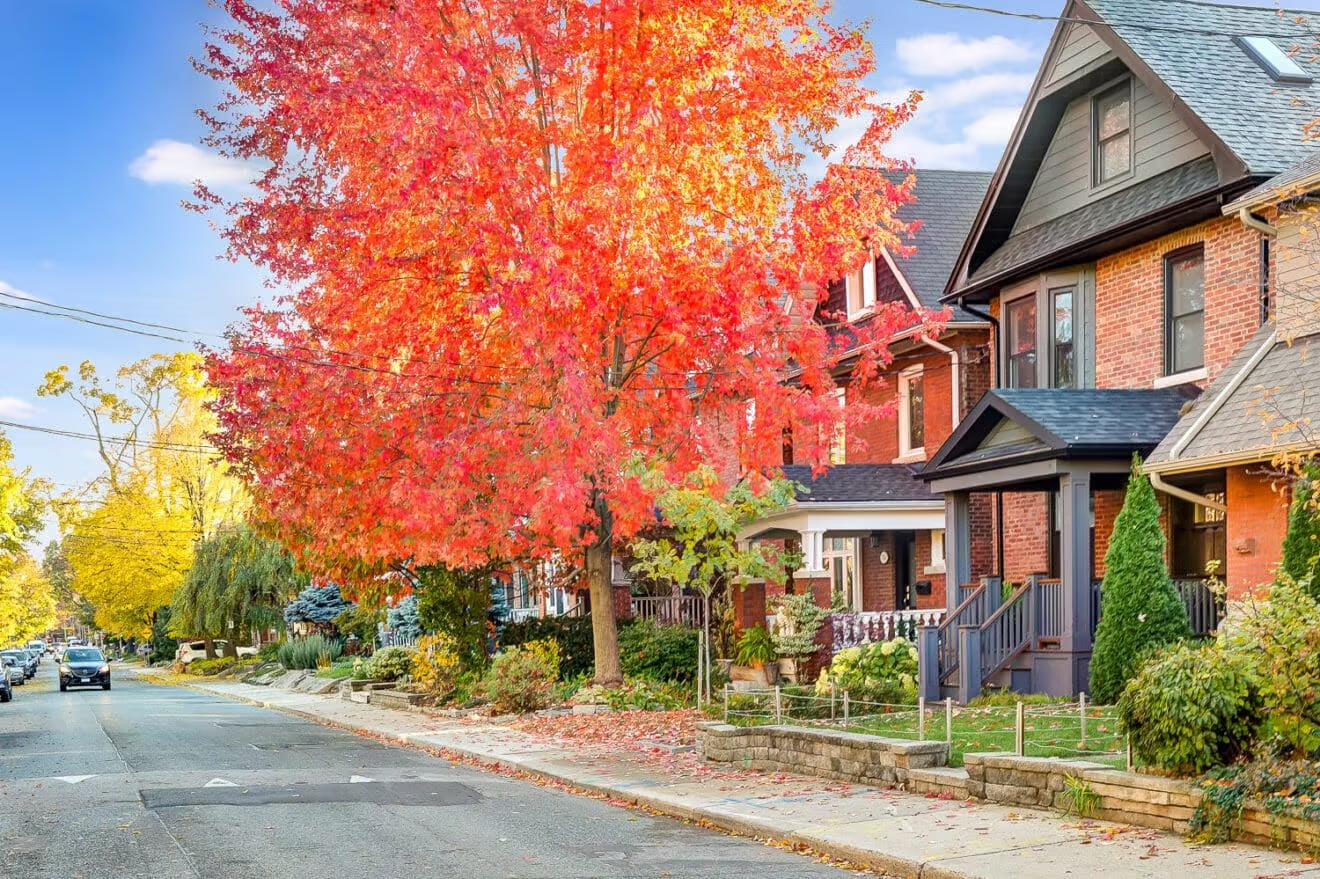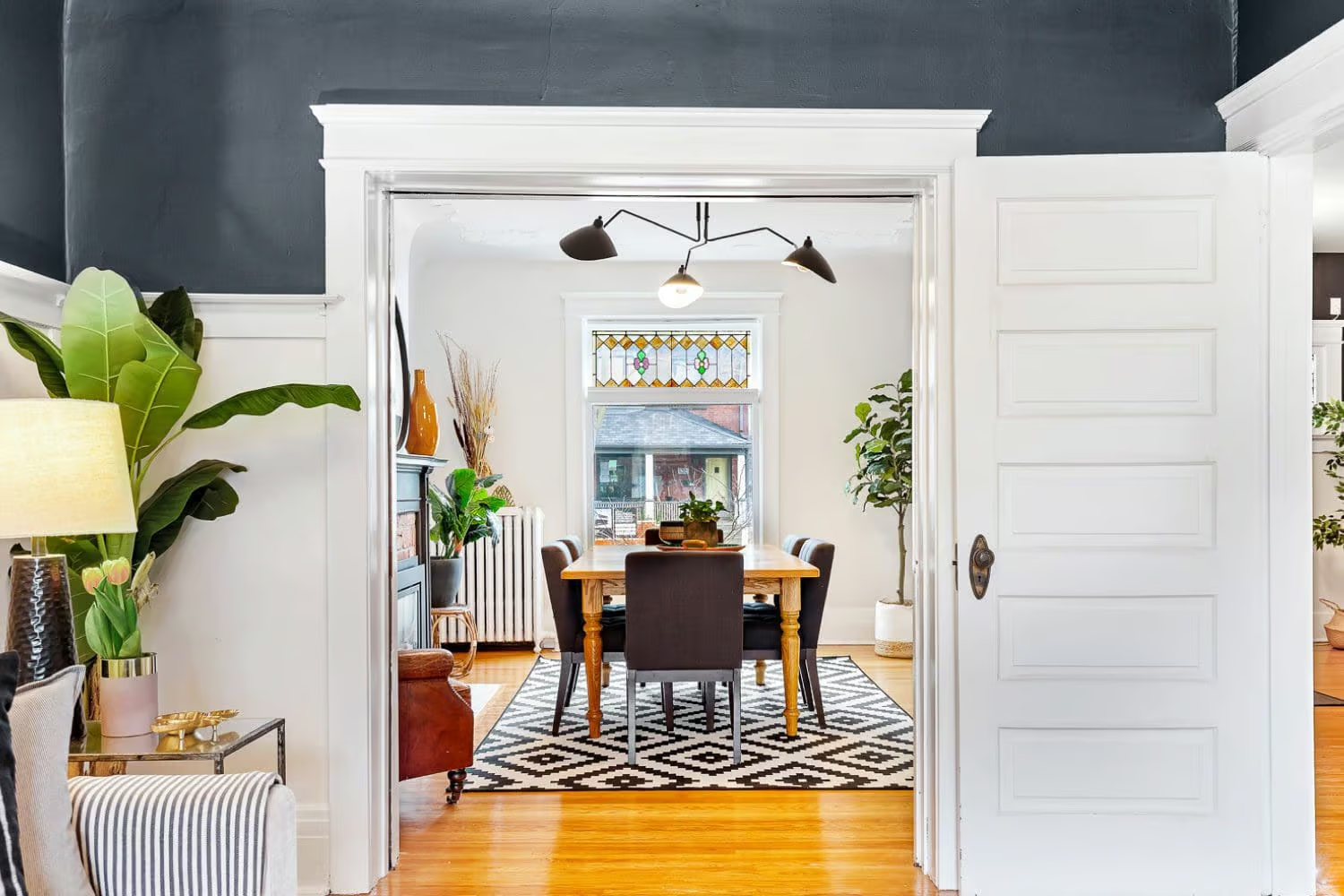

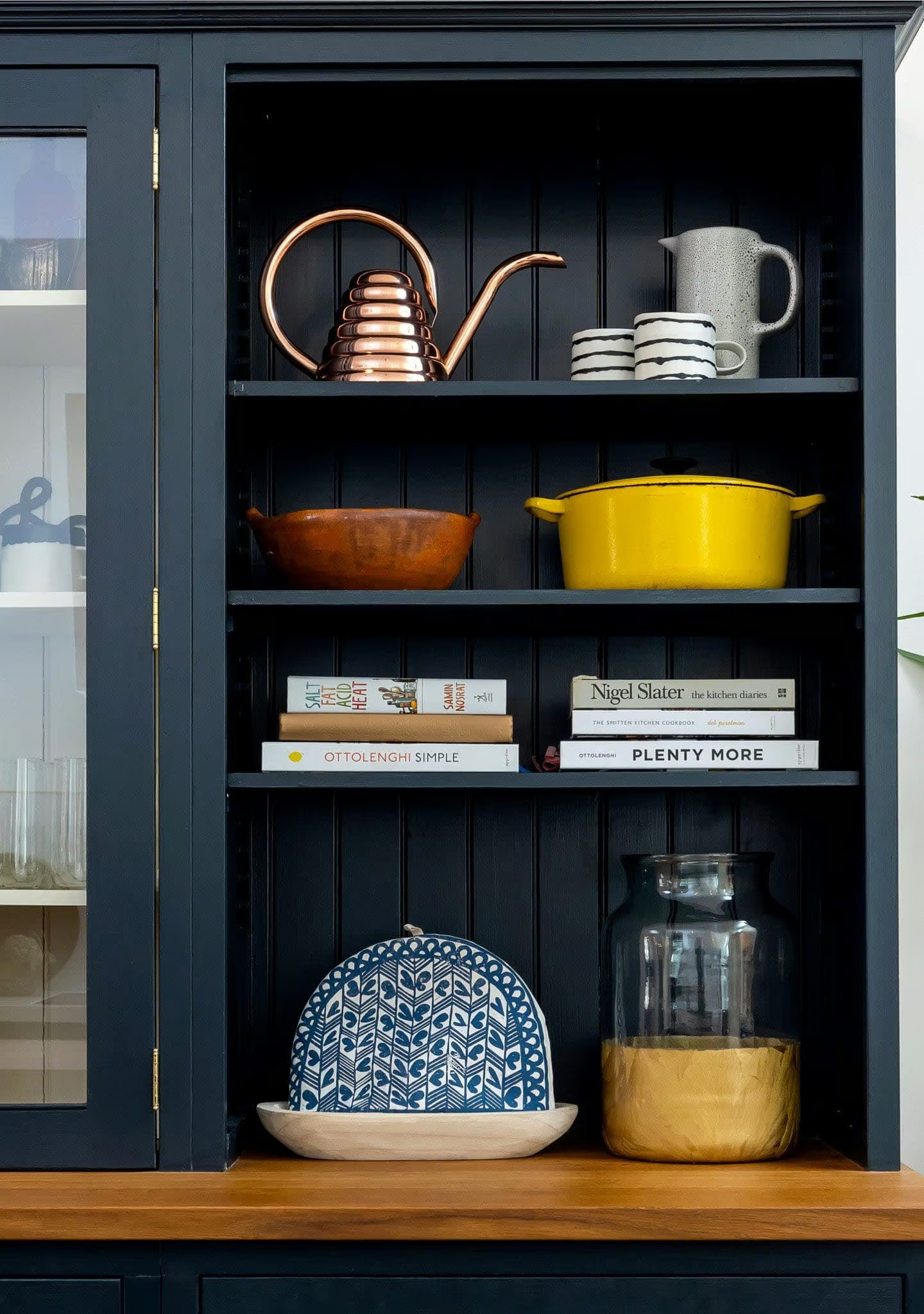

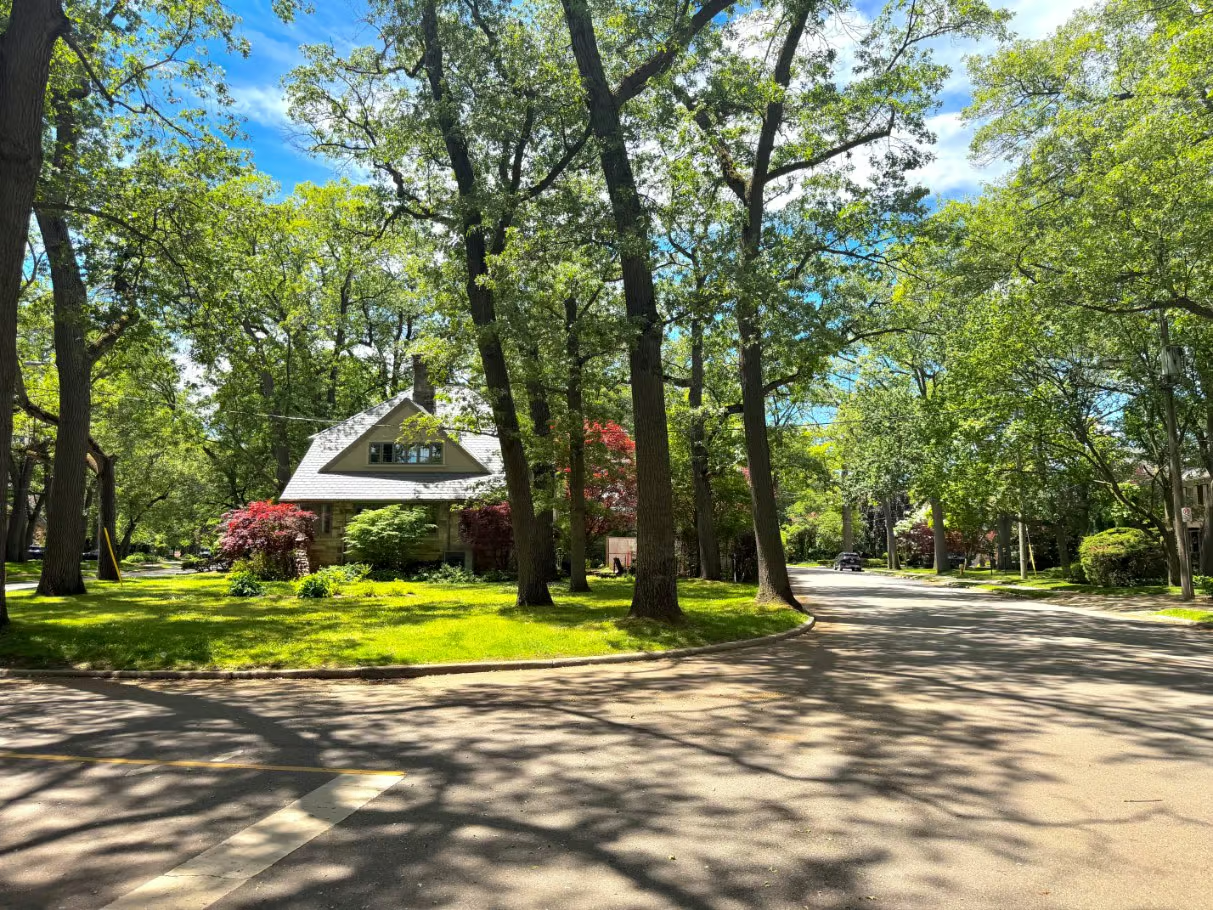
Tucked into a peninsula formed by a bend in the Humber River, Baby Point occupies one of the most quietly extraordinary pieces of land in Toronto’s West End. You know it the moment you pass through the century-old stone gates at Jane and Baby Point Road. Something shifts. The streets curve. The lots deepen. The tree canopy closes overhead, and the city you just left feels very far away.
This is an enclave in the truest sense. Residents here don’t tend to leave, and that’s not an accident. Baby Point has the kind of community feel that most neighbourhoods spend decades trying to manufacture and never quite achieve. People know each other. They gather. They stay. The result is a neighbourhood with an almost village-like intimacy, set against some of the most spectacular ravine properties in the city.
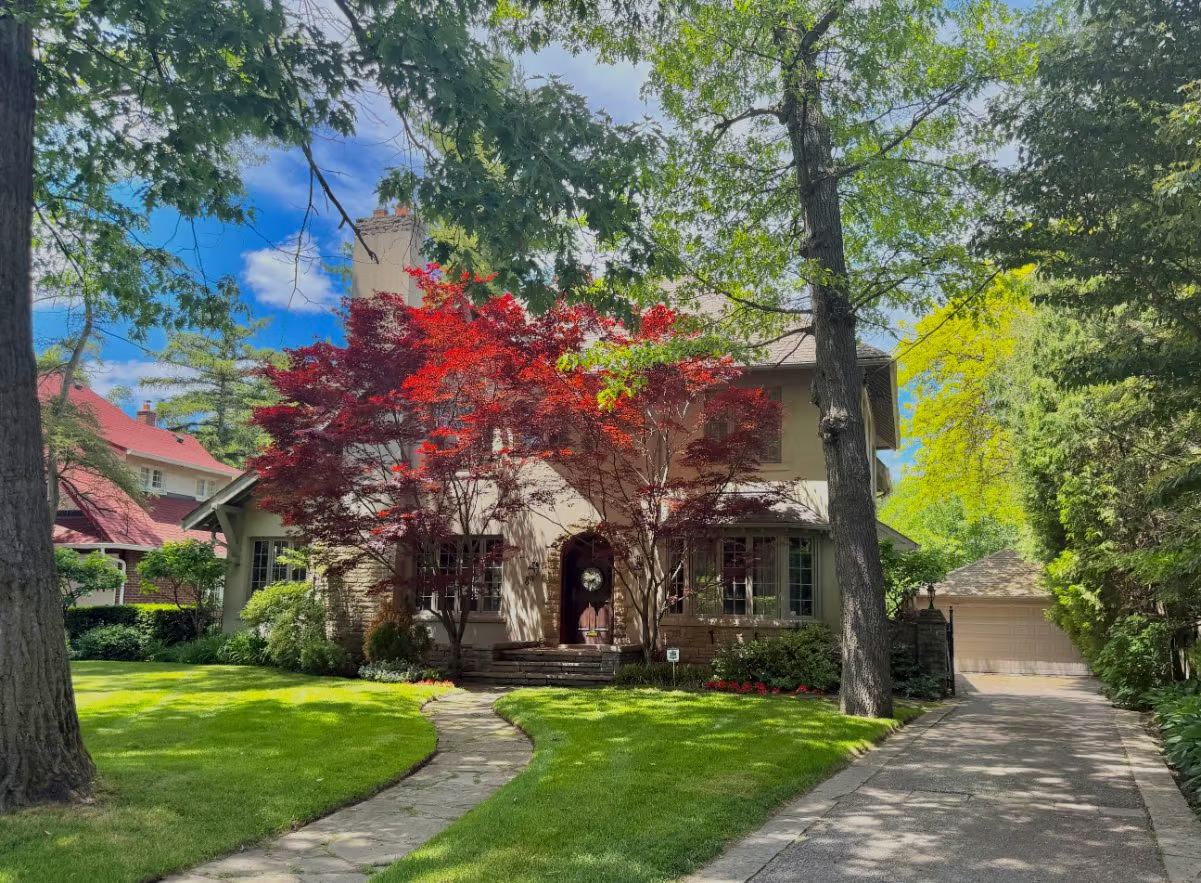
Some of Toronto’s most exclusive streets run through here. Homes set back on generous lots, ravine views that look like something from a film set, mature landscaping that took generations to reach this level of presence. Baby Point is one of the city’s few intact garden suburbs, designed in the early twentieth century and preserved with genuine care. Architectural beauty, ravine access, and a rare sense of belonging. That combination doesn’t exist anywhere else in the West End.
Homes come to market infrequently. When they do, they move with purpose.
The History of Baby Point
Baby Point takes its name from James Baby, a French settler and member of Upper Canada’s Family Compact who established his estate on this peninsula in 1816. Long-time residents still pronounce it the French way: “Bobby Point.” It’s one of those small details that separates the people who live here from everyone else.
The land itself carries a much older story. Before Baby’s arrival, this promontory above the Humber River was the site of Teiaiagon, a prosperous Seneca Nation village dating to the 1600s, and one of the largest known Indigenous archaeological sites within present-day Toronto. The location was no accident: the high peninsula at the bend of the Humber was easily defended and perfectly positioned for the fur trade routes that defined this part of the continent.
After Baby’s heirs held the land for nearly a century, the property passed to developer Robert Home Smith in 1912. Home Smith, who would later shape The Kingsway across the river, was deliberate about what he built here. He personally determined the placement of every home. The result is a garden suburb that has remained remarkably intact: curvilinear streets, generous lots, and a built form that still reflects his original vision more than a hundred years later.
Types of Homes for Sale in Baby Point
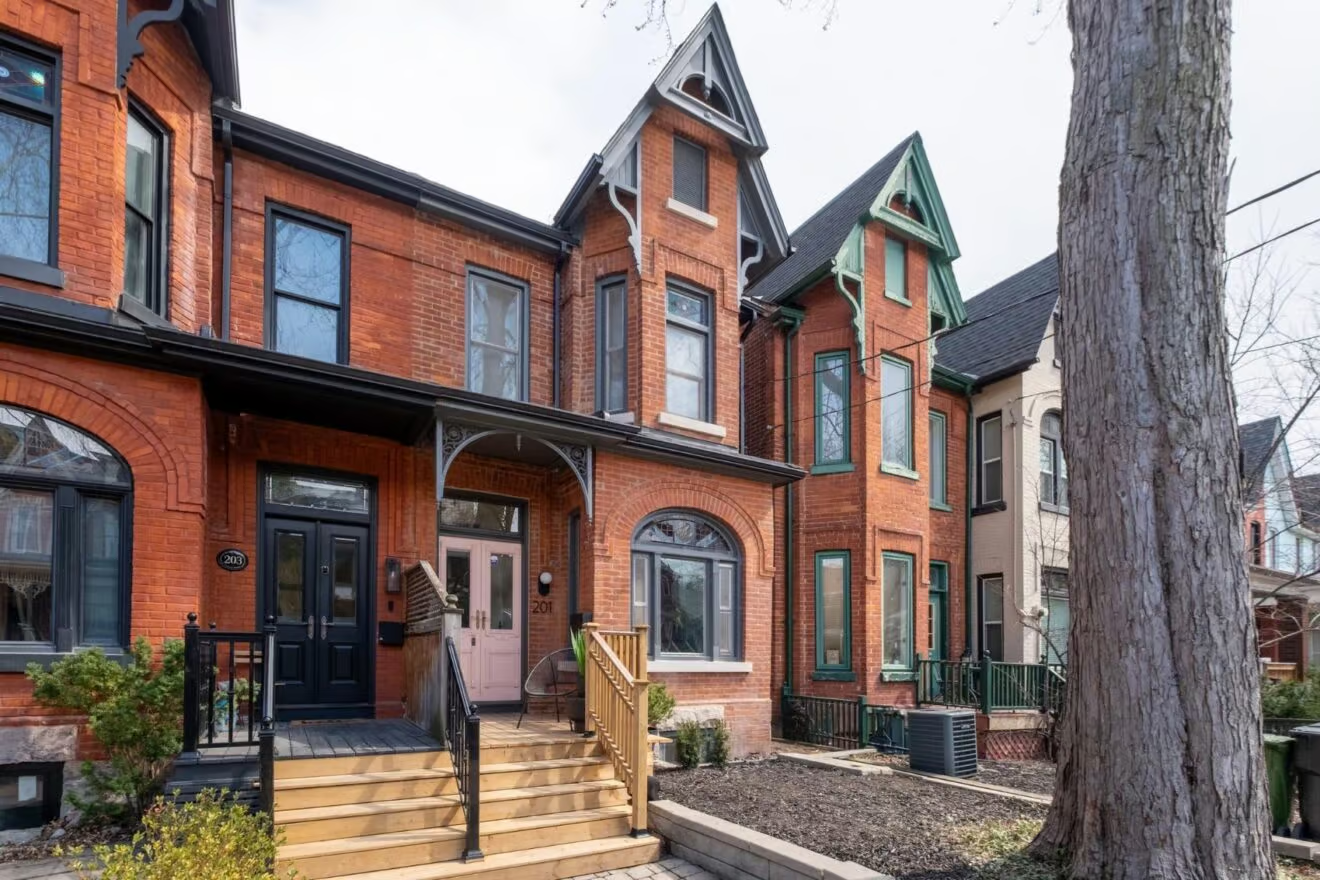
Baby Point real estate is defined by large, architecturally significant detached homes on generous lots with deep front and rear yards and, in many cases, ravine vistas that feel more like a country estate than a city property. The neighbourhood was built out during a single concentrated period, and that origin gives it something genuinely unusual: coherence. Walk along Baby Point Crescent or Baby Point Road and the streetscape tells a consistent story. Tudor Revival and English Cottage homes in brick and stone, with the occasional Colonial Revival property adding Georgian and Edwardian proportion to the mix.
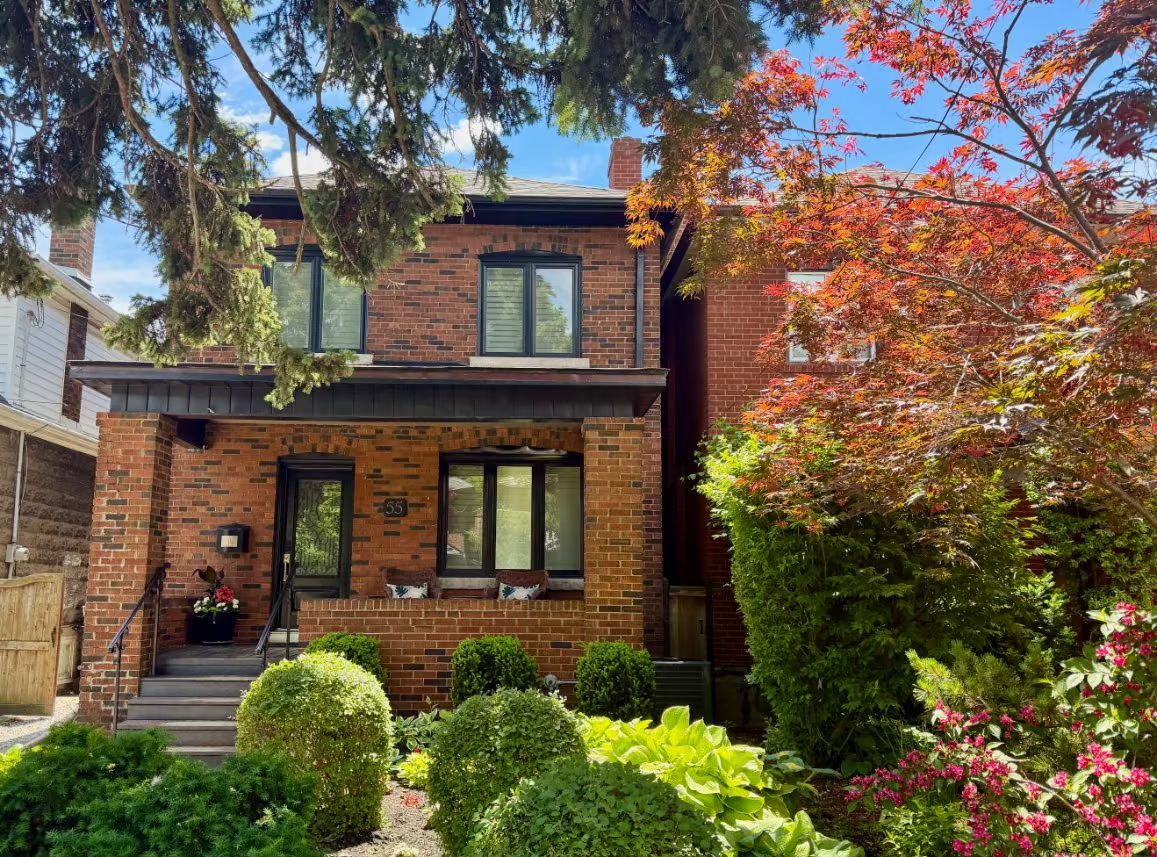
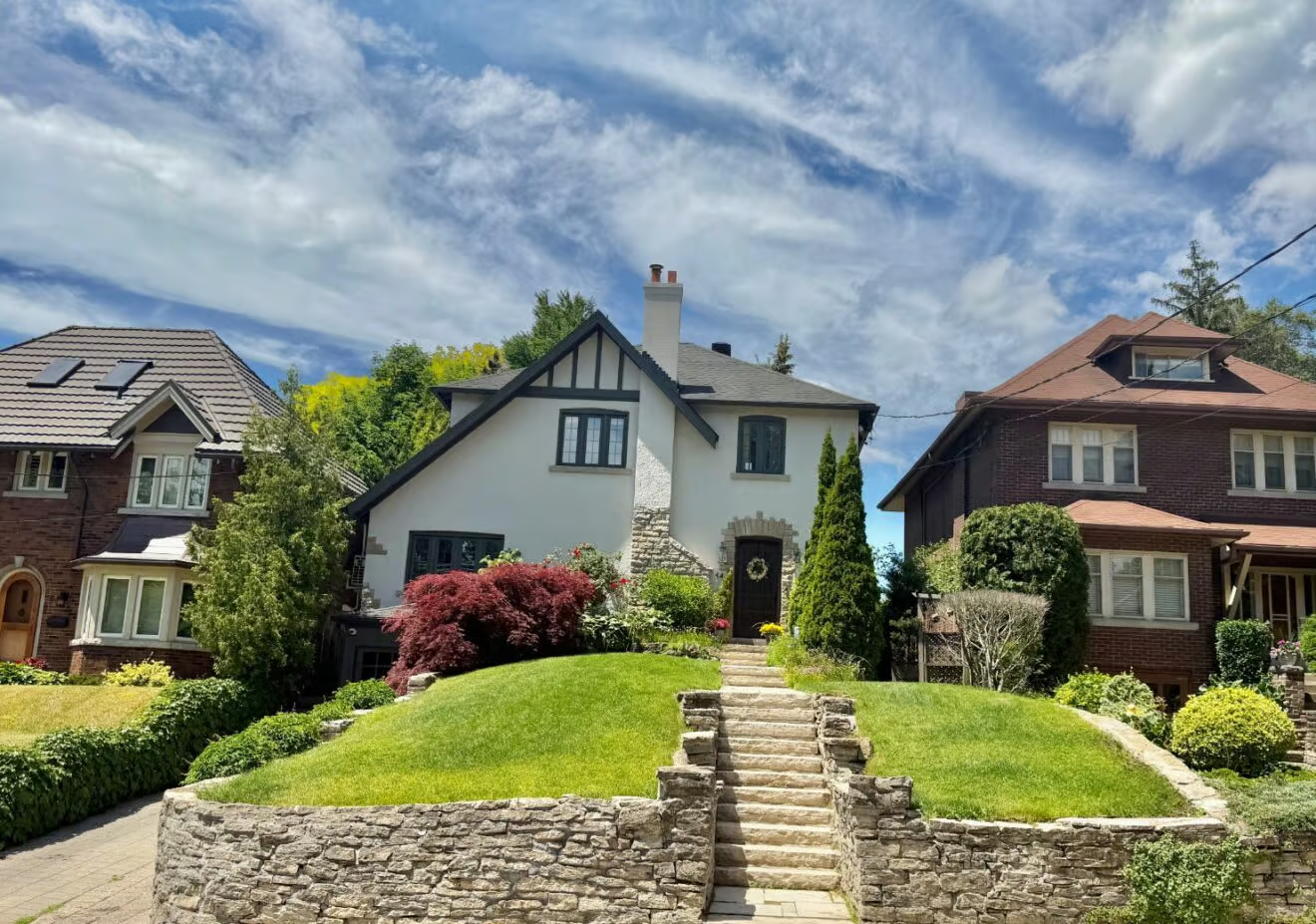
Most homes here were built in the 1920s and 1930s. The best among them have been carefully maintained or thoughtfully renovated to preserve their original character, and the difference is visible the moment you pull up. These are not modest family semis. Baby Point homes are substantial in scale: four or more bedrooms, mature private gardens, and architectural detail that simply cannot be replicated in new construction at any price. Properties backing onto the Humber River Valley offer some of the most coveted rear outlooks in the West End. On the right lot, the view from the back of the house is genuinely cinematic.
Baby Point is exclusively detached residential. That scarcity of supply, combined with consistent demand from buyers who know exactly what they are looking for, keeps the market here disciplined. When a home comes to market, it tends to attract buyers who have been watching the neighbourhood for years. They move quickly, and they rarely need convincing.
The Other Side Of The Gates
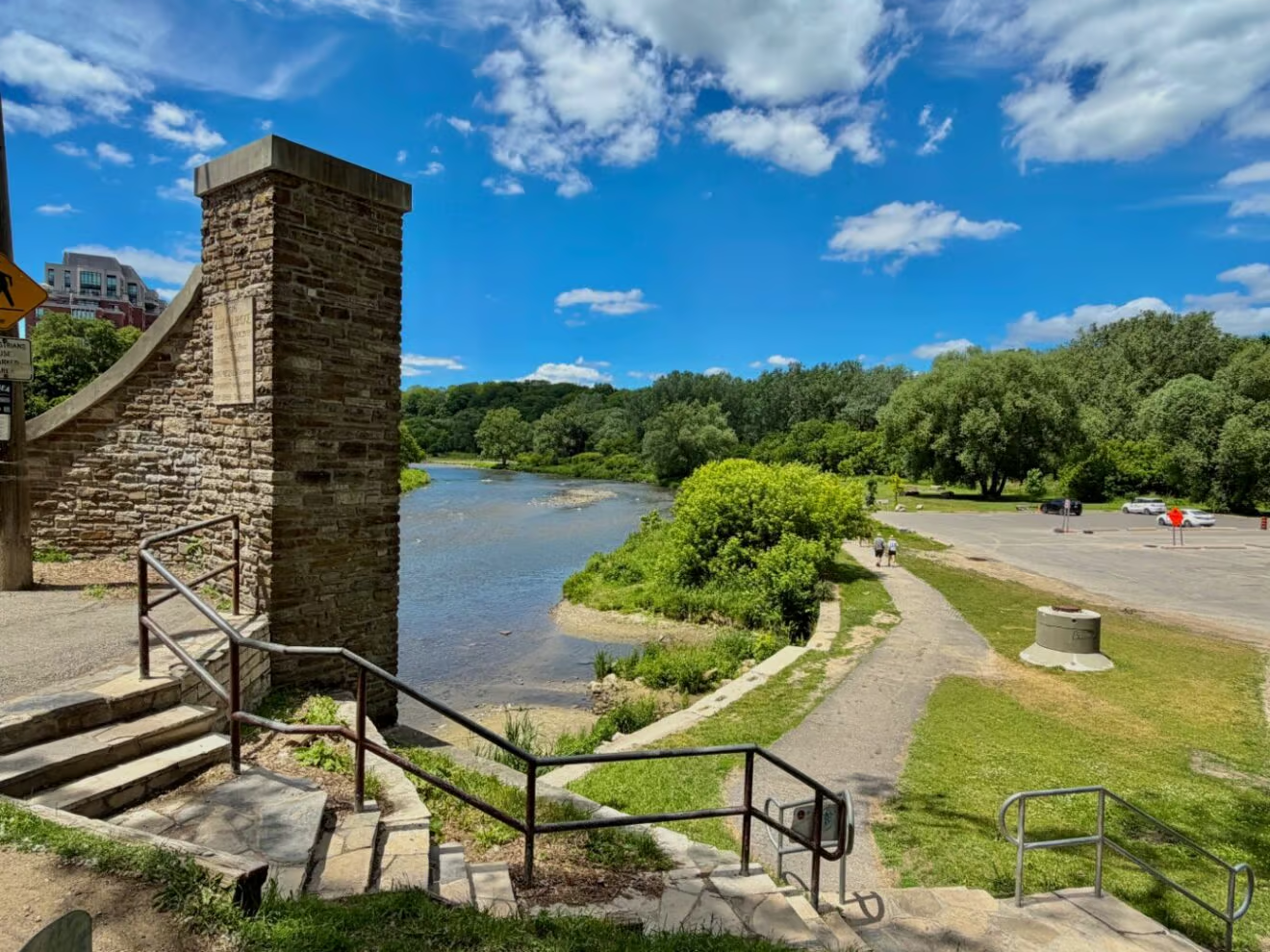
Step outside most front doors in Baby Point and you are minutes from Etienne Brule Park and the Humber Valley Trail. This is one of the few pockets of the West End where trail-running along a Canadian Heritage River is a Tuesday morning option, not a weekend expedition. The ravine here doesn’t feel like an amenity. It feels like part of the neighbourhood.
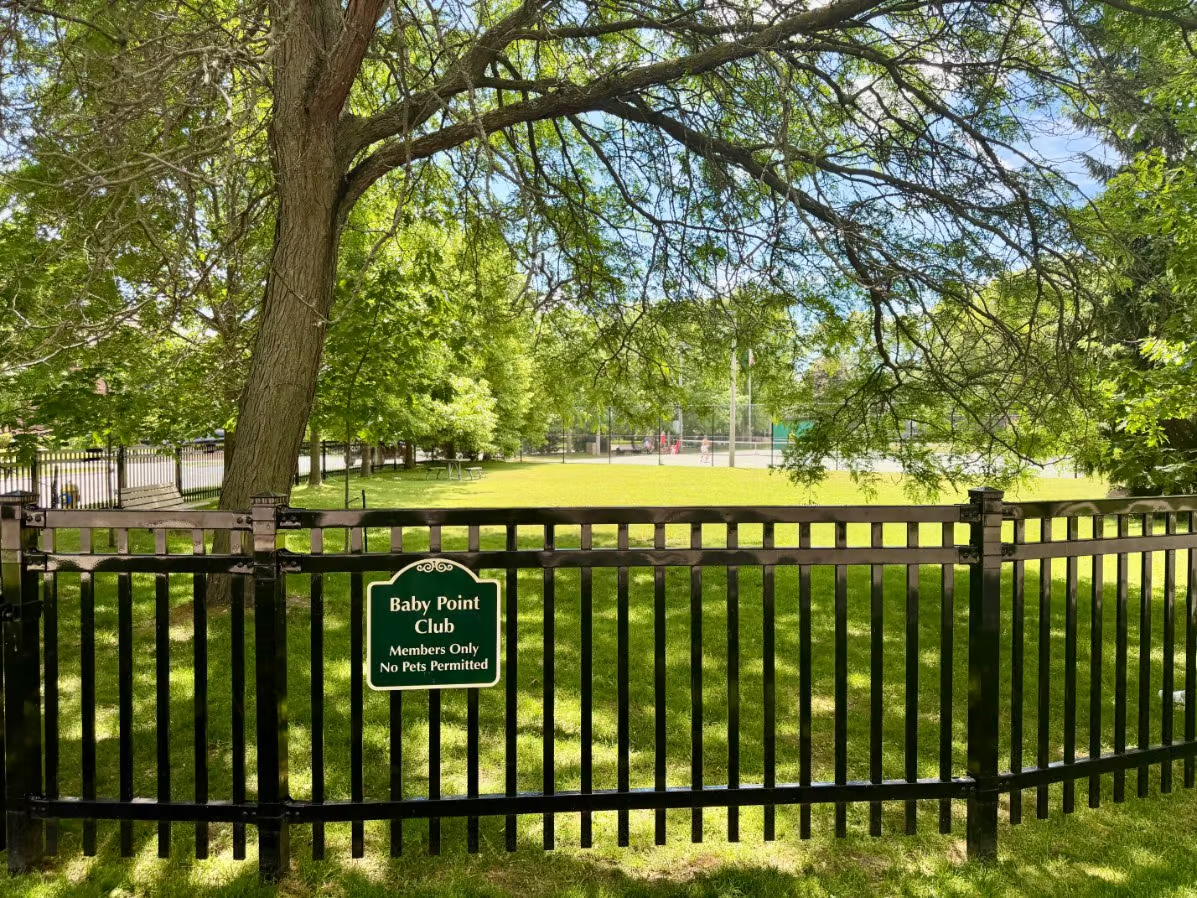
Then there is the Baby Point Club. Membership-based, residents-only, and anchored at the centre of the neighbourhood. Two tennis courts, lawn bowling, and a log cabin clubhouse that has served as the social heart of this community for decades. It is the kind of place that only exists where a community has been given the time and the stability to build something lasting. You either know about it or you don’t. Residents very much do.
What Do Homes Cost in Baby Point?
Baby Point is exclusively detached, and pricing reflects that. Smaller detached homes currently trade in the $1.6M to $1.8M range, while larger properties sit in the $2M to $4M range. For homes backing onto the Humber River Valley or carrying the neighbourhood’s finest architectural pedigree, $5M to $6M is not unusual, and the most exceptional estates trade well beyond that.
Selling a home in Baby Point takes a different kind of strategy. With so few comparable sales to draw from, pricing and staging matter more here than almost anywhere else in the West End.
Because inventory is so limited, individual sales can vary significantly depending on condition, lot depth, and rear exposure. The neighbourhood does not offer a deep pool of comparable sales from which to draw a precise median. What we can say with confidence, based on our experience working this pocket of the West End, is that buyers come prepared and sellers who present their homes well are rewarded. Proper staging and bespoke marketing matter here, perhaps more than anywhere else in the West End, because the buyers who target Baby Point are discerning and well-informed.
How to Pick the Right Baby Point Real Estate Agent?
Baby Point isn’t a neighbourhood you learn from a spreadsheet. Homes here come to market rarely, and when they do, the buyers who move quickly are the ones who already understand what a lot depth, a ravine outlook, or a stretch of Baby Point Crescent is actually worth. Working with an agent who watches this pocket closely, rather than one encountering it for the first time, makes a real difference.
That’s where Nested comes in. Kathy Essery and Pavlena Brown have spent 14 years working the West End’s enclaves, including Baby Point, and bring that street-level knowledge to every buyer and seller who calls this neighbourhood home. Here’s how we help you buy in the West End.
Hoping to call Baby Point home? Book a meeting with us to see how we help buyers.
Living in Baby Point
There is a particular quality to daily life in Baby Point that residents describe the same way, almost without exception. It feels like a bubble. The streets are quiet and picturesque. The greenery is extraordinary. Neighbours know each other by name, gather at the Club, and look out for one another in the way that used to be common in Toronto neighbourhoods and increasingly isn’t. Once you are inside the gates, the city recedes in a way that is difficult to explain until you have experienced it yourself.
The river shapes everything. Etienne Brule Park runs along the Humber, offering walking, running, cycling, and cross-country skiing trails that most Toronto neighbourhoods can only envy. The Humber is a designated Canadian Heritage River, and the trail network connected to it extends far beyond Baby Point itself. Residents have access to one of the city’s most beautiful green corridors, right from their front door, with routes that stretch all the way to Humber Bay and the waterfront.
At the centre of neighbourhood social life sits the Baby Point Club. Founded by residents in 1923 and still operating today, it offers tennis, lawn bowling, and a calendar of seasonal events that reinforces the community’s close-knit character. This is not a neighbourhood of strangers. People put down deep roots here, and the Club is a big part of why.
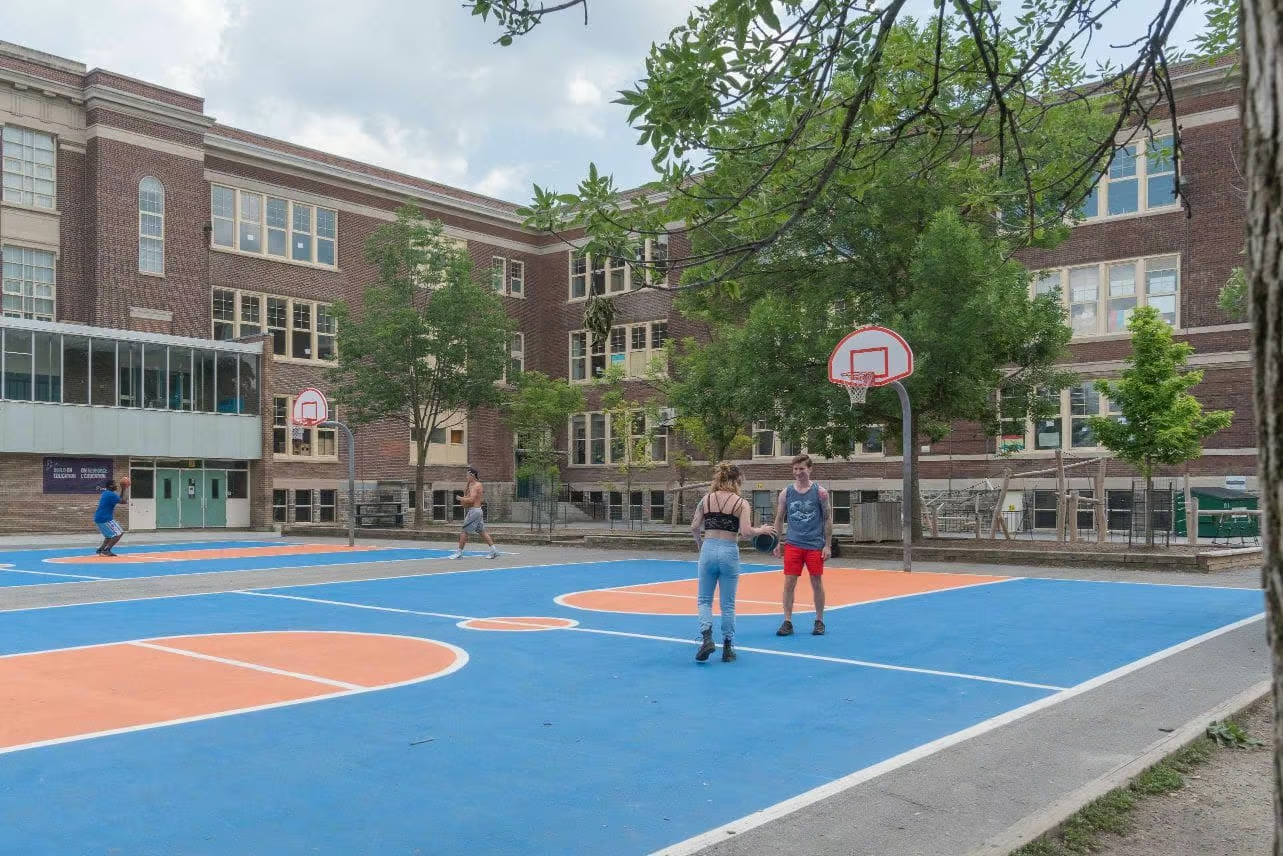
The intersection of Jane and Bloor is a short walk or bike ride away: the Jane subway station, the shops and restaurants along Bloor Street West, and easy connections to Roncesvalles, Swansea, and Bloor West Village. The Old Mill heritage site is nearby. For families, Humbercrest Public School and Senior Public School and Runnymede Collegiate Institute are both within reach.
Baby Point Real Estate Frequently Asked Questions:
Yes. Baby Point is one of Toronto’s West End enclaves, bordered by the Humber River to the west and south, and connecting to Bloor West Village and Swansea to the east. It has its own distinct character and a self-contained quality that sets it apart from surrounding neighbourhoods, but geographically and culturally it belongs firmly to the West End.
Kathy Essery and Pavlena Brown of Nested Real Estate work this pocket regularly and know its market well, whether you’re buying or selling here.
Baby Point is exclusively detached residential. Homes are predominantly Tudor Revival and English Cottage in style, built mostly between the 1920s and 1940s on generous lots with deep setbacks and mature landscaping. Many properties offer ravine or river valley views at the rear. There are no condominiums or semi-detached homes in the neighbourhood’s core, which is a significant part of what makes it so architecturally coherent.
Less often than other West End pockets. Homeowners here tend to stay for decades, which means new listings arrive infrequently and serious buyers often wait years for the right property. Buyers targeting Baby Point benefit from working with an agent who watches the neighbourhood actively and has the relationships to hear about properties before they are formally listed.
The Baby Point Club is a private residents’ club founded in 1923 on land originally set aside by developer Robert Home Smith. It offers tennis, lawn bowling, and a log cabin clubhouse, and hosts a calendar of social events throughout the year. Membership is available to neighbourhood residents and is one of the features that makes Baby Point feel less like a neighbourhood and more like a community.
It is one of the best in the West End. The Humber Valley trail system and Etienne Brule Park provide exceptional outdoor access year-round, and the Baby Point Club adds a layer of community infrastructure that most neighbourhoods simply don’t have. School options nearby include Humbercrest Public School, High Park Alternative Junior School, Western Technical School, and Runnymede Collegiate Institute.
Is Baby Point considered part of the West End?
Yes. Baby Point is one of Toronto’s West End enclaves, bordered by the Humber River to the west and south, and connecting to Bloor West Village and Swansea to the east. It has its own distinct character and a self-contained quality that sets it apart from surrounding neighbourhoods, but geographically and culturally it belongs firmly to the West End. Kathy Essery and Pavlena Brown of Nested Real Estate work this pocket regularly and know its market well, whether you’re buying or selling here.
What types of homes are available in Baby Point?
Baby Point is exclusively detached residential. Homes are predominantly Tudor Revival and English Cottage in style, built mostly between the 1920s and 1940s on generous lots with deep setbacks and mature landscaping. Many properties offer ravine or river valley views at the rear. There are no condominiums or semi-detached homes in the neighbourhood’s core, which is a significant part of what makes it so architecturally coherent.
How often do homes come to market in Baby Point?
Rarely. Homeowners here tend to stay for decades, which means new listings arrive infrequently and serious buyers often wait years for the right property. Buyers targeting Baby Point benefit from working with an agent who watches the neighbourhood actively and has the relationships to hear about properties before they are formally listed.
What is the Baby Point Club?
The Baby Point Club is a private residents’ club founded in 1923 on land originally set aside by developer Robert Home Smith. It offers tennis, lawn bowling, and a log cabin clubhouse, and hosts a calendar of social events throughout the year. Membership is available to neighbourhood residents and is one of the features that makes Baby Point feel less like a neighbourhood and more like a community.
Is Baby Point a good neighbourhood for families?
It is one of the best in the West End. The Humber Valley trail system and Etienne Brule Park provide exceptional outdoor access year-round, and the Baby Point Club adds a layer of community infrastructure that most neighbourhoods simply don’t have. School options nearby include Swansea Junior and Senior Public School, High Park Alternative Junior School, and Runnymede Collegiate Institute.