


Buying a home in Toronto’s West End is one of the most significant decisions you will make. The neighbourhoods here, from Bloor West Village and High Park to Roncesvalles, Swansea, The Junction, and Parkdale, attract buyers who have done their research and know exactly what they are looking for. A community to put down roots in. A home that holds its value. A street that feels right the moment you turn onto it.
The more you know going in, the better you buy. What follows is everything Kathy and Pavlena of Nested Real Estate want west end buyers to know before they start their search.
For most west end buyers, the active search from first showings to an accepted offer takes four to six months. Buyers with clear criteria and the flexibility to act quickly can buy a home in two to three months. Those navigating a simultaneous sale, working in a price range with limited inventory, or refining their criteria along the way often take longer. The process rarely feels linear, and that is completely normal.
Before the search begins, getting your financing organized is crucial and takes two to four weeks, if your documents are in order. That step needs to happen before you start shopping seriously, not after you find the home you want. Buyers who skip this step consistently find themselves unable to act when the right property appears.
Once you have an accepted offer, closing typically runs 30 to 90 days, with 60 days being most common. During that window your lawyer reviews title and ownership transfer, your mortgage is finalised, and you prepare for possession.
The buyers who move fastest are not the ones who look at the most homes. They are the ones who narrow down neighbourhoods, know their must have’s and can make a confident decision when the right home appears. A focused buyer is a faster buyer.
The features that matter most in a West End home are rarely the ones that photograph best. Buyers fall for renovations and character features, and overlook the things that actually drive long-term value.
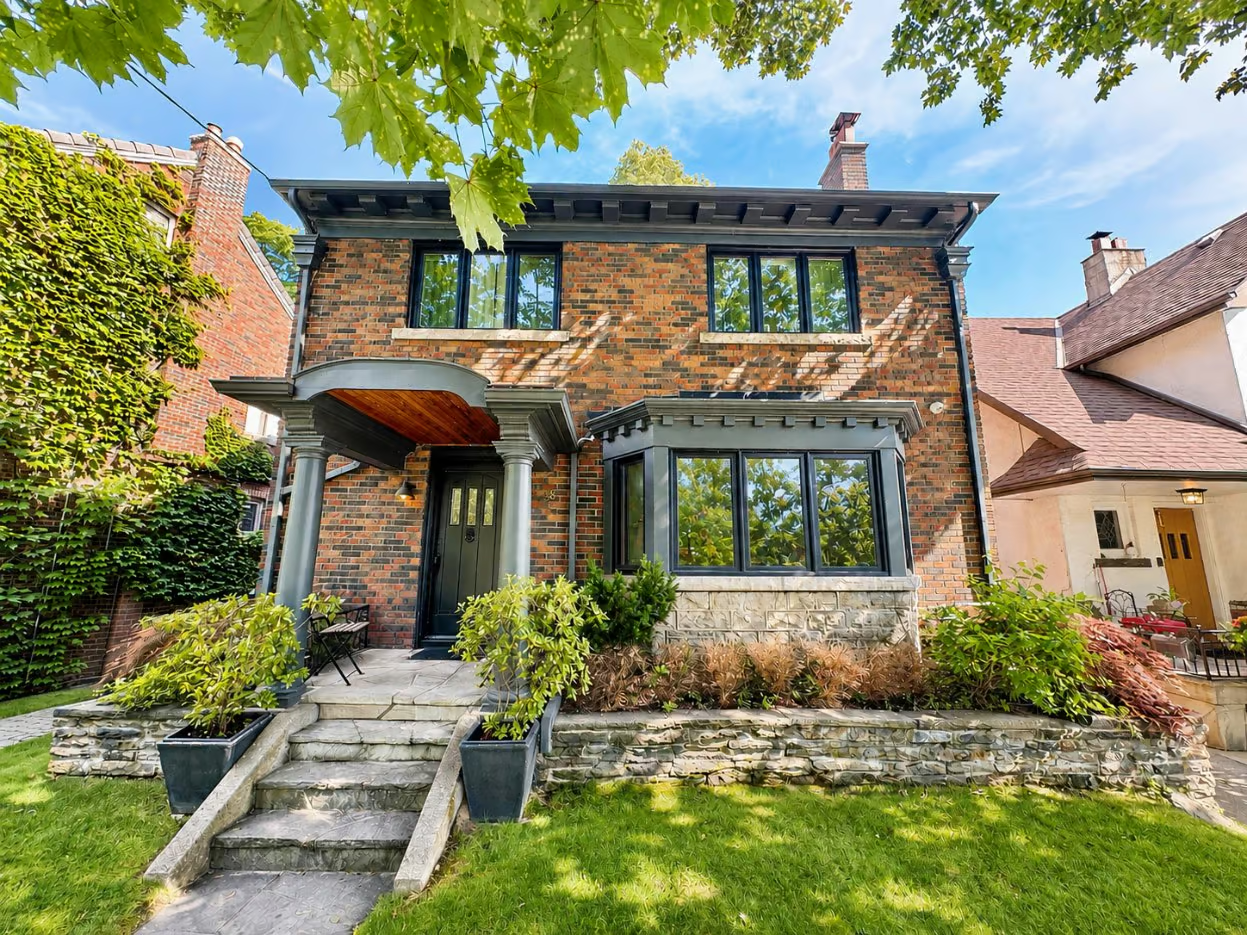
Parking is the single most underrated feature in the west end. A legal spot, a private drive, or a detached garage can add $50,000 to $100,000 to a home’s value depending on the neighbourhood. Lot size matters too. Wider and deeper lots give you options for additions and outdoor living that narrow lots simply do not.
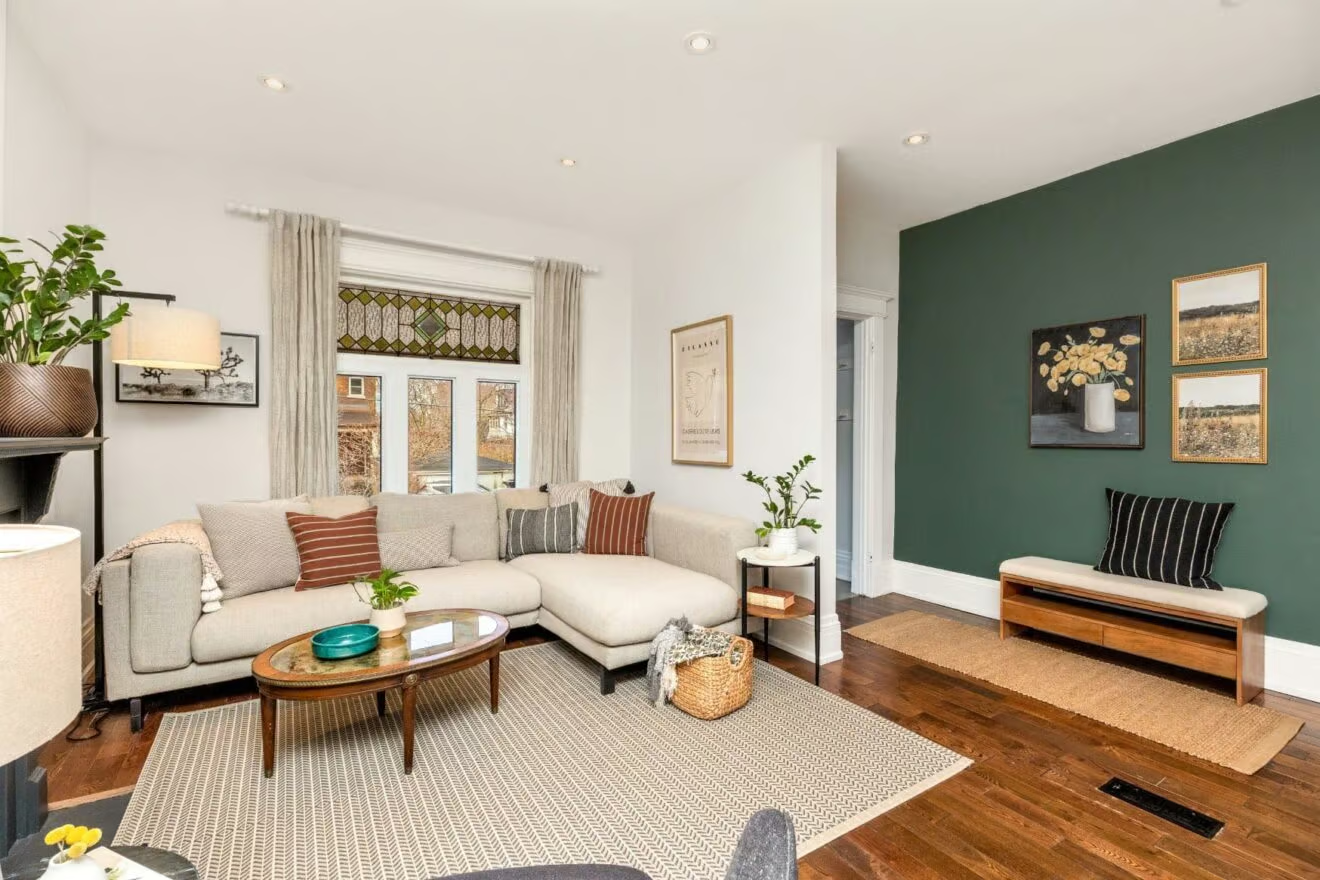
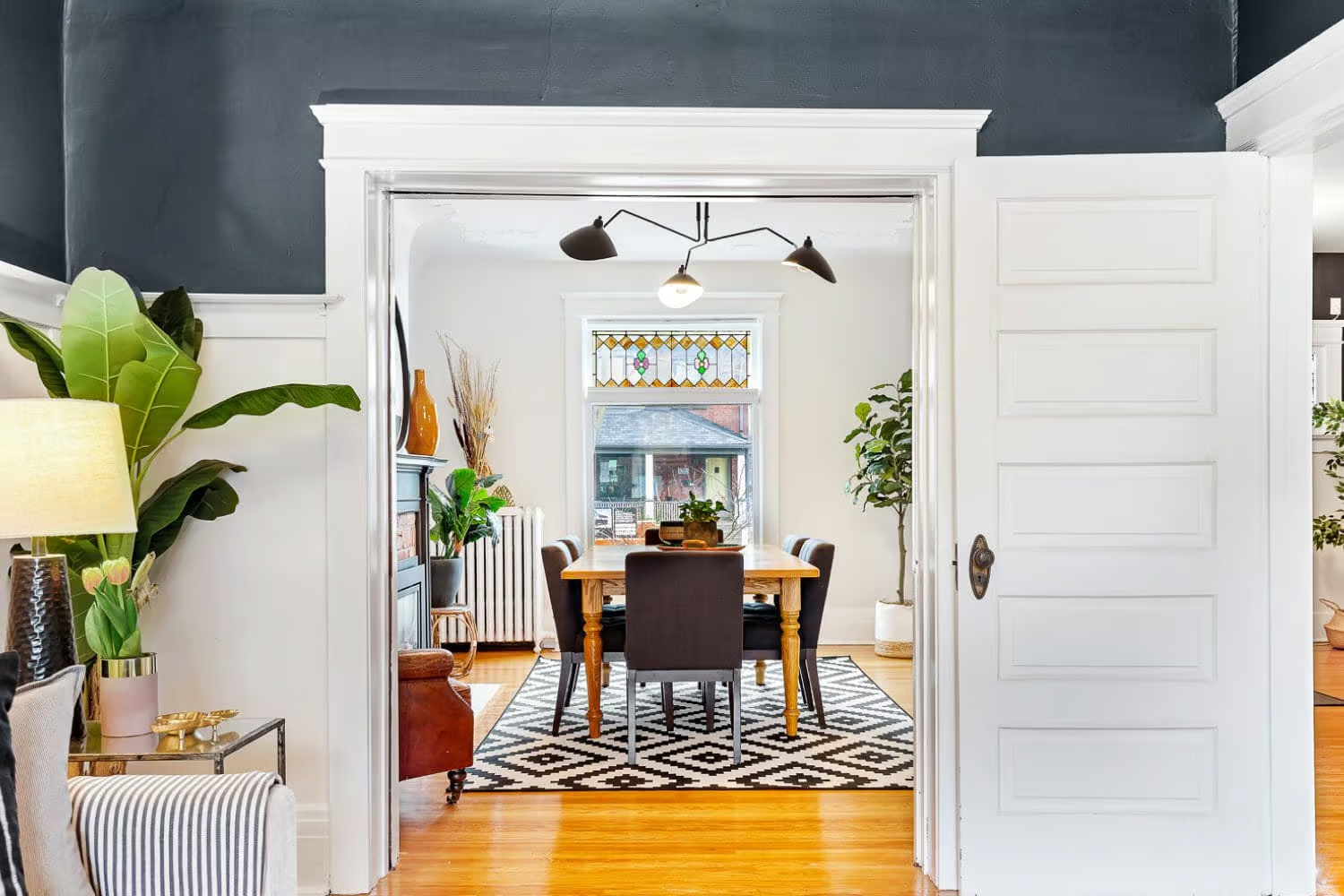
Ceiling height is worth noticing. Older West End homes with 9 or 10-foot ceilings on the main floor are genuinely harder to find, and that sense of space cannot be fabricated later. Original architectural detail, stained glass, wide-plank hardwood, period trim, adds real value when it is in good condition. The basement matters more than buyers often realise. Ceiling height and layout determine whether it functions as proper living space or just storage.
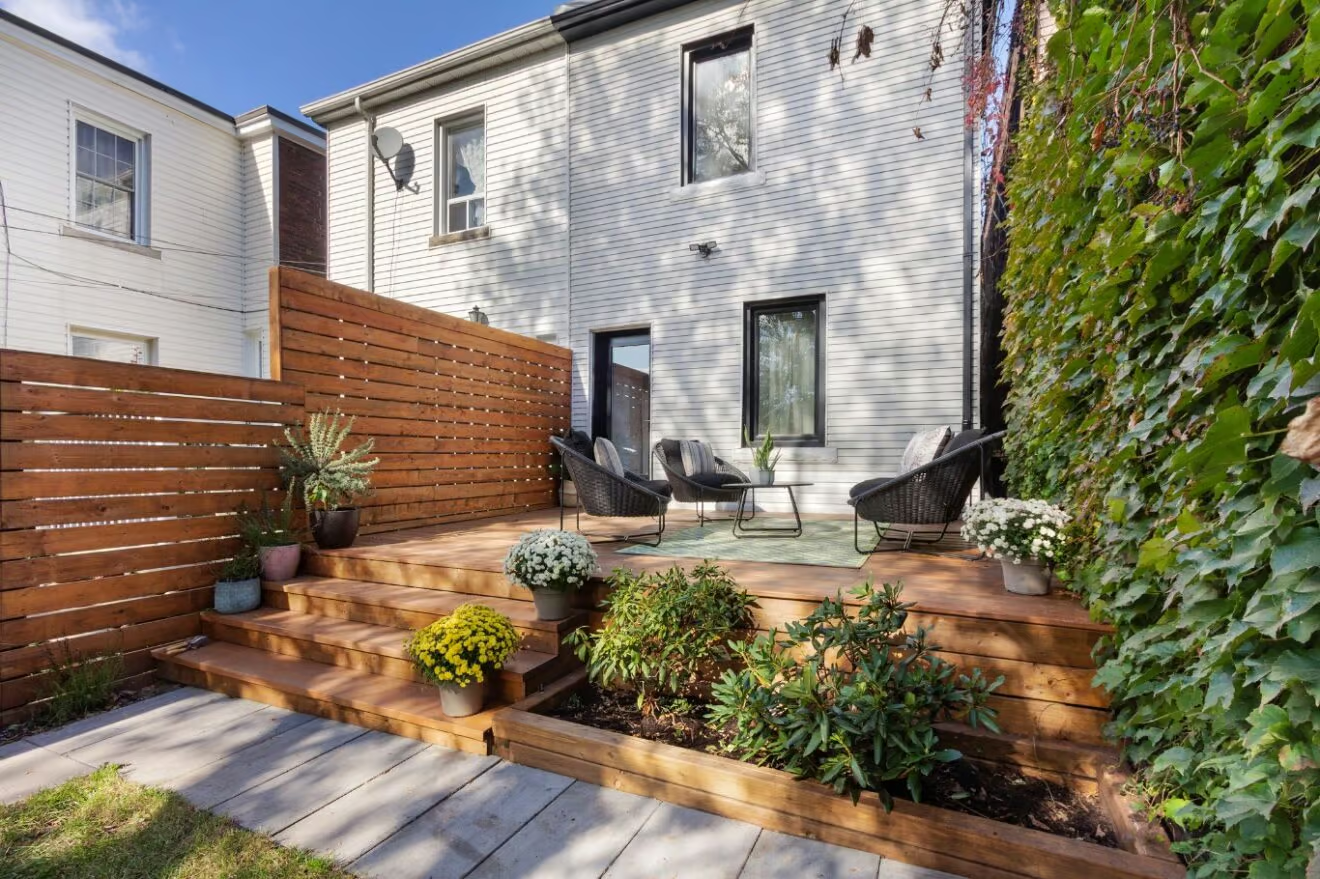
Pay attention to rear yard orientation. A west facing yard means natural light through the afternoon and evening, something you will notice every day. And look at the street itself. The location and quality of the immediate block are things you cannot change after you buy.
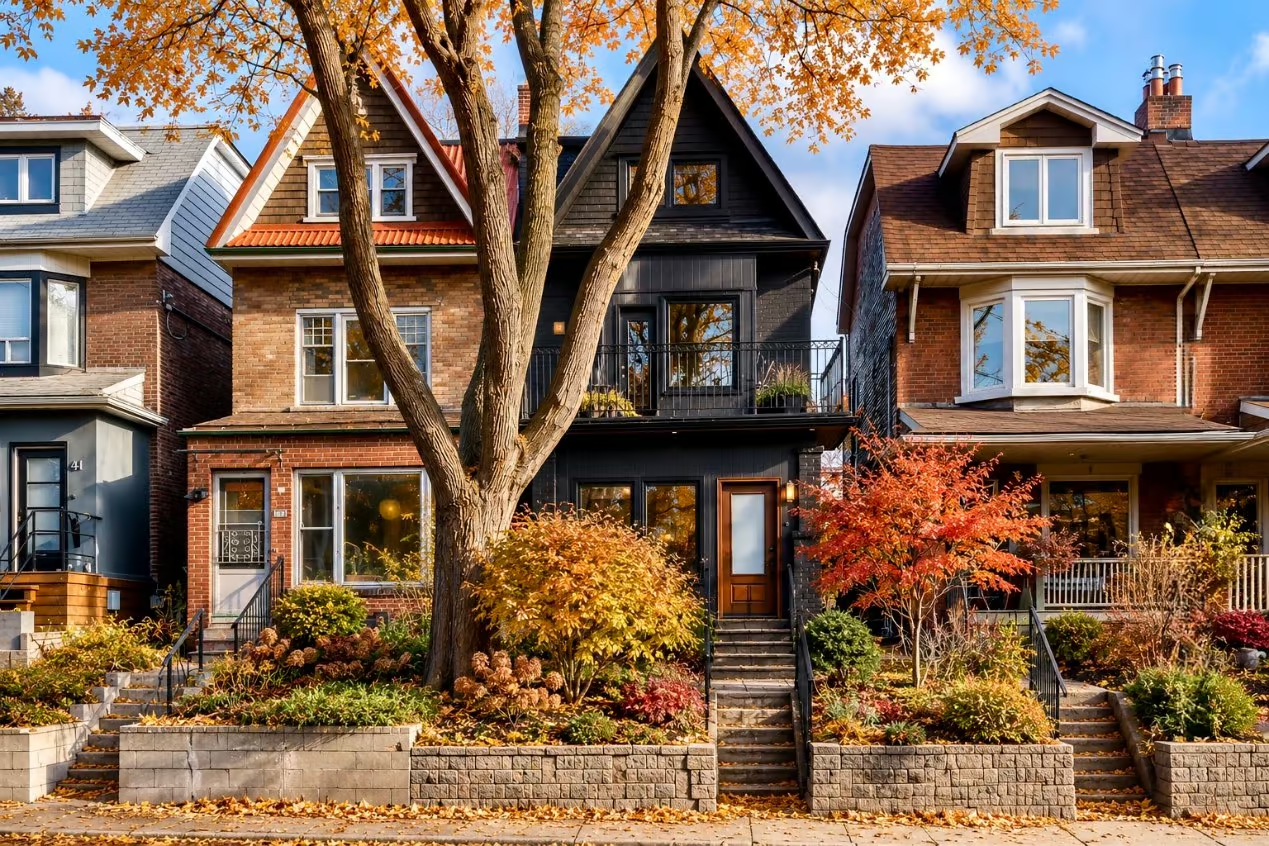
Yes. A well-positioned semi-detached home on a desirable west end street holds its value strongly and offers one of the best entry points into some of Toronto’s most sought-after neighbourhoods. Buyers who rule out semis categorically often end up compromising on neighbourhood to afford a detached home, and that trade-off rarely serves them well over the long term.
In Toronto’s west end, many semi-detached homes were built in the early 1900s with double-brick party walls that do a surprisingly effective job of managing sound between neighbours. Many have original mouldings, stained glass, and rich wood trim that simply do not exist in modern builds. The character is genuine, and buyers who appreciate it are rewarded with homes that hold their appeal across every market cycle.
The price advantage is also meaningful. In Roncesvalles, a two-storey semi typically ranges from $1.7M to $2M. In Bloor West Village, semis run from $1.4M to $1.8M. In High Park and High Park North, semi-detached properties generally range from $1.4M to $2M, and the Edwardian and craftsman semis here are among the most generously proportioned in the west end.
That is the same neighbourhood, the same school catchment, and much of the same character as the detached market, at a meaningful price difference. The honest assessment:on the right block in the right neighbourhood, a well-chosen semi is not a compromise. It is a genuinely smart buy.
Location. Almost always. This is the trade-off that comes up in nearly every west end buyer search, and the answer is consistent: a smaller, well-positioned home on the right street will outperform a larger home on a less desirable block, every time. In the west end, location is not about prestige or postcode. It is about school catchments, transit access, proximity to the shopping strips, and the quality of the immediate block.
The difference between a well-located home and one that is two blocks further than you wanted can be $150,000 to $300,000 in long-term value and a completely different buyer pool when it comes time to sell. These are things that extra square footage cannot compensate for. Space is not irrelevant. For families with young children, an extra bedroom or a functional backyard makes a real difference to daily life.
The question worth asking is: which trade-off will you regret more in five years? If the location compromise is significant, a neighbourhood you were not planning on, a street that does not feel right, the extra space rarely makes up for it. If the location is solid and the question is one room or a few hundred square feet, that is often solvable through renovation. Our rule of thumb at Nested: choose the best location your budget allows, then figure out the space. You can renovate a home. You cannot renovate its street.
Purchase price is only part of what you need to budget for when buying in Toronto’s west end. The closing costs below are separate from your down payment and mortgage, and they need to be factored in from the beginning of your search, not at the end.
Land transfer tax is the largest closing cost for most buyers. Toronto applies both a provincial and a municipal land transfer tax, meaning west end buyers pay both. On a $1.8M purchase, budget approximately $55,000 to $60,000 combined. A full calculation is available at TRREB.ca. Legal fees typically run $1,800 to $2,500 plus disbursements. Engage your real estate lawyer as soon as you have an accepted offer, not closing week.
A home inspection typically costs $550 to $650. Moving costs run $2,000 to $5,000 for a local Toronto move depending on size and whether packing is included. Budget separately for any immediate updates you plan before moving in. Your mortgage broker and lawyer will walk you through the specific numbers for your transaction. Going in with a realistic sense of these costs means no surprises on closing day.
Yes, and not just in principle. In practice, having your financing organised before you begin seriously viewing homes is one of the most important steps a west end buyer can take. Homes in the most desirable pockets of the west end move quickly. When the right property appears, you need to be in a position to act, and that means knowing your number with confidence before you walk through the door.
Getting your financing organised typically takes two to four weeks if you have your documents in order: proof of income, employment confirmation, recent tax returns, bank statements, and details of any existing debts. The result is a clear maximum purchase price, a realistic sense of your monthly carrying costs, and the credibility to make an offer that sellers and their agents take seriously.
Buyers who begin shopping without organized financing consistently find themselves in one of two situations: they fall in love with a home they cannot mentally move on from, or they make an offer without fully understanding what they can carry. Neither outcome is in your interest. In a market where strong homes can attract multiple offers, arriving without financing organized is a genuine disadvantage.
One important note: a financing conversation is not the same as formal mortgage approval, and your final mortgage will be subject to the specific property you purchase. But having your financing organized gives you the foundation to search with confidence and act decisively. Talk to your mortgage broker before your first showing. It is a non-negotiable step in the West End market.
The west end in 2026 is active and competitive, but more nuanced than it was in 2021 and 2022. The frenzied conditions of that period have settled. What has replaced them is a market that rewards preparation, clear strategy, and accurate pricing. Well-priced, well-presented homes in prime west end locations are still generating multiple offers, typically two to six competing buyers, and sometimes more when a home is genuinely compelling. Renovated homes with parking consistently attract the strongest interest. Buyers who understand how to navigate a multiple offer situation are competing effectively.
At higher price points of $2.7M and above, there is often some room to negotiate. Conditions vary meaningfully by neighbourhood, by street, and by price range. A home on a prime Roncesvalles block behaves very differently from a comparable property a few streets away. Your agent should give you a specific read on the exact pocket you are targeting, not just a neighbourhood-level summary.
Winning in a multiple offer situation comes down to solid preparation. Financing organised in advance, a strong deposit, a clear understanding of what the home is worth, and flexibility on closing dates. Buyers who have those elements in place before they find the right home are the ones who walk away with it.
Nested is a boutique west end team led by Kathy Essery and Pavlena Brown, operating under SAGE Real Estate. We have been buying and selling exclusively in Toronto’s west end since 2012. It is the only market we work in, and that focus makes a real difference for our buyers.
After 14+ years in these neighbourhoods, we know these neighbourhoods at a granular level. Which homes are worth what they are asking, which are not, and why. That kind of knowledge only comes from being here, every day, for a long time. We have relationships with the agents most active in every pocket of the west end. When a home is about to come to market, we often know before it lists.
Every buyer relationship starts with a real conversation. Not a quick call, not a walk through the first property. We sit down and talk through your criteria, your timeline, your financing, and what actually matters to you. From there we give you an honest read on what your budget can realistically achieve, where the trade-offs live, and what current conditions mean for your strategy. We work with fewer buyers at any one time, and we do so intentionally. When it is offer time, we bring 14+ years of west end experience to the table. We know what comparable homes have actually sold for, when an offer date is likely to attract serious competition, and how to write an offer that is competitive without being reckless. There is no shortcut to that knowledge.