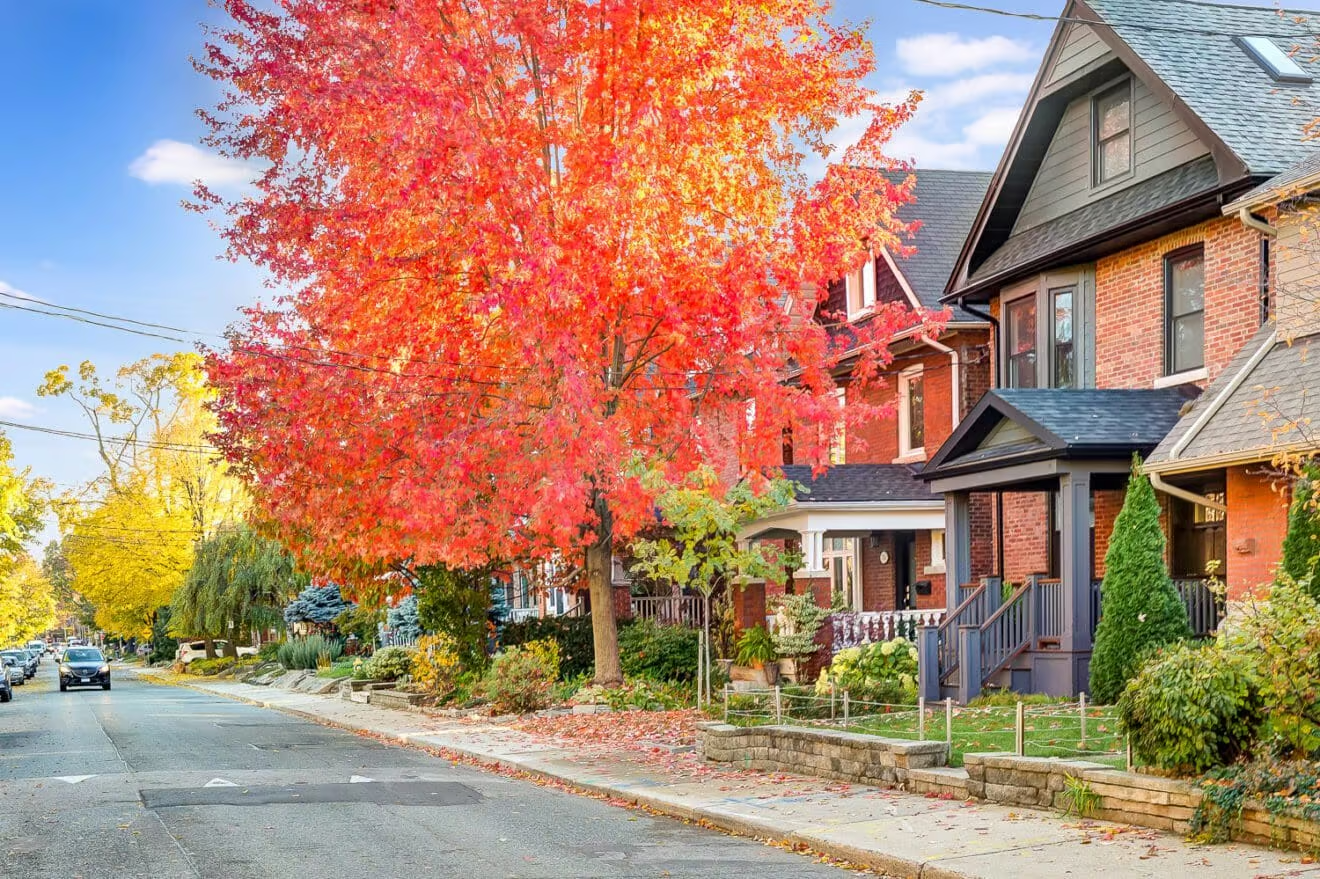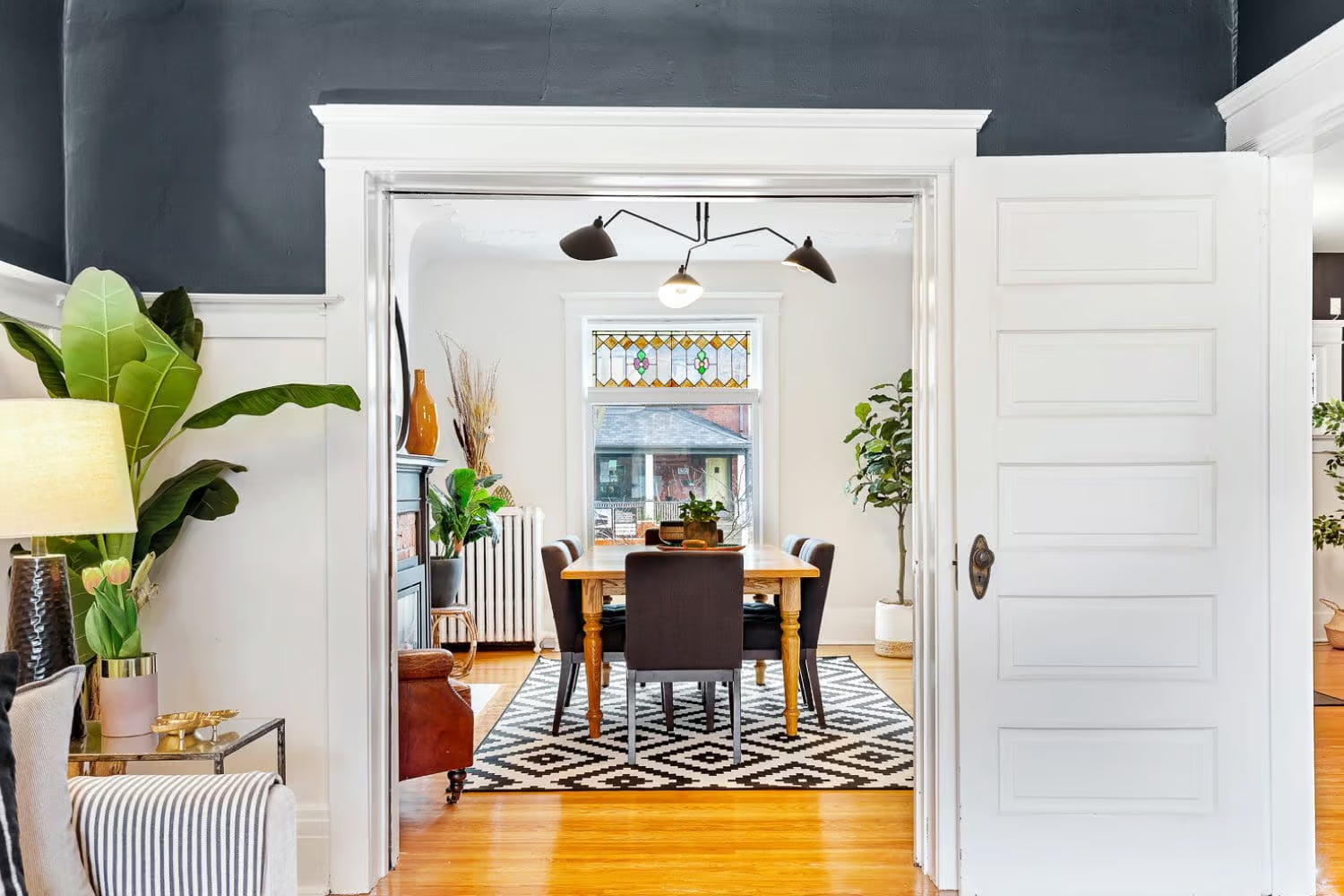

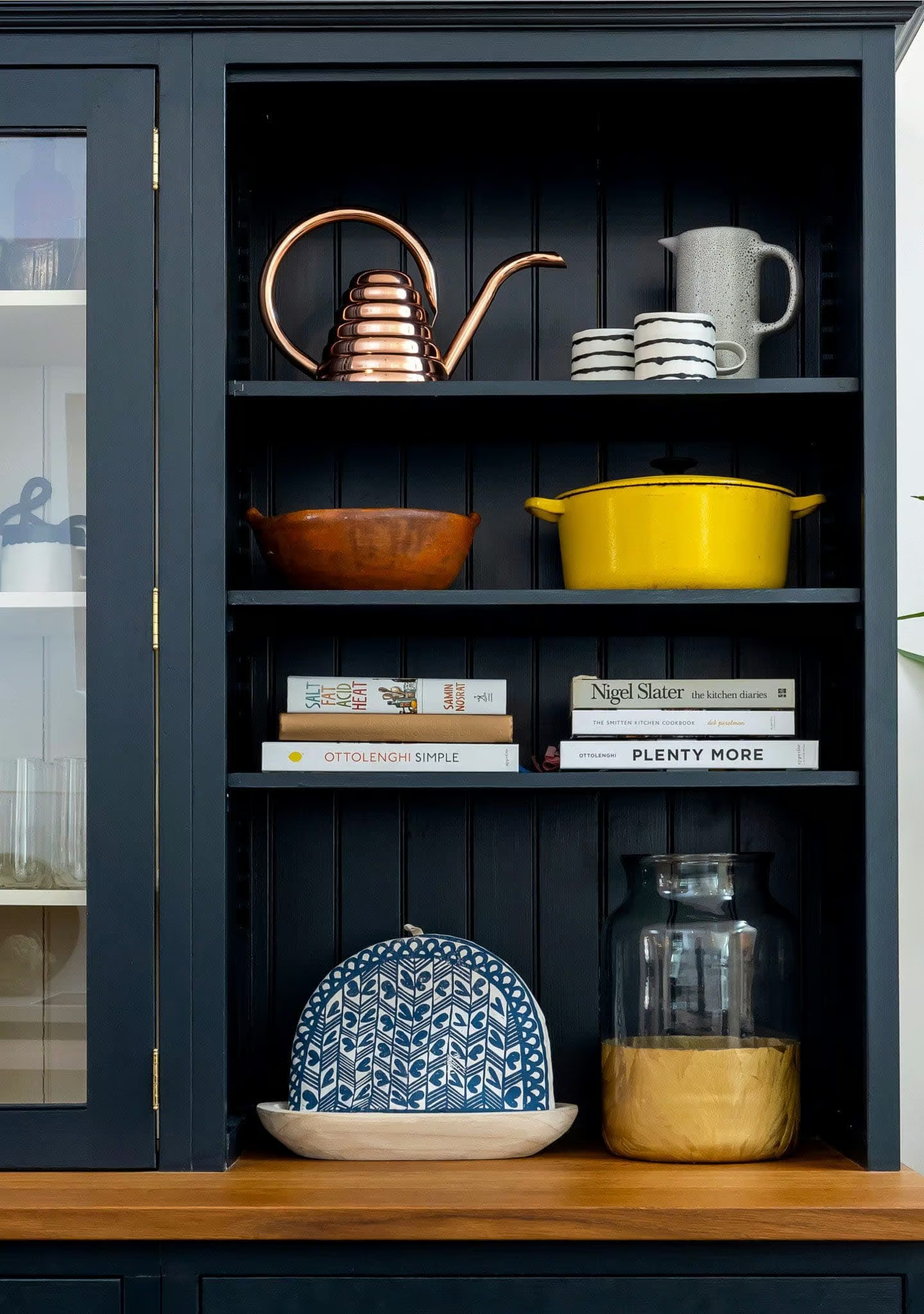

Immerse yourself in the centre of Wallace Emerson and you will find something most West End neighbourhoods no longer can offer: the feeling that you are in the middle of something, not at the end of it.
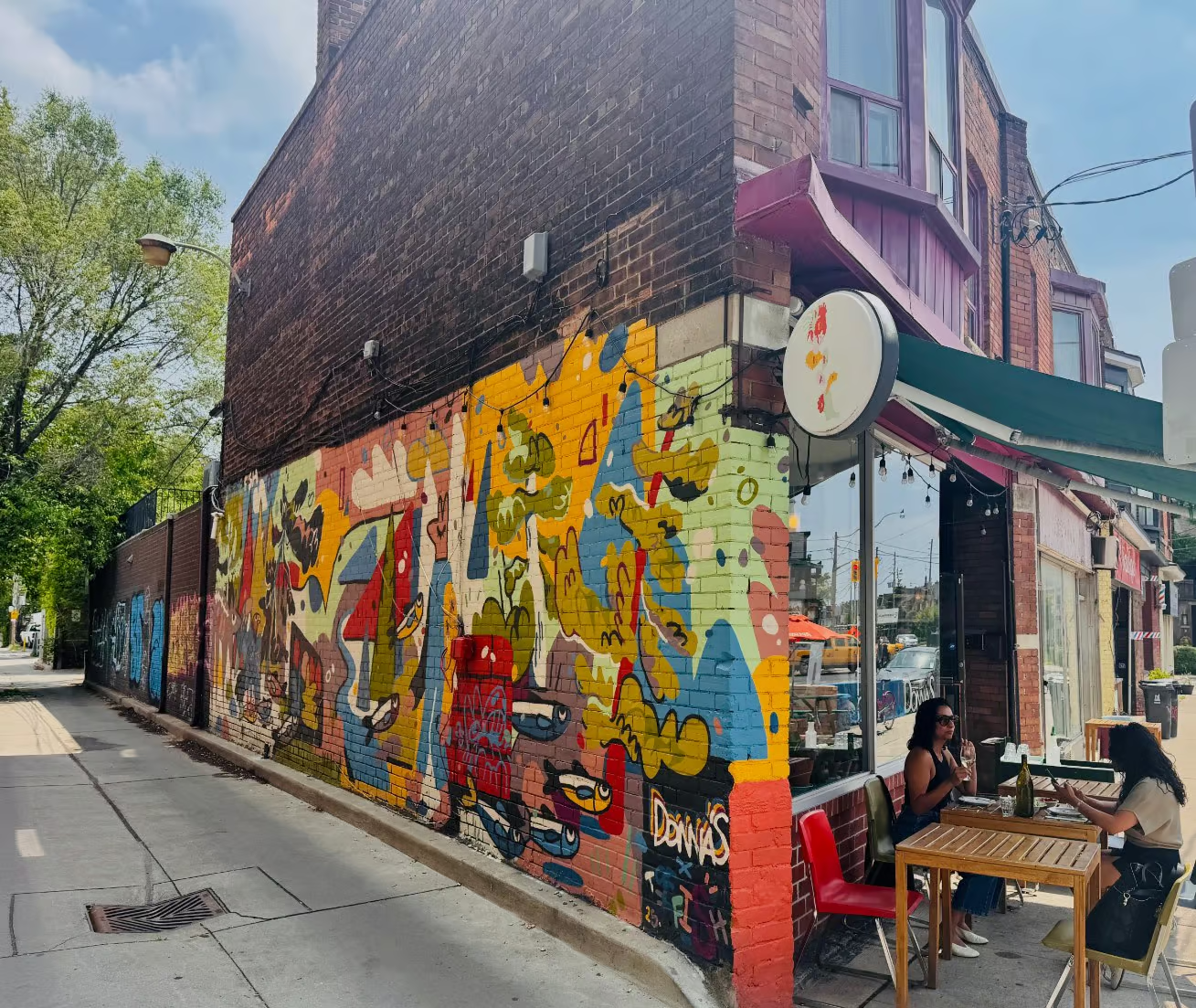
The murals are still wet. The vintage shops are still independently owned. Sugo is full by six. This is a neighbourhood with a genuine vibe, the kind that cannot be manufactured or imported from somewhere else. Young families pushing strollers past century-old rowhouses. Dog owners who all seem to know each other. A close-knit community that debates, organises, and looks out for itself with an energy you feel the moment you arrive. The neighbourhood Facebook groups and online forums are some of the most active in the West End. People here are not passive residents. They are invested ones.
And at the corner of Dufferin and Dupont, a crane sits over what will become one of the most significant neighbourhood transformations in Toronto’s West End in a generation.
Wallace Emerson has always attracted people who see things before they are obvious: the creative types, the young families who wanted character and community without the Trinity Bellwoods price tag, the buyers who trusted their instincts over the consensus. Right now, what they are seeing is a neighbourhood on the edge of something real. Kathy Essery and Pavlena Brown of Nested Real Estate have been watching this pocket closely for years. The Galleria redevelopment is not background noise. It is the story.
The Neighbourhood at a Glance
Located between Dufferin to the east, Symington and Lansdowne to the west, Dupont to the north, and Bloor to the south, Wallace Emerson sits in the heart of Toronto’s West End with subway access at both Lansdowne and Dufferin stations, the Bloor streetcar running along its southern edge, and the West Toronto Railpath connecting cyclists and pedestrians south toward the city core.
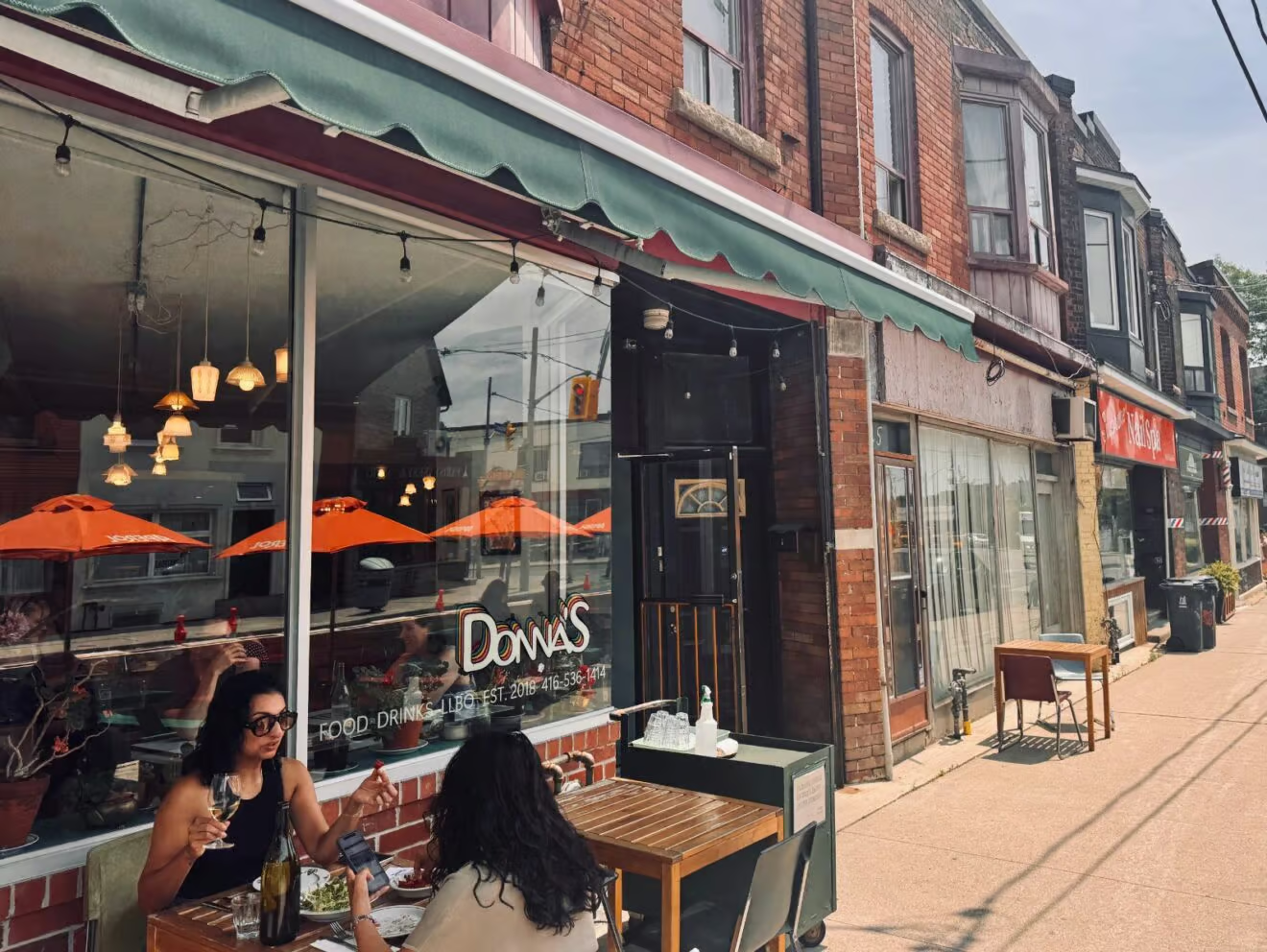
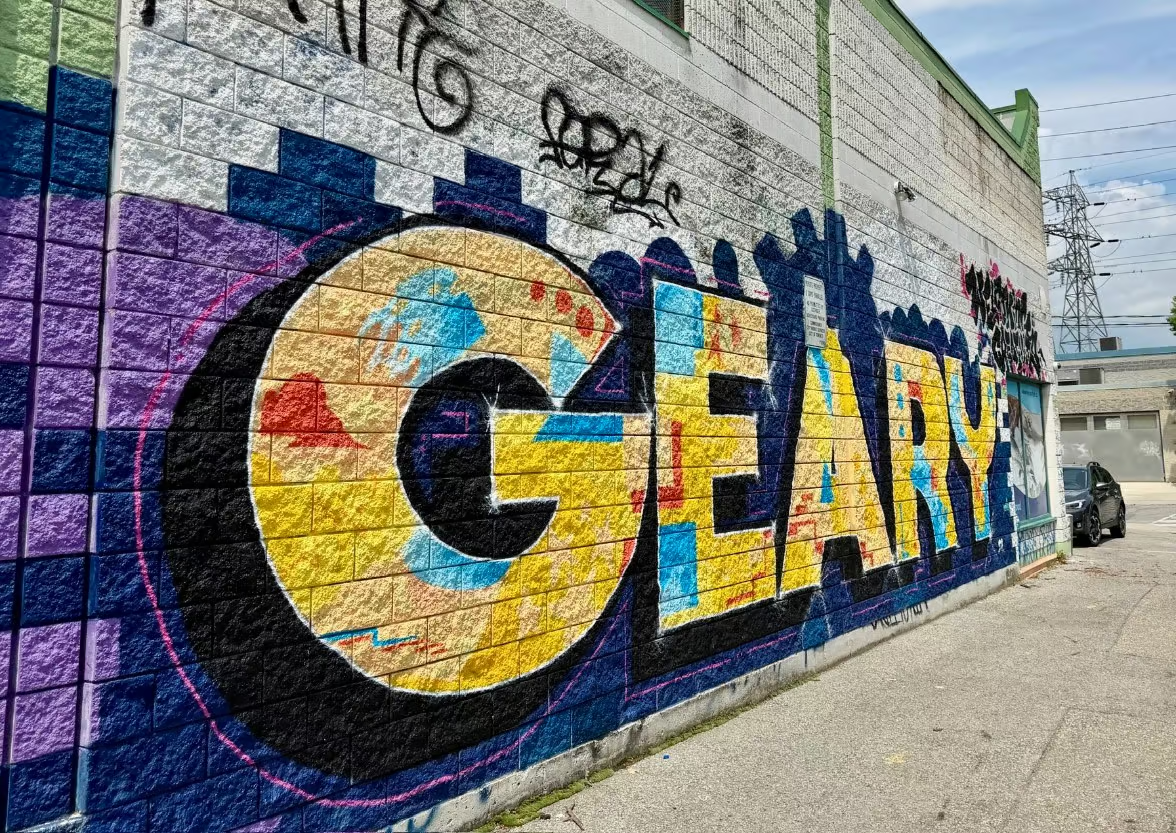
The vibe is creative, independent, and culturally layered. Geary Avenue to the north has become one of the city’s most talked-about creative and dining corridors. Bloor Street West delivers the daily rhythm. And the Galleria on the Park redevelopment at Dufferin and Dupont is reshaping the northern edge of the neighbourhood in real time.
Freehold homes range from $900K to $1.5M. Entry-level condos start from $500K. For families, Pauline Junior Public School and Bloor Collegiate Institute serve the neighbourhood, with a new childcare centre arriving as part of the Galleria community centre in 2027.
This is a neighbourhood best suited to early-adopter buyers, young families, and professionals who want genuine West End character and the kind of upside that comes from buying ahead of a transformation that is already underway.
The History of Wallace Emerson
Wallace Emerson grew up around the railways.
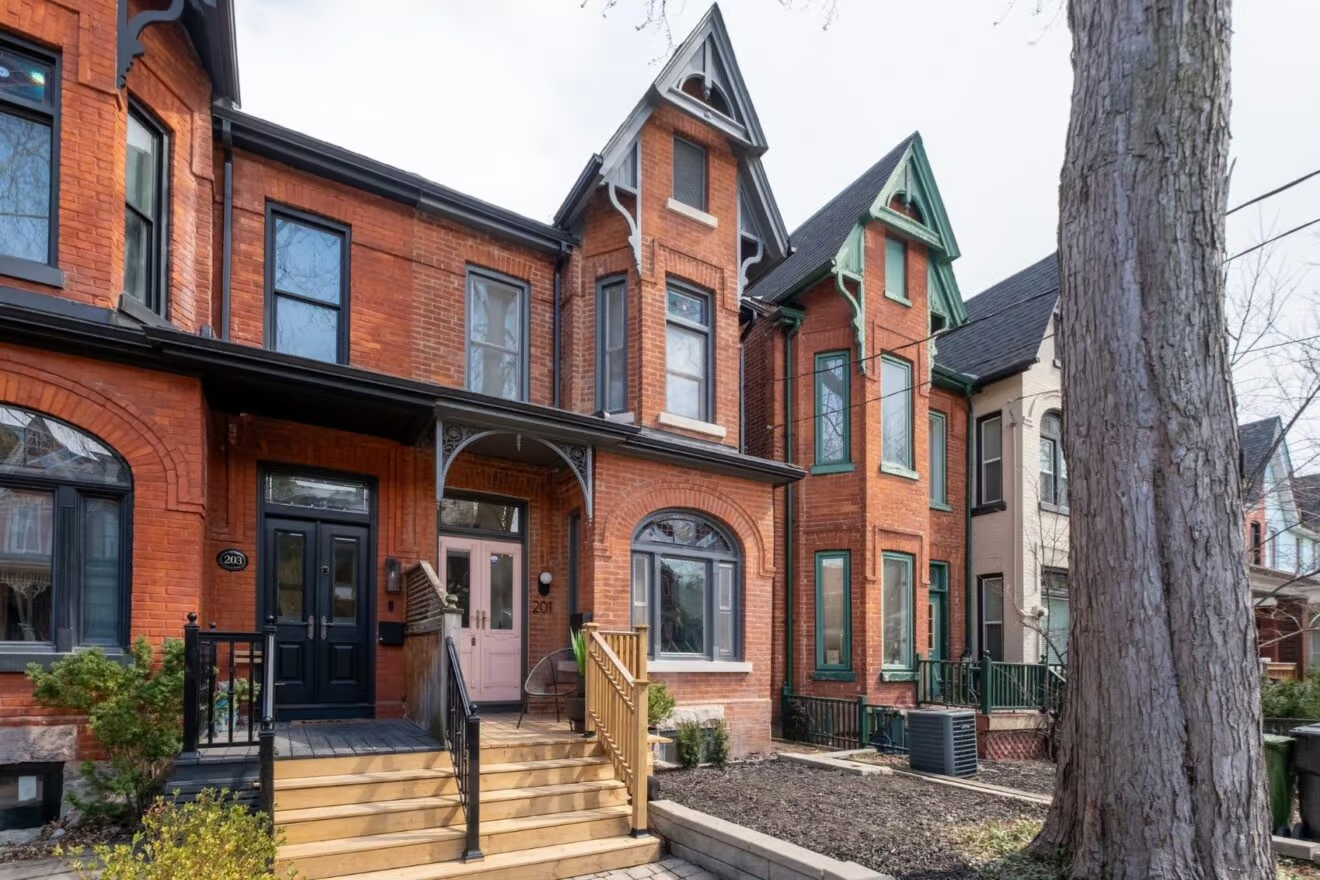
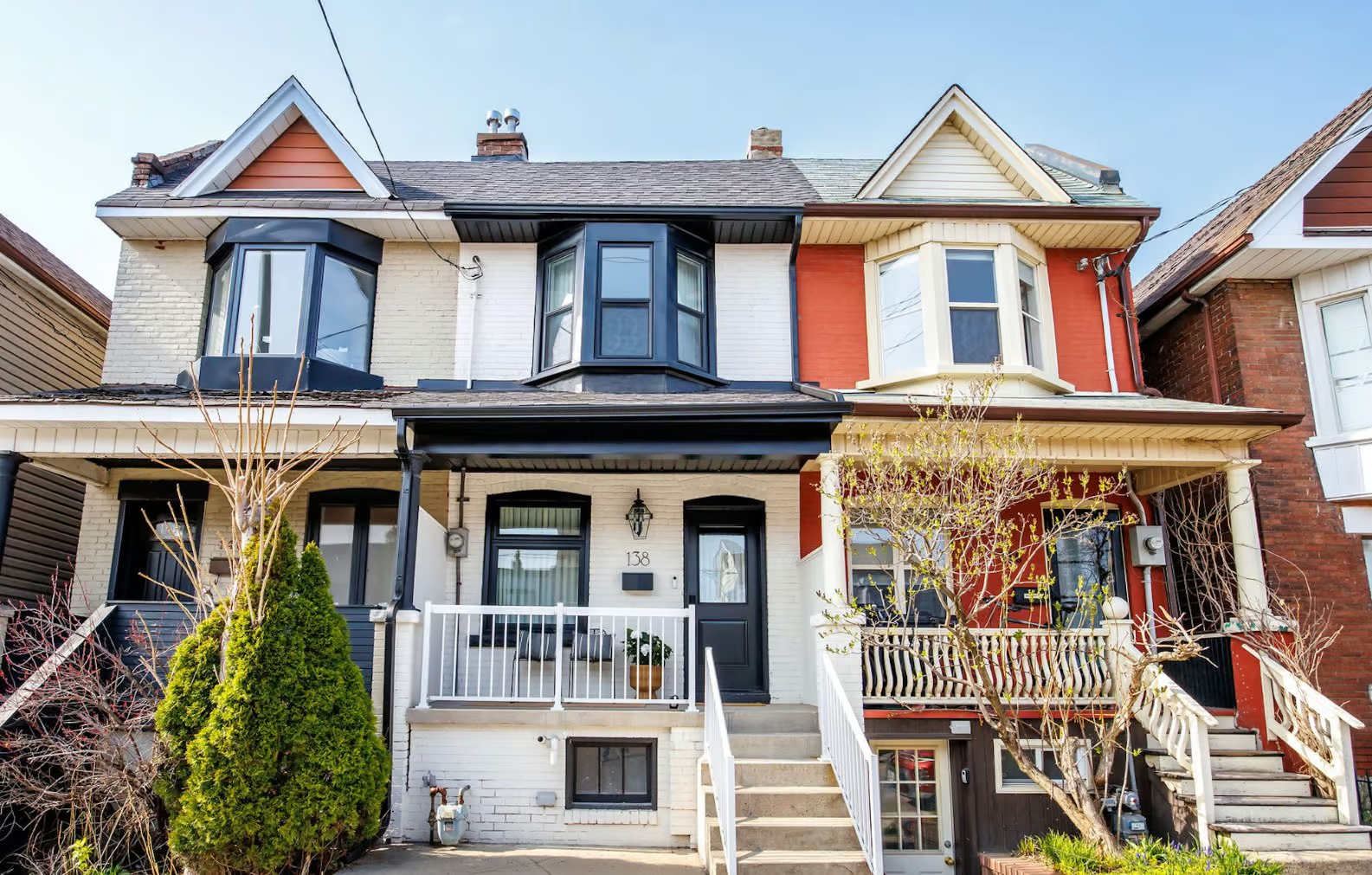
The neighbourhood took shape in the late 19th century, established along the CP/CN rail lines that ran through this part of the city. It attracted working-class families, factory workers, and a steady wave of immigrants: Portuguese, Italian, Korean. They planted themselves here, built communities, and stayed. The evidence is still visible everywhere: the brightly painted Victorian rowhouses, the Portuguese social clubs, the laneways that once served industrial yards and now connect a neighbourhood that has quietly reinvented itself several times over without losing its character.
What Wallace Emerson has never been is generic. It has always had a particular kind of resident. Independent-minded, drawn to affordability and authenticity over polish, willing to find something before the rest of the city catches up. The neighbourhood rewards that instinct. It has done so for decades. It is doing so again right now.
Types of Homes in Wallace Emerson
Wallace Emerson is primarily a neighbourhood of Victorian and Edwardian rowhouses, semi-detached homes, and detached houses on streets that are narrower than elsewhere in the West End. That narrowness gives them an intimacy that buyers either love immediately or grow to love over time.
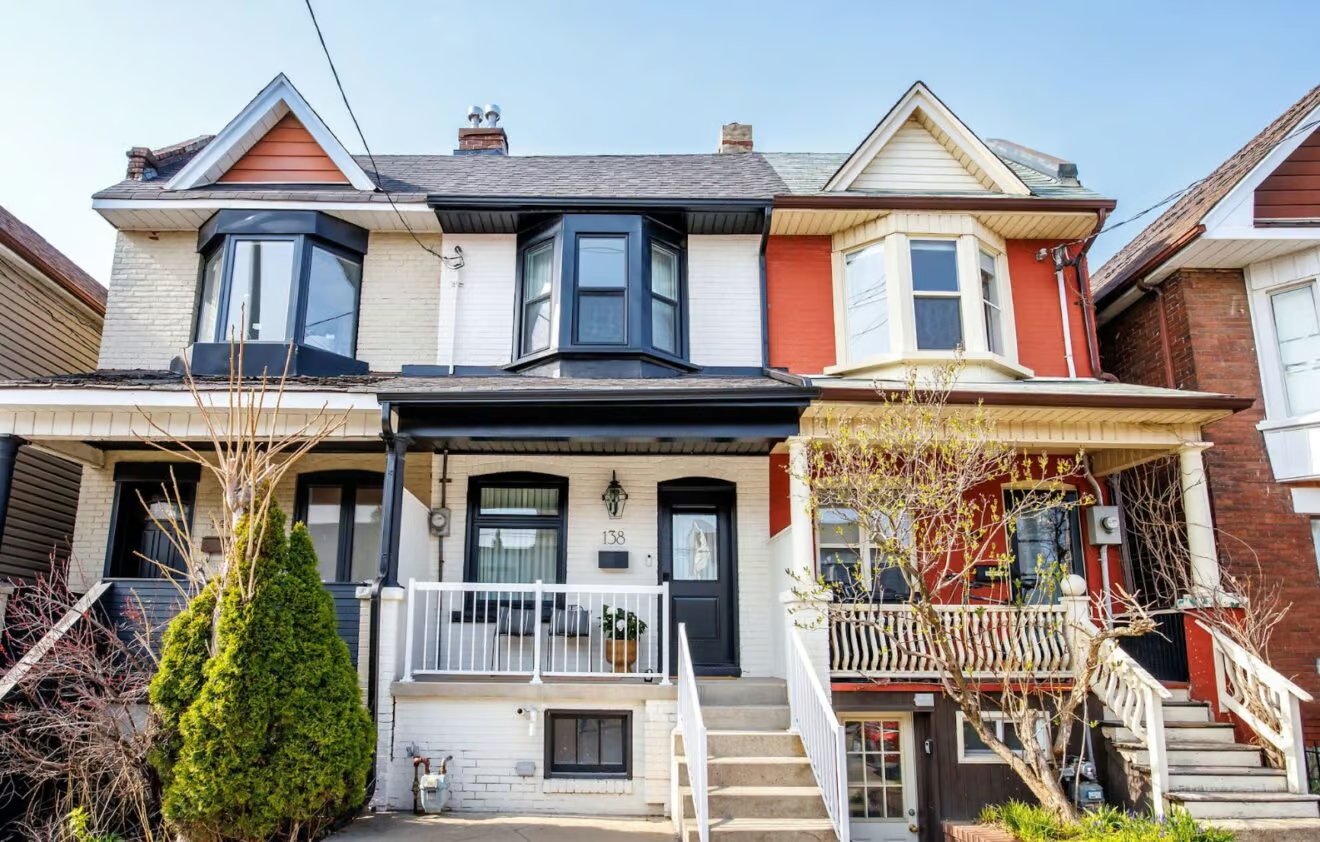
The housing stock is genuinely varied. Lovingly renovated homes sit next to untouched originals with exceptional bones and clear potential. Modern laneway houses have appeared on back streets where artists and architects have made something remarkable out of overlooked spaces.
The neighbourhood also has a meaningful condo offering: established buildings along Bloor and the new Galleria on the Park towers coming online as the redevelopment progresses. Together they give buyers entry points at a wide range of price points.
If you’re selling a home, staging and marketing matter as much here as the price you set, especially with the Galleria redevelopment changing how this neighbourhood is perceived. See how we sell West End homes.
For home buyers who want genuine West End character, architectural depth, and real room to grow, Wallace Emerson delivers all three. It is a neighbourhood that rewards conviction.
What Do Homes Cost in Wallace Emerson in 2026?
Wallace Emerson is one of the most accessible freehold markets in Toronto’s West End — and one of the most strategically positioned given what is coming.
In 2026, here is what to expect:
Semi-detached homes in Wallace Emerson typically range from $1M to $1.5M. The neighbourhood’s Victorian and Edwardian stock is consistently strong on bones, with renovation levels affecting price and varying significantly from home to home. For buyers who know what to look for, the less renovated homes offer a great opportunity into the market.
Detached homes generally range from $1.2M to $1.6M, heavily depending on the size and renovation level. Relative to immediate neighbours like Brockton Village and Roncesvalles, the value here is real and it is measurable. Limited inventory means well-priced, well-presented properties move with conviction.
Condos and lofts start from approximately $550K and over, spanning established buildings along the Bloor corridor and new Galleria on the Park units coming online as the redevelopment progresses. For buyers who want a West End address at an accessible entry point, this pocket offers options that most of the surrounding neighbourhoods no longer can.
The Galleria redevelopment context matters here. Eight residential towers, 2,700+ units, 27,000 square metres of retail, a new community centre, and a redesigned park are being delivered into a neighbourhood where freehold prices have not yet fully reflected what that investment means. That gap is narrowing.
Who Lives in Wallace Emerson?
Wallace Emerson has always been a neighbourhood for people who were looking for something the more established pockets could not offer. A combination of affordability, authenticity, and creative energy that is increasingly rare in Toronto’s West End.
The Portuguese and Italian communities that built this neighbourhood over decades are still present, still visible in the social clubs, the churches, and the food. Alongside them, a younger wave of residents has arrived: artists, musicians, young families, independent business owners drawn by the laneways, the Geary Avenue creative corridor nearby, and price points that still make first ownership in the West End achievable.
These are not passive buyers waiting to be told a neighbourhood is good. They are the kind of people who make a neighbourhood good. And they have been arriving in Wallace Emerson for long enough that the evidence is everywhere.
The Galleria on the Park Redevelopment
This is the story that changes everything.
The Galleria Mall at Dufferin and Dupont, a 1970s-era mall that had been described as a greyfield for years, is being replaced by one of the most ambitious master-planned communities in Toronto’s West End, Reimagine Galleria. Designed by Hariri Pontarini Architects and developed by Freed Developments and Elad Canada, the Reimagine Galleria project encompasses eight residential towers, over 2,700 units, 27,000 square metres of retail space, a diagonal pedestrian road connecting Dufferin and Dupont, and a completely reimagined Wallace Emerson Park.
The new Wallace Emerson Community Recreation Centre is 75,000 square feet, with an aquatic centre, gym, running track, dance studios, and a purpose-built childcare facility. It is under construction now and set to open in Winter 2027. It will be one of the most significant public amenity investments in the West End in years.
For buyers, the implications are direct. Neighbourhoods that receive this level of public and private investment: new park space, new community infrastructure, new retail, new transit-connected density, consistently see sustained price appreciation in the surrounding freehold market. The timeline is not speculative. The cranes are up. The community centre opens next year.
Bloor Street West & The Geary Corridor
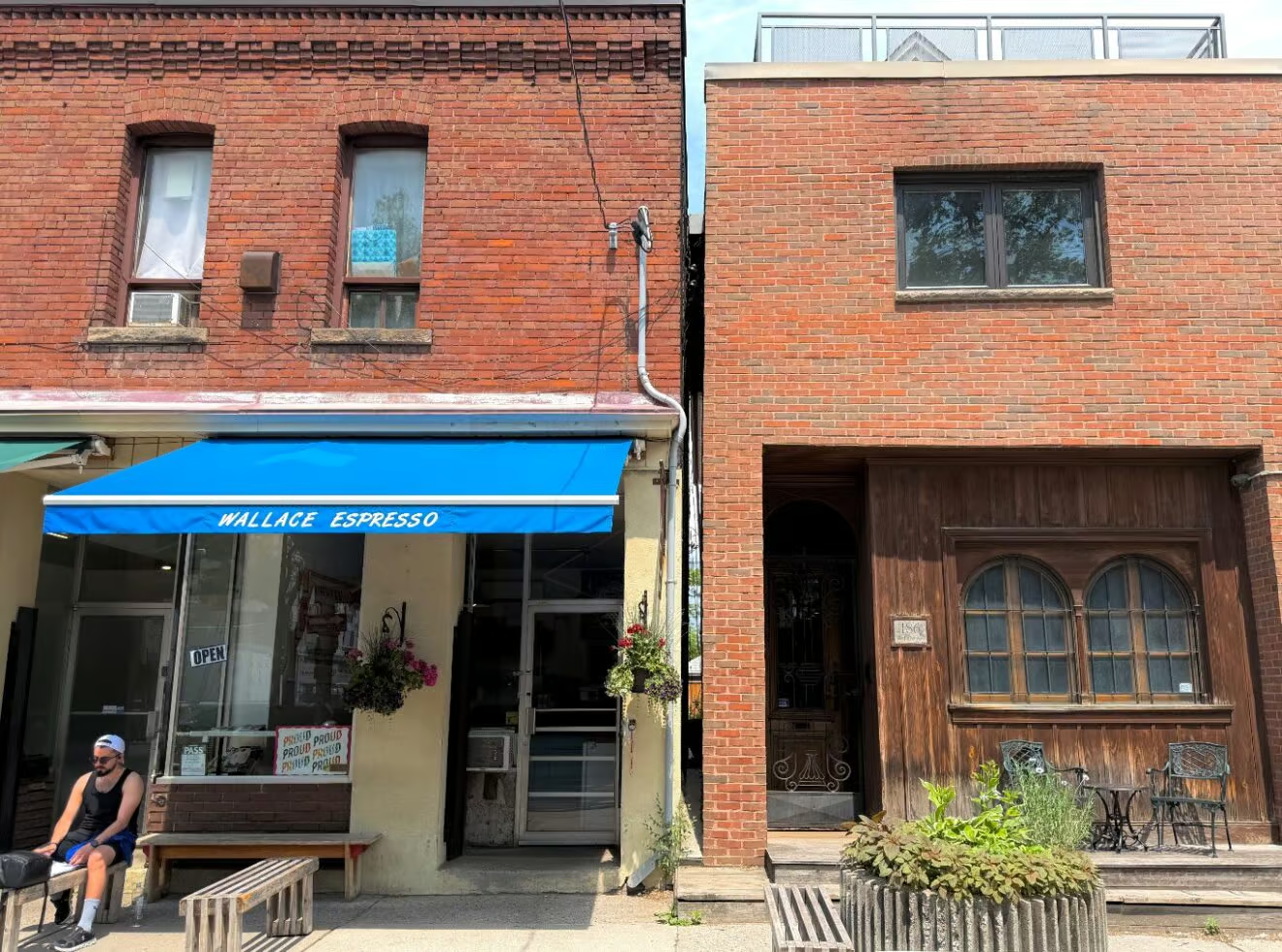
Bloor Street West through Wallace Emerson has the layered, unfiltered energy of a strip that is still figuring out what it wants to be. That is exactly what makes it interesting.
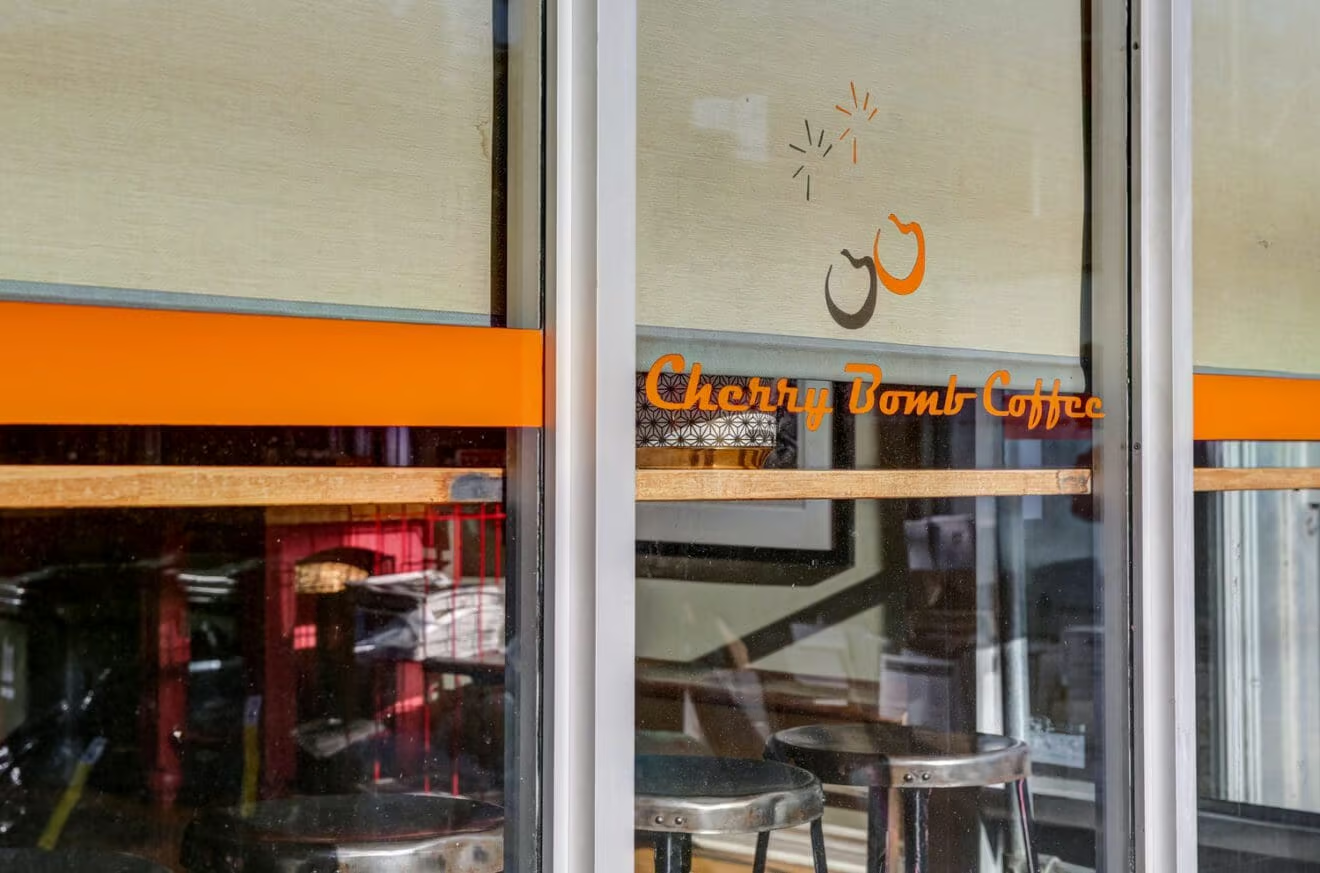
Sugo at Bloor Street West and Lansdowne is one of the city’s most talked-about Italian restaurants, packed and genuine in equal measure. Burdock on Bloor West has been a neighbourhood anchor for years: a brewery, a record shop, and a live music venue occupying the same building in a way that could only work in a neighbourhood like this one. General Public on Geary, from Jen Agg, brought a destination-level restaurant to an industrial corridor and the neighbourhood absorbed it without a flinch.
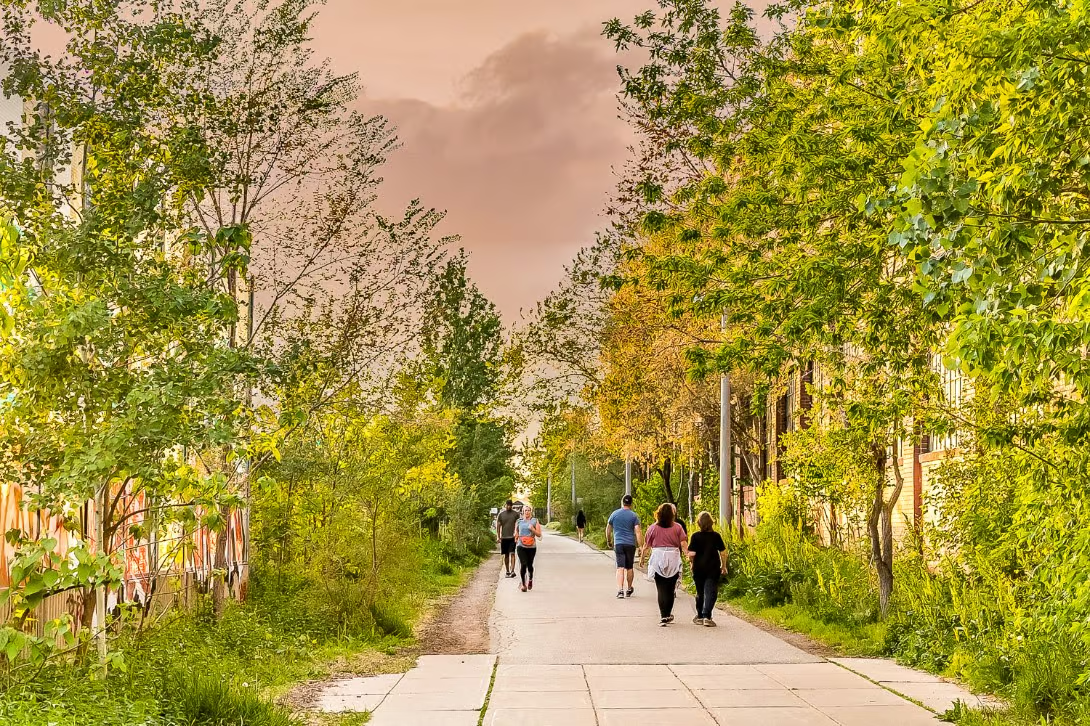
The West Toronto Railpath runs along the neighbourhood’s eastern edge, a reclaimed linear park that connects cyclists and pedestrians south toward Dundas West Station. It has been compared favourably to New York City’s High Line for its combination of public art, green space, and genuine urban utility.
Every July, the BIG on Bloor Festival transforms Bloor Street West from Dufferin to Lansdowne into one of the West End’s most vibrant community celebrations. Local artists, musicians, and independent vendors fill the street, and the murals they leave behind stay on the buildings long after the festival ends.
Schools & Transit In Wallace Emerson
Schools:
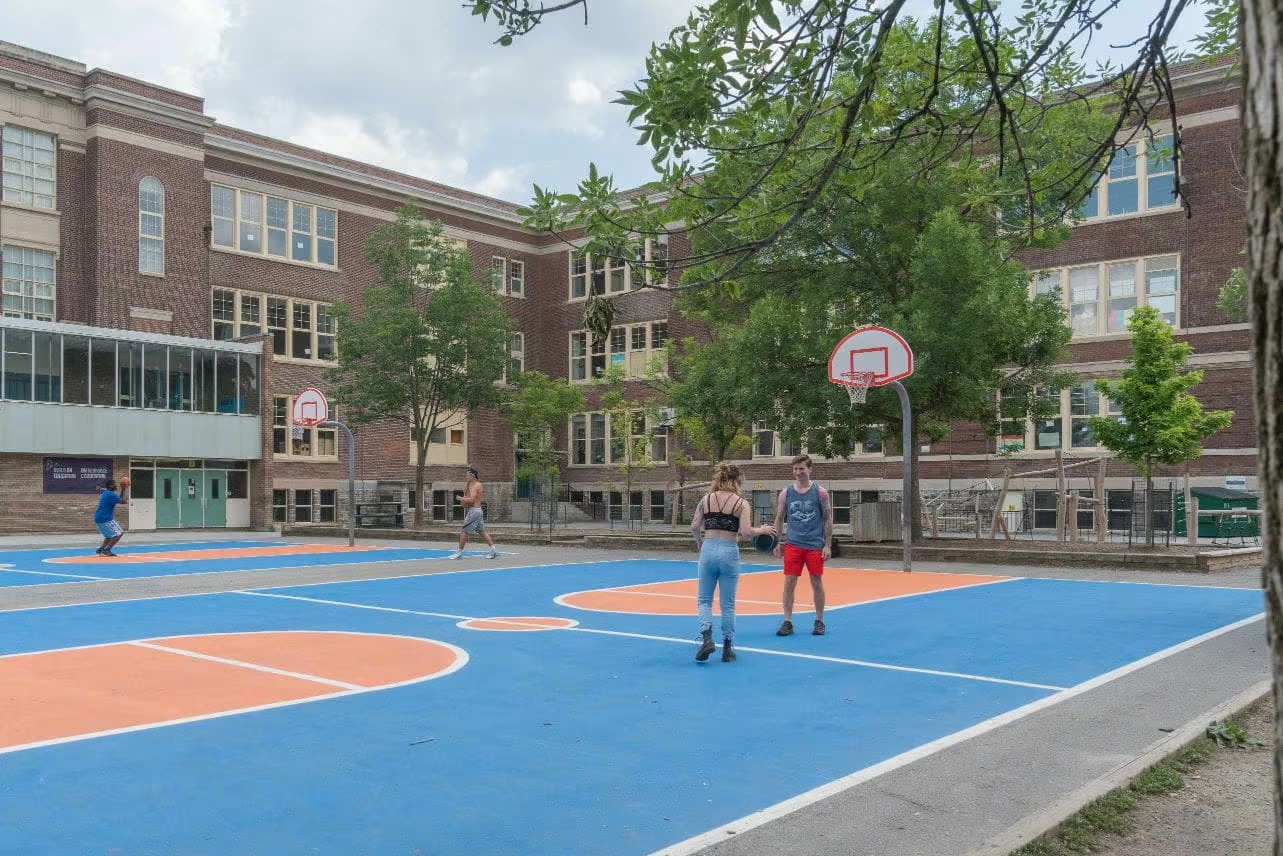
Public elementary: Pauline Junior Public School is the main catchment school within the neighbourhood. Perth Avenue Junior Public School is also nearby.
Catholic elementary: St. Sebastian Catholic School is located directly within the neighbourhood boundaries, confirmed by the City of Toronto’s own streets plan.
Public secondary: Bloor Collegiate Institute is the catchment high school.
Catholic secondary: Bishop Marrocco/Thomas Merton Catholic Secondary School at 1515 Bloor Street West serves Catholic families in the area.
Transit:
Lansdowne and Dufferin stations on the Bloor-Danforth subway line sit at either edge of the neighbourhood. The Bloor streetcar provides east-west surface transit along the southern boundary.
The West Toronto Railpath runs along the neighbourhood’s eastern edge: a 3-kilometre car-free trail along a former CP Rail corridor, connecting Dundas Street West in the south to Caribou Road near Bloor in the north. It is well-lit, lined with public art, and used daily as a genuine commuter route, not just a recreational path. For Wallace Emerson residents, it provides a direct, traffic-free connection south toward the Junction Triangle and Dundas West Station.
Dundas West Station is one of the most connected transit hubs in the West End. From there, residents have access to the Bloor-Danforth subway, the Dundas streetcar, and the UP Express, which runs directly to Union Station in nine minutes and to Pearson International Airport in 25 minutes. No transfers, no traffic. Union Station in under ten minutes is something most Toronto neighbourhoods cannot offer at any price point.
For a neighbourhood at this price point, the transit access is exceptional.
Wallace Emerson vs. Brockton Village
They share a boundary along Bloor Street but they are distinct in feel.
Brockton Village to the south is quieter and more settled. A residential neighbourhood with deep cultural roots that is evolving steadily and on its own terms. Wallace Emerson is more openly in transition. It has more edge, more industrial texture, and a level of infrastructure investment coming that Brockton Village simply does not have in the same concentrated form. The Galleria redevelopment sits entirely within Wallace Emerson. That distinction matters for buyers thinking carefully about where the next five years of appreciation is most likely to be concentrated.
Both neighbourhoods offer real value relative to Roncesvalles and Trinity Bellwoods. Wallace Emerson offers something additional: a specific, time-limited window to buy ahead of a transformation that is already underway and impossible to ignore.
Working with Nested in Wallace Emerson
Wallace Emerson rewards buyers who understand it. The micro-geography matters here more than in most West End neighbourhoods: which streets are best positioned relative to the Galleria redevelopment, where the Railpath connectivity adds long-term value, and how the new community centre changes the calculus for families considering this pocket seriously.
Kathy Essery and Pavlena Brown of Nested Real Estate have been selling homes exclusively in Toronto’s West End since 2012. They have watched Wallace Emerson evolve through multiple cycles. They know the streets that are quietly outperforming, the homes with more potential than a first showing reveals, and what the current moment of transformation actually means for buyers and sellers who want to get ahead of it rather than catch up to it.
If you’re thinking about buying a home, here’s how we help you buy in the West End.
hello@getnested.ca · getnested.ca · 416-909-1602
Wallace Emerson Frequently Asked Questions
Wallace Emerson is one of the West End’s most creatively energetic and genuinely diverse neighbourhoods. Bloor Street West delivers an eclectic mix of independent shops, restaurants, and venues. The Geary Avenue corridor nearby has become a destination in its own right. And the Galleria on the Park redevelopment means the neighbourhood is in the early stages of a transformation that will significantly reshape it over the next five years.
For buyers with a long view, Wallace Emerson is one of the most strategically positioned freehold markets in Toronto’s West End right now. The Galleria redevelopment: eight towers, a new 75,000 square foot community centre, redesigned parkland, and significant new retail, is delivering a level of public and private investment that freehold prices have not yet fully absorbed. The window is real and it is finite.
Semi-detached homes typically range from $900,000 to $1.2 million. Detached homes generally range from $1.1 million to $1.5 million. Condos start from approximately $500,000 in established buildings, with new Galleria on the Park units available at a range of price points. Wallace Emerson remains one of the most accessible freehold entry points in Toronto’s West End.
The new 75,000 square foot Wallace Emerson Community Recreation Centre is part of the Reimagine Galleria Master Plan and is scheduled to open Winter 2027. It will include an aquatic centre, gym, running track, dance studios, fitness areas, and a purpose-built childcare centre.
Both neighbourhoods offer Victorian and Edwardian character homes at accessible West End price points. Brockton Village is more settled and residential in feel. Wallace Emerson has more industrial texture and creative energy, and it carries the specific catalyst of the Galleria redevelopment, a scale of investment that Brockton Village does not have in the same concentrated form.
Thinking about buying or selling in Wallace Emerson? Kathy and Pavlena at Nested Real Estate have been selling exclusively in Toronto’s West End since 2012. Get in touch at hello@getnested.ca or getnested.ca.