

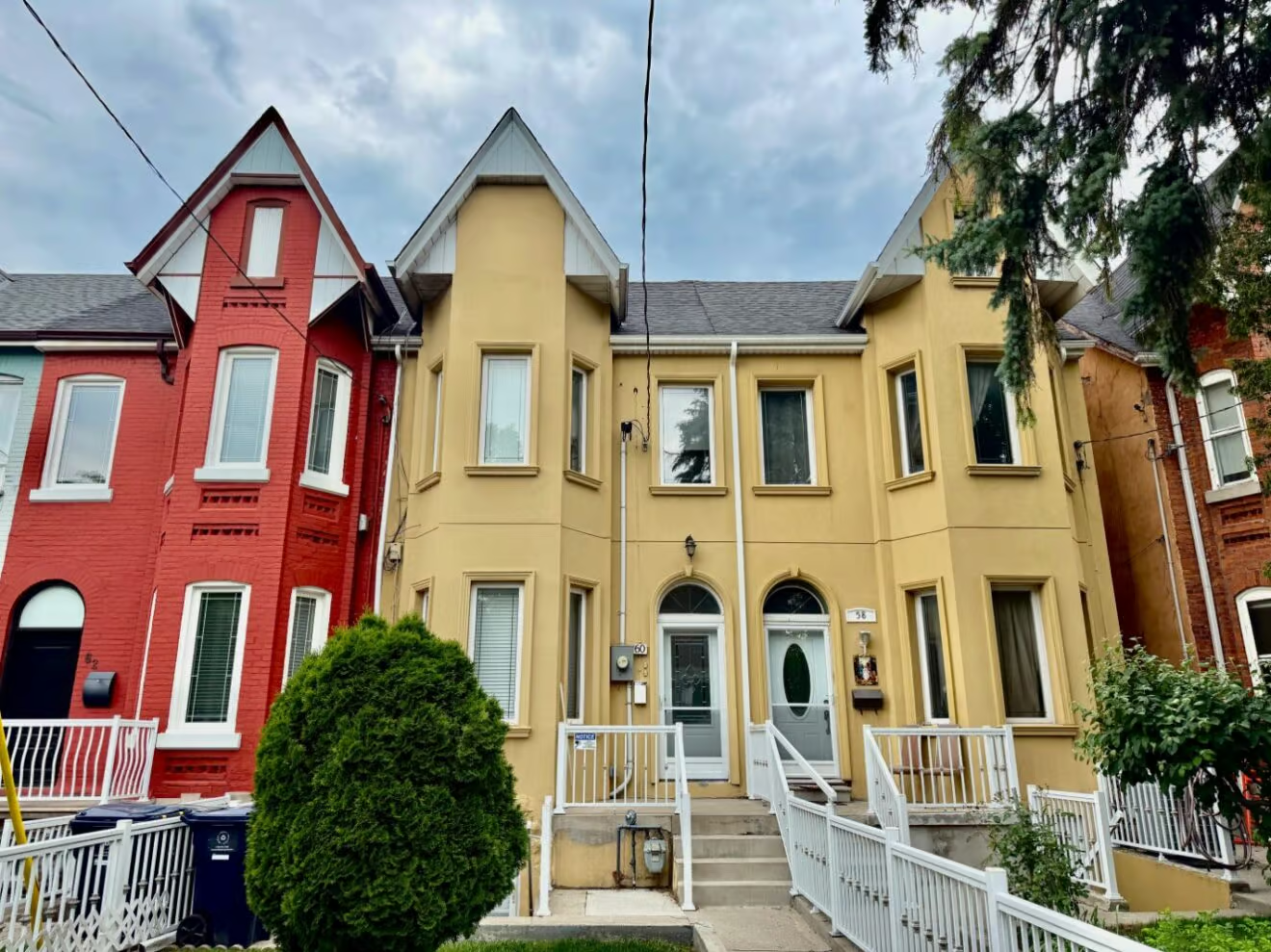
There is a particular kind of afternoon on Dundas Street West that tells you everything you need to know about Brockton Village. The Brockton Village Bakery is doing its usual business. A few tables outside Imanishi are filling up. The metal street signs that say “Village of Brockton” catch the late sun, and someone is walking a dog past a Victorian rowhouse painted a shade of blue that only works because the whole street earns it.
This neighbourhood does not announce itself. It does not need to. Brockton Village has been quietly doing its own thing for long enough that the people who live here have stopped feeling the need to explain it to anyone.
After more than a decade selling real estate across Toronto’s West End, Kathy Essery and Pavlena Brown of Nested Real Estate will tell you something they have observed consistently: the buyers who find Brockton Village and actually look at it closely almost always wish they had looked sooner.
The Neighbourhood at a Glance
Brockton Village sits south of Bloor Street, bounded by Dufferin to the east, Lansdowne to the west, College to the north, and Bloor and Queen to the south. It is one of the most walkable and community-rooted pockets in Toronto’s West End, with Dundas Street West running through its heart and two streetcar lines connecting residents directly to the downtown core.
The vibe is unpretentious, culturally rich, and genuinely community-rooted. This is the West End before it became expensive, and it still carries that quality in its streets, its shops, and the people who choose it.
Dundas Street West is the neighbourhood anchor: the Brockton Village Bakery, Imanishi, Good Fork, and the Portuguese institutions that have defined this strip for decades. Freehold homes range from $900K to $1.6M for detached and semi-detached properties, making Brockton Village one of the most accessible character home markets in the West End.
For families, Brockton Public School and Pauline Junior Public School serve the neighbourhood at the elementary level. The Dundas streetcar, College streetcar, and Lansdowne and Dufferin bus routes connect north to the Bloor-Danforth subway, putting the rest of the city within easy reach.
This is a neighbourhood best suited to buyers who want genuine West End character, strong community roots, and a price point that Roncesvalles and Trinity Bellwoods can no longer offer.
The History of Brockton Village
Brockton Village has been defying expectations since before it was even part of Toronto.
Incorporated as a village in 1881 and named after Captain James Brock, a cousin of War of 1812 hero Sir Isaac Brock, the neighbourhood was settled in the 1840s by Irish immigrants who worked in the area’s rope-making factories and farmed the surrounding land. Only three years after incorporation, Brockton had accumulated significant debt and voted to amalgamate with the City of Toronto in 1884, making it one of the earliest communities absorbed into what would become modern Toronto. The former Brockton Village Town Hall, built in 1882, still stands on the south-west corner of Dundas Street and Brock Avenue.
Over the latter half of the 20th century, a wave of Portuguese and Brazilian immigrants transformed the neighbourhood, establishing the cultural institutions, bakeries, restaurants, and community ties that define Brockton Village to this day. The Little Portugal Business Improvement Area along Dundas Street West is their legacy. St. Helen’s Parish, a Gothic Revival church built in 1909, anchors the neighbourhood visually and historically. Brockton Village wears its layers openly. You can read a century of Toronto history just by walking its streets.
Types of Homes in Brockton Village
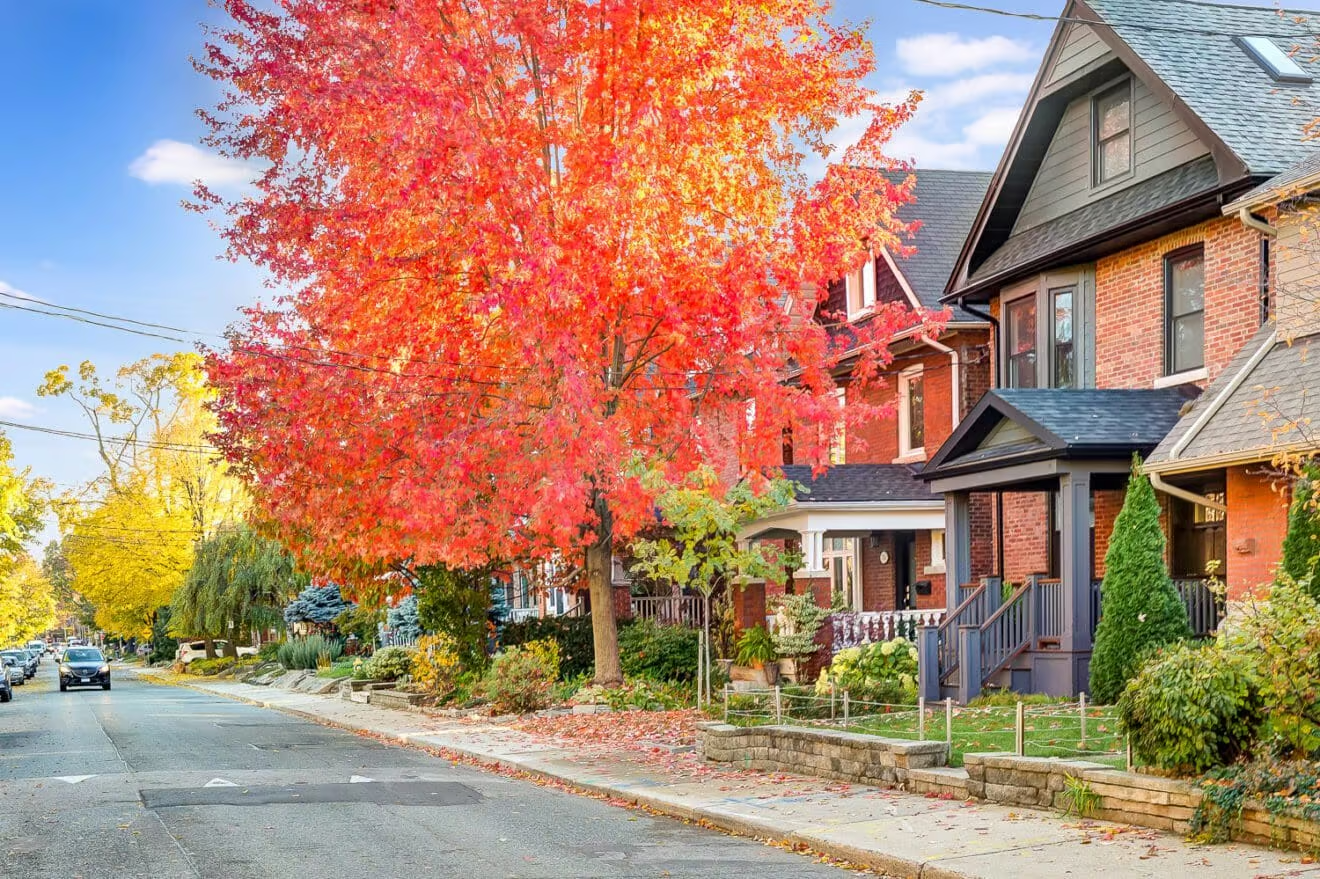
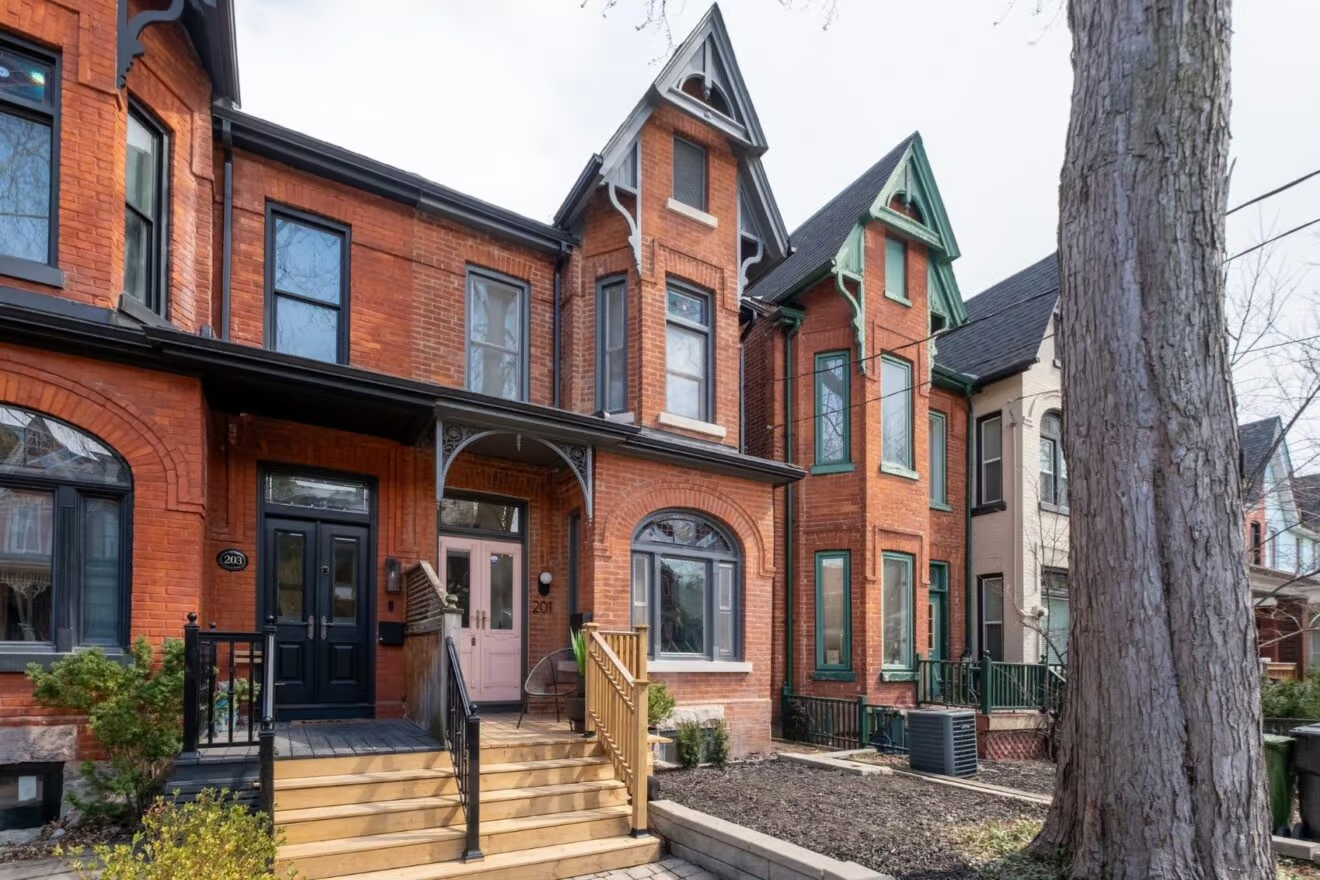
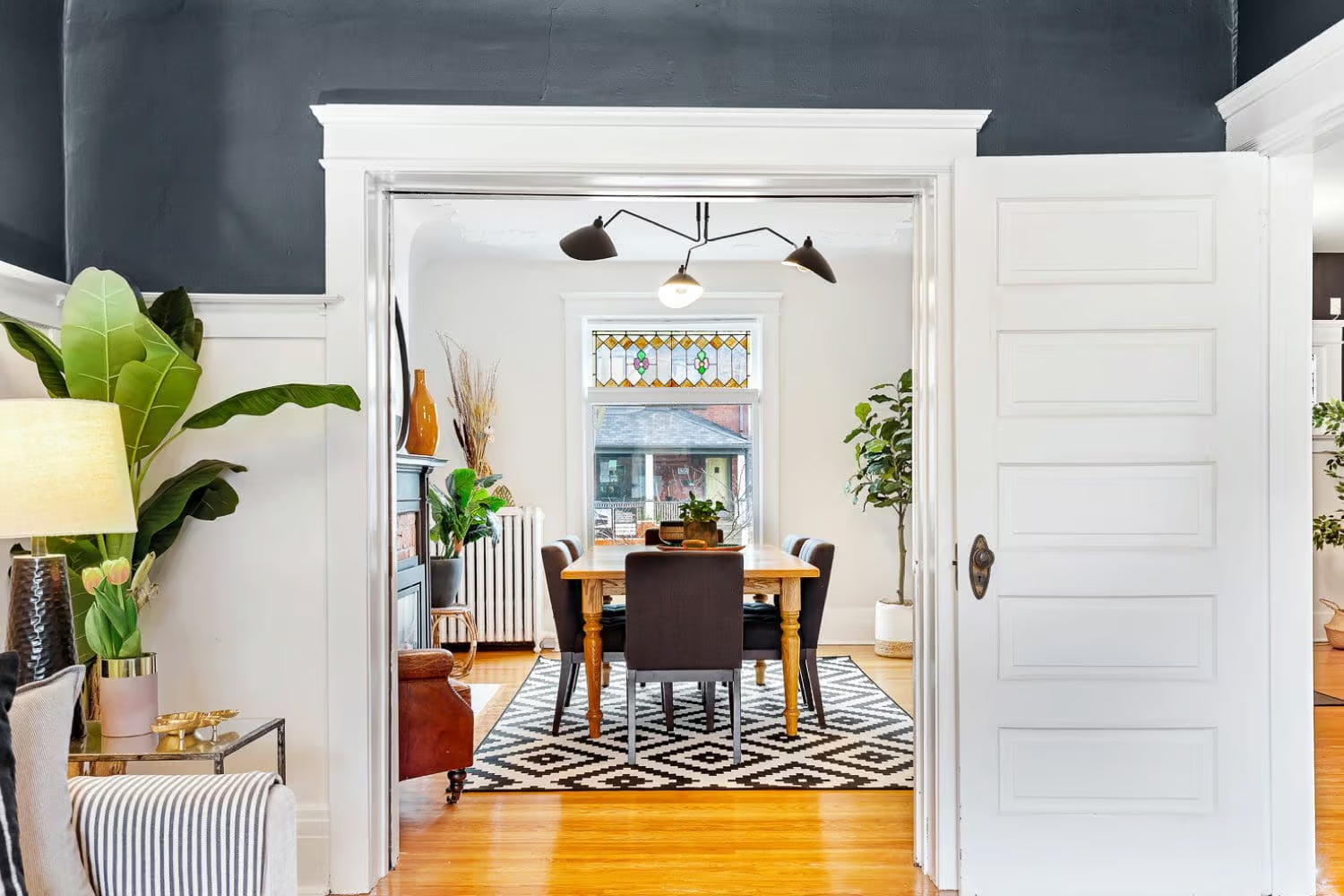
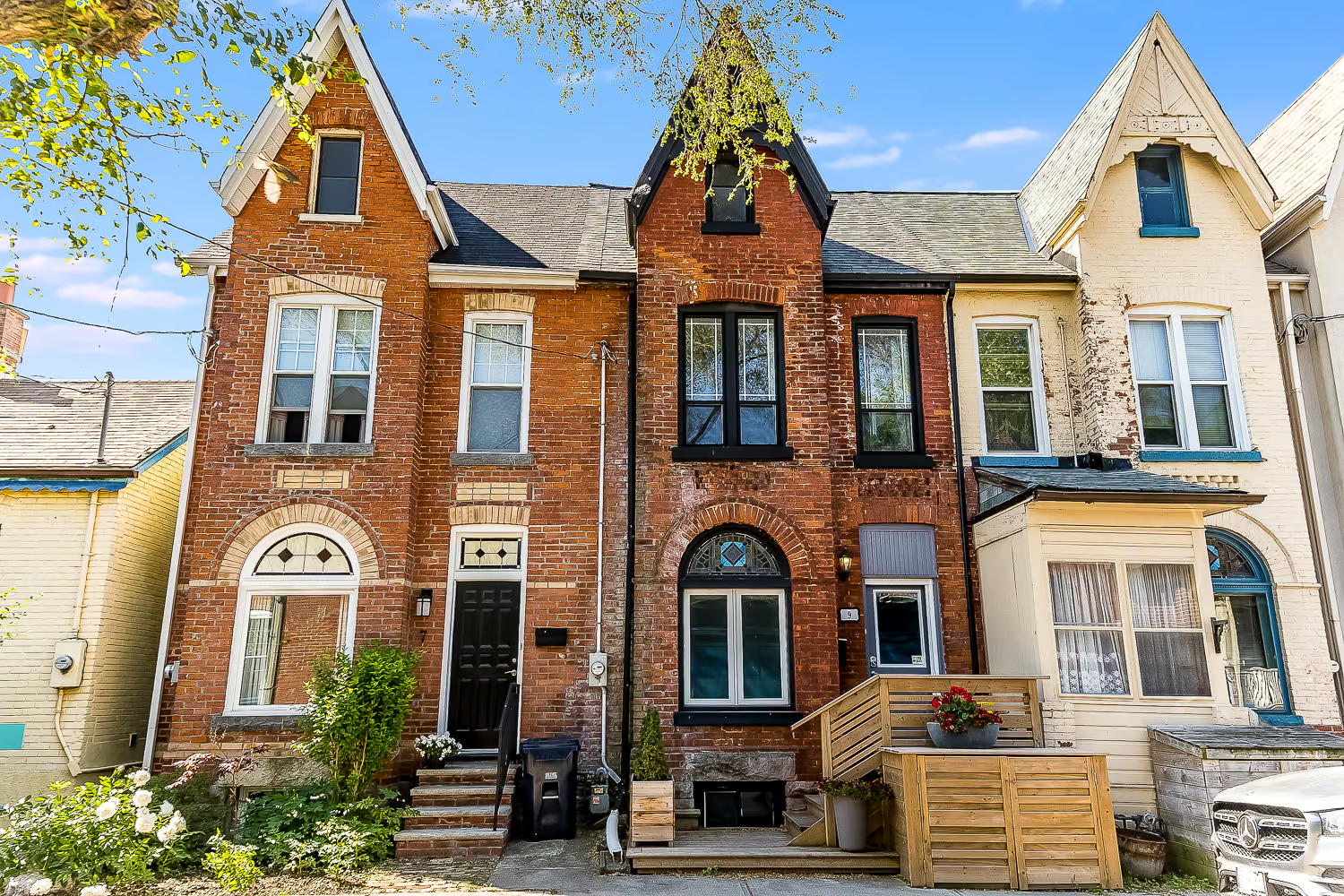
The Victorian semi-detached is the defining home type in Brockton Village. Built primarily between 1880 and 1920, these homes have the architectural detail that only comes with age: front porches with decorative columns, bay windows, wrought iron railings, narrow lots with rear laneway parking, and the kind of brick and millwork that newer construction simply does not attempt. Many are painted in the brightly coloured tradition of the Portuguese community that shaped this neighbourhood, which gives the residential streets a visual warmth that is entirely their own.
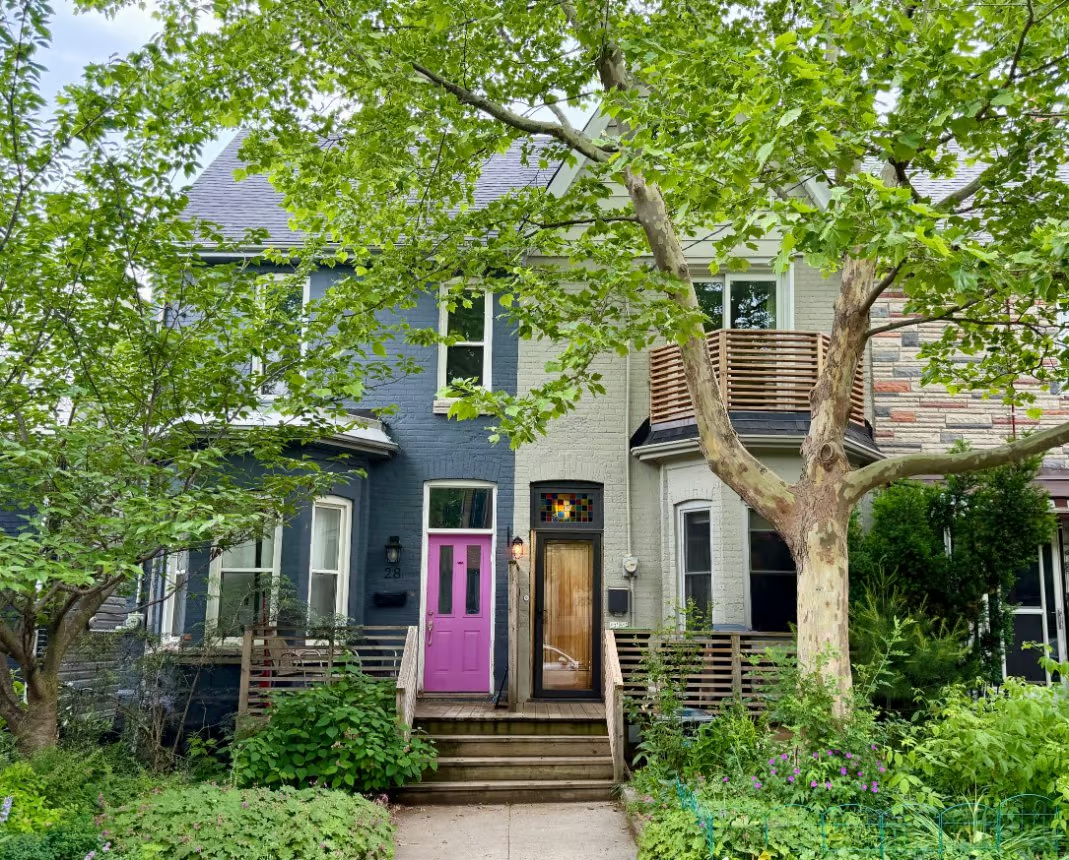
Detached homes exist here and they are worth paying close attention to. Because the neighbourhood’s housing stock skews heavily toward semi-detached, the average sale price does not fully reflect what a well-located detached home in Brockton Village is actually worth. Buyers who understand that distinction and move on a detached property when one comes to market are consistently well-positioned. They are getting a home type that trades at a discount to comparable detached stock in Roncesvalles and Trinity Bellwoods, in a neighbourhood surrounded by both.
Townhouses in Brockton Village offer two distinct experiences. The older Victorian rowhouses carry the same bones and character as the neighbourhood’s semis: narrow footprints, front porches, original brick, and the kind of street presence that holds its value over the long term. Florence Avenue is home to newer townhouse developments that bring a more contemporary option into the mix, with modern finishes, private outdoor space, and layouts designed for the way people live today. For buyers who want freehold ownership in Brockton Village with a turnkey finish, Florence Avenue is worth a close look.
Condos and lofts round out the options for buyers seeking a lower-maintenance entry point into Brockton Village. Select conversions of older industrial and commercial buildings have produced boutique loft spaces with exposed brick and high ceilings that suit the neighbourhood’s character well. For buyers who want to be part of this pocket without the commitment of a freehold property, the condo options here are modest in number but strong in personality.
Renovation levels vary significantly across the neighbourhood. Some homes have been fully updated and are completely turnkey. Others retain strong original character with genuine potential for buyers who want to make something their own. The bones throughout are exceptional. That is the one constant.
What Do Homes Cost in Brockton Village in 2026?
Brockton Village represents one of the most compelling value propositions in Toronto’s West End. Buyers who understand the neighbourhood’s trajectory and its proximity to Trinity Bellwoods, Roncesvalles, and Little Portugal consistently find that the price gap relative to its neighbours is difficult to justify on fundamentals alone.
In 2026, here is what to expect:
Semi-detached homes in Brockton Village typically range from $1M to $1.3 million, depending on size, renovation level, and street. The neighbourhood’s Victorian and Edwardian semis offer strong square footage and original character detail at price points that have largely disappeared from Roncesvalles and Trinity Bellwoods.
Detached homes generally range from $1.3 million to $1.7 million. Well-located, well-presented detached properties represent genuine value relative to comparable homes in neighbouring pockets, and buyers who move decisively here are consistently rewarded.
Brockton Village is not a neighbourhood where buyers are chasing a trend. It is a neighbourhood where buyers with a sharp eye for value and genuine West End character are quietly getting ahead of one.
Who Lives in Brockton Village?
Brockton Village sits at the centre of some of the most sought-after real estate in Toronto’s West End, bordered by Roncesvalles to the west, Trinity Bellwoods to the east, and the creative energy of Wallace Emerson to the north. The remarkable thing is the price. You are surrounded by premium West End neighbourhoods on every side, and you are paying less than any of them.
The vibe is unpretentious, culturally rich, and genuinely community-rooted. This is the West End before it became expensive, and it still carries that quality in its streets, its shops, and the people who choose it.
Dundas Street West is the neighbourhood anchor: the Brockton Village Bakery, Imanishi, Good Fork, and the Portuguese institutions that have defined this strip for decades. Freehold homes range from $900K to $1.6M for detached and semi-detached properties, making Brockton Village one of the most accessible character home markets in the West End.
For families, Brockton Public School and Pauline Junior Public School serve the neighbourhood at the elementary level. The Dundas streetcar, College streetcar, and Lansdowne and Dufferin bus routes connect north to the Bloor-Danforth subway, putting the rest of the city within easy reach.
This is a neighbourhood for buyers who want genuine West End character, strong community roots, and a price point that the neighbourhoods surrounding it can no longer offer.
Dundas Street West: The Heart of It
Dundas Street West is the commercial spine of Brockton Village and one of the most interesting strips in the West End. The reason is simple: it has not been polished into something generic. It still feels like itself.
The Brockton Village Bakery is a neighbourhood staple for a reason. Imanishi has been one of the city’s best Japanese restaurants since it opened, with a menu that barely changes because it does not need to. Good Fork brings Anatolian cooking to a room that feels genuinely neighbourhood-rooted rather than destination-focused. Midfield wine bar draws the kind of crowd that treats Tuesday the same as Friday. Dakota Tavern on Dundas West is one of the city’s great live music venues, with country and folk nights that have been drawing a loyal crowd for years.
Portuguese bakeries, Brazilian grocery shops, and long-standing local businesses sit alongside the new arrivals without tension. That layering is what gives Dundas West its character. It is a strip that reflects the actual neighbourhood rather than performing a version of it.
Parks & Community
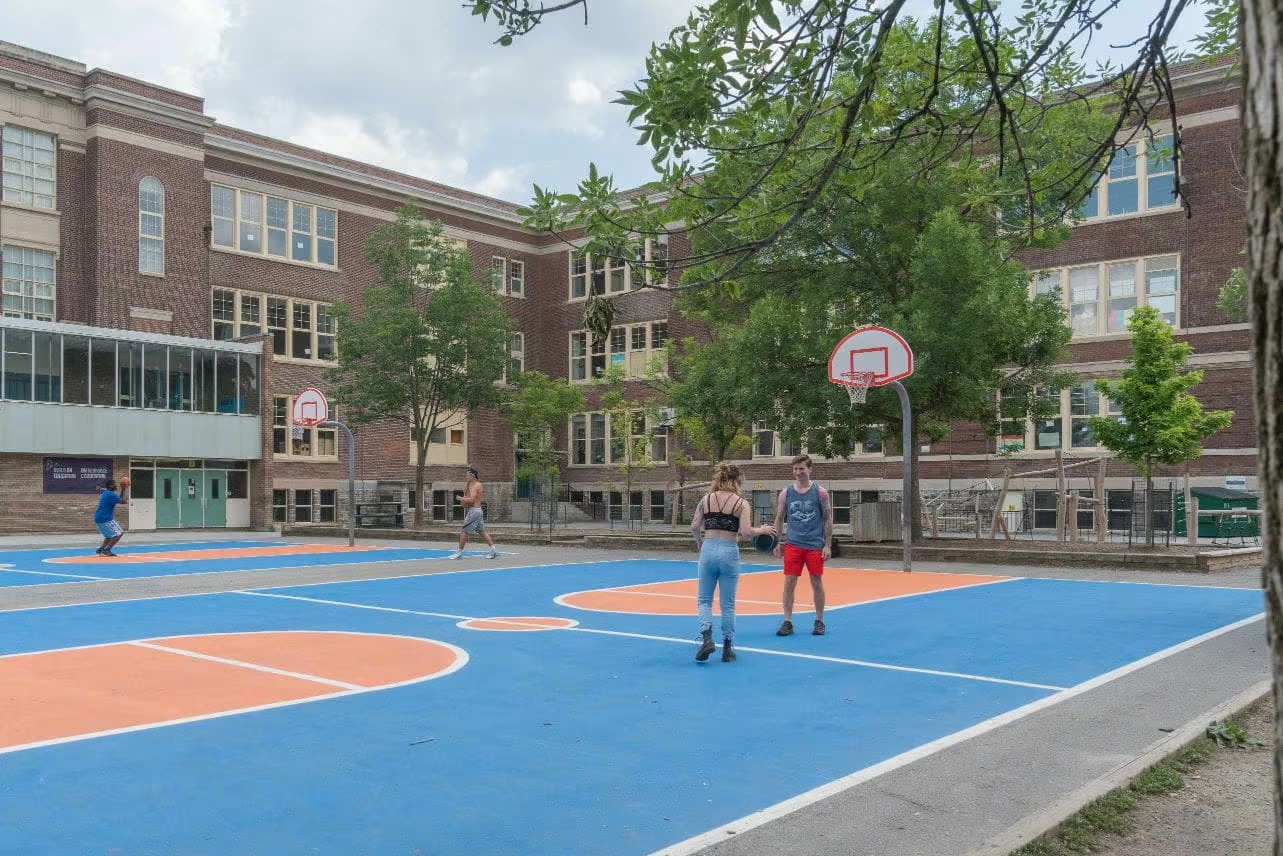
McCormick Park is the neighbourhood’s anchor green space, sitting on Sheridan Avenue with a baseball diamond, basketball courts, a bocce green, a children’s playground, and a wading pool. It is a genuine community hub, the kind of park that gets used daily, not just on weekends.
Dufferin Grove Park, just to the east, is one of Toronto’s most beloved community parks. A wood-burning oven, a farmers’ market, a skating rink in winter, and a community ethos that has been celebrated city-wide for years. It draws people from across the West End and then keeps them coming back.
Every summer, the BIG on Bloor Festival fills Bloor Street West with local artists, musicians, and vendors for one of the West End’s most community-driven annual events. It is the kind of thing that reminds you Brockton Village has always had a strong sense of itself, long before anyone was writing neighbourhood guides about it.
Schools & Transit
Schools:
At the elementary level, Brockton Public School and Pauline Junior Public School serve the neighbourhood within the public system. St. Helen’s Catholic School, steps from the heart of the neighbourhood, offers a faith-based option for Catholic families and has been a community institution here for generations.
For secondary school, public system students attend Bloor Collegiate Institute, currently operating from a temporary location at Central Technical School while its new building at Bloor and Dufferin is under construction. Catholic secondary students are served by Bishop Marrocco/Thomas Merton Catholic Secondary School at 1515 Bloor Street West.
School catchments in Toronto are address-specific and subject to change. We recommend confirming your exact catchment school using the TDSB or TCDSB school locator before making any decisions based on school boundaries.
Transit:
Brockton Village is exceptionally well connected for a neighbourhood at this price point. The Dundas streetcar runs along the neighbourhood’s main commercial strip and connects directly east to the subway and the downtown core. The College streetcar provides a second east-west surface route along the northern edge. The Lansdowne and Dufferin bus routes run north to Lansdowne and Dufferin stations on the Bloor-Danforth subway line, putting the rest of the city within easy reach.
For drivers, Dufferin Street connects south to the Gardiner Expressway in approximately 15 minutes, and the neighbourhood’s central location means most of Toronto is accessible without significant commute time. The transit picture here is one of the neighbourhood’s most underappreciated assets. Two streetcar lines, two subway connections, and highway access, all at a price point well below the neighbourhoods surrounding it.
Working with Nested in Brockton Village
Brockton Village is a neighbourhood where local knowledge makes a genuine difference. The micro-geography matters, which streets carry the strongest long-term value, where the best transit access sits, and how the neighbourhood’s ongoing evolution is likely to affect prices over the next decade.
Kathy Essery and Pavlena Brown of Nested Real Estate have been selling exclusively in Toronto’s West End since 2012. They know Brockton Village the way you know a neighbourhood you have watched evolve over more than a decade. If you are thinking about buying or selling here, get in touch.
hello@getnested.ca · getnested.ca · 416-909-1602
FAQ’s
Brockton Village is one of the most underrated neighbourhoods in Toronto’s West End. It has genuine architectural character, a rich cultural history, strong transit access, and a food and bar scene on Dundas Street West that holds its own against any strip in the city. For buyers who value substance over profile, it consistently delivers.
Both neighbourhoods share Victorian and Edwardian architecture, strong community roots, and West End character. The key difference is price. Brockton Village offers comparable housing stock at meaningfully lower price points, making it one of the most compelling value plays in the West End in 2026.
Semi-detached homes typically range from $900,000 to $1.3 million. Detached homes generally range from $1.2 million to $1.6 million. Both represent significant value relative to neighbouring pockets like Roncesvalles and Trinity Bellwoods, where comparable homes command considerably higher prices.
Brockton Village has been evolving steadily for over a decade. The arrival of destination restaurants, wine bars, and a new wave of buyers has layered new energy over a neighbourhood with deep cultural roots. The gap between Brockton Village prices and those of its immediate neighbours is difficult to justify on fundamentals alone, which is typically what precedes a meaningful shift
St Clarens Ave, Margueretta st, Sheridan St, and Florence St are among the most sought-after residential streets in the neighbourhood, tree-lined, architecturally strong, and well-positioned relative to Dundas Street West and transit access.