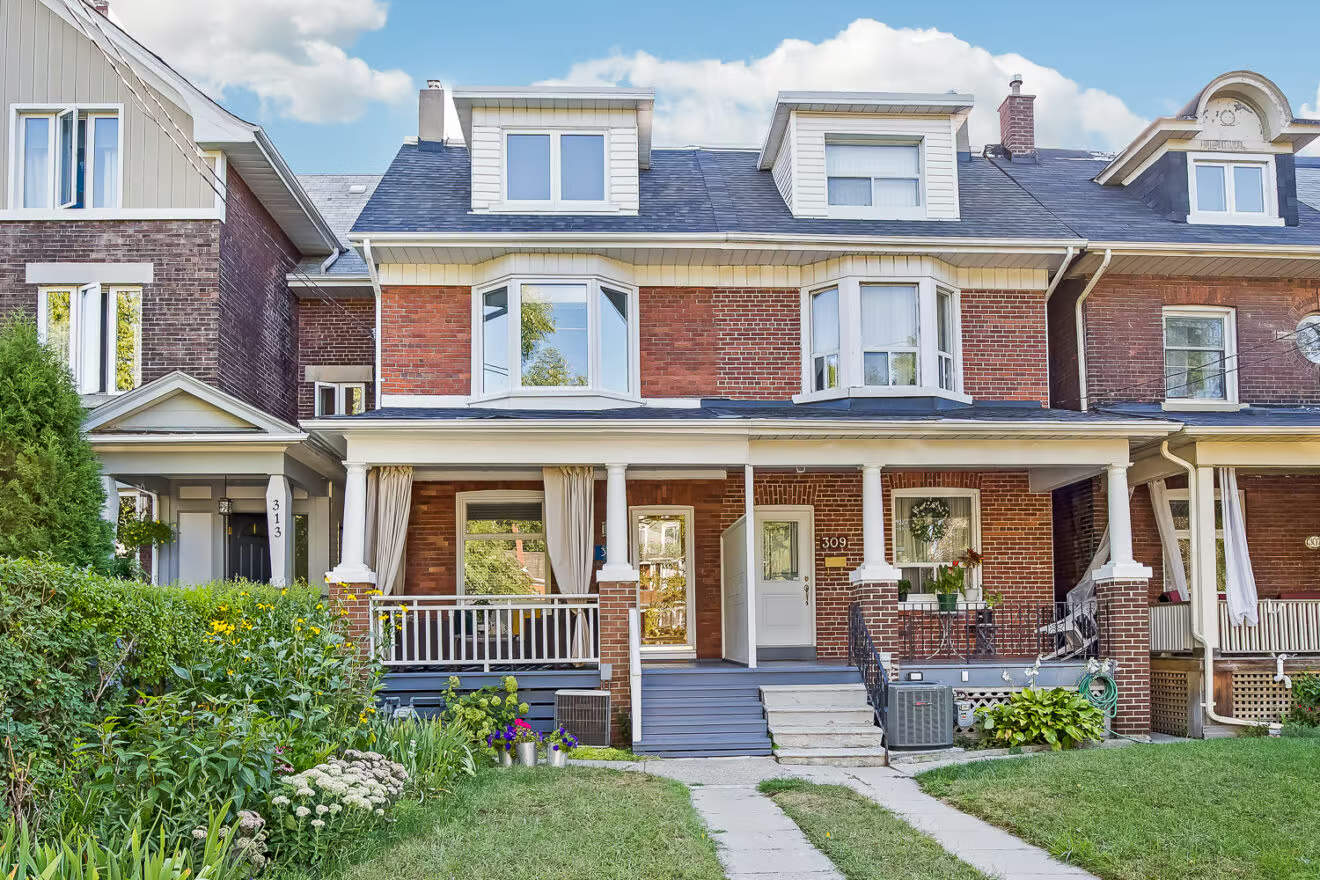



Selling a home in Toronto’s west end is one of the most significant financial decisions you will make. The neighbourhoods here, from Roncesvalles and Bloor West Village to High Park, Swansea, The Junction, and Parkdale, attract some of the most serious buyers in the city. People who know exactly what they want, who have done their research, and who arrive with high expectations for how a home is presented and priced.
We’ve been working with west end sellers for over 14 years. And what we’ve learned, more than anything, is that the sellers who come out ahead are the ones who understand what they’re actually selling. Not just square footage and a postal code. A home in this part of the city carries real weight, real community, a particular kind of life. The buyers who want it know that. Your strategy should too.
Here’s what Kathy and Pavlena want every west end seller to know before they list.
Late winter through early spring, typically February through April, is historically the strongest window for west end sellers. Buyer motivation is high, competing inventory is still relatively limited, and that combination creates the conditions where well-prepared homes generate serious interest quickly.
May and early June remain strong months, with more inventory coming to market, but buyer activity staying consistent. The fall market, running from September through November, offers another compelling window. The periods to avoid are mid December, January, July and early August. Buyer activity drops significantly during these months, and listing into a quiet market rarely serves sellers well.
But season is only part of the picture. The right week to list is as important as the right month. Are there strong recent sales in your pocket of the west end that will anchor your price? Is there competing inventory that could split buyer attention? A skilled local agent tracks all of it at a granular level and helps you time your entry for maximum impact, not just a favourable season.
Earlier than most sellers think. The ideal window is three to six months before your planned listing date, not to sort paperwork, but to use that preparation period strategically to put your home in the strongest possible position before it hits the market.
In that window, a good agent should be advising you on which pre-listing improvements will actually move the needle and which ones won’t. Helping you build a realistic timeline, connecting you with trusted trades, guiding you through decluttering and staging preparation. Making sure there are no surprises when you go to list.
Most sellers engage an agent when they feel ready. The ones who consistently achieve the strongest results start the conversation three to six months earlier. You are paying commission either way. You may as well get the full value of that relationship from the start.
If your timeline is shorter, don’t wait. Even four to six weeks of focused preparation with the right agent is significantly better than going to market underprepared.
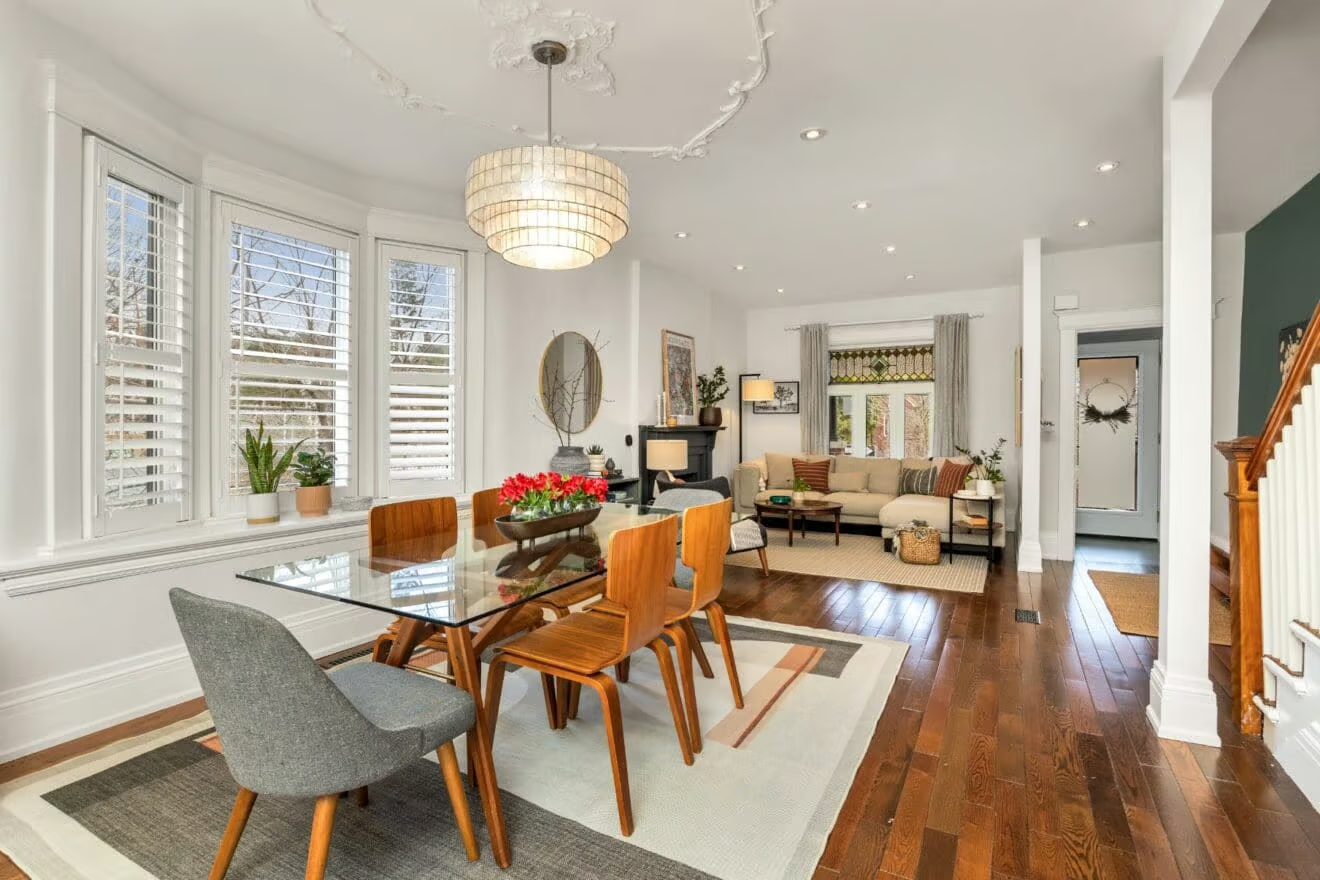
Yes. In the west end market, strategically staged homes consistently sell for more than their unstaged equivalents. The gap is not marginal. Presentation directly affects how buyers perceive value, and buyers at this price point have walked through a lot of homes. They feel the difference immediately.
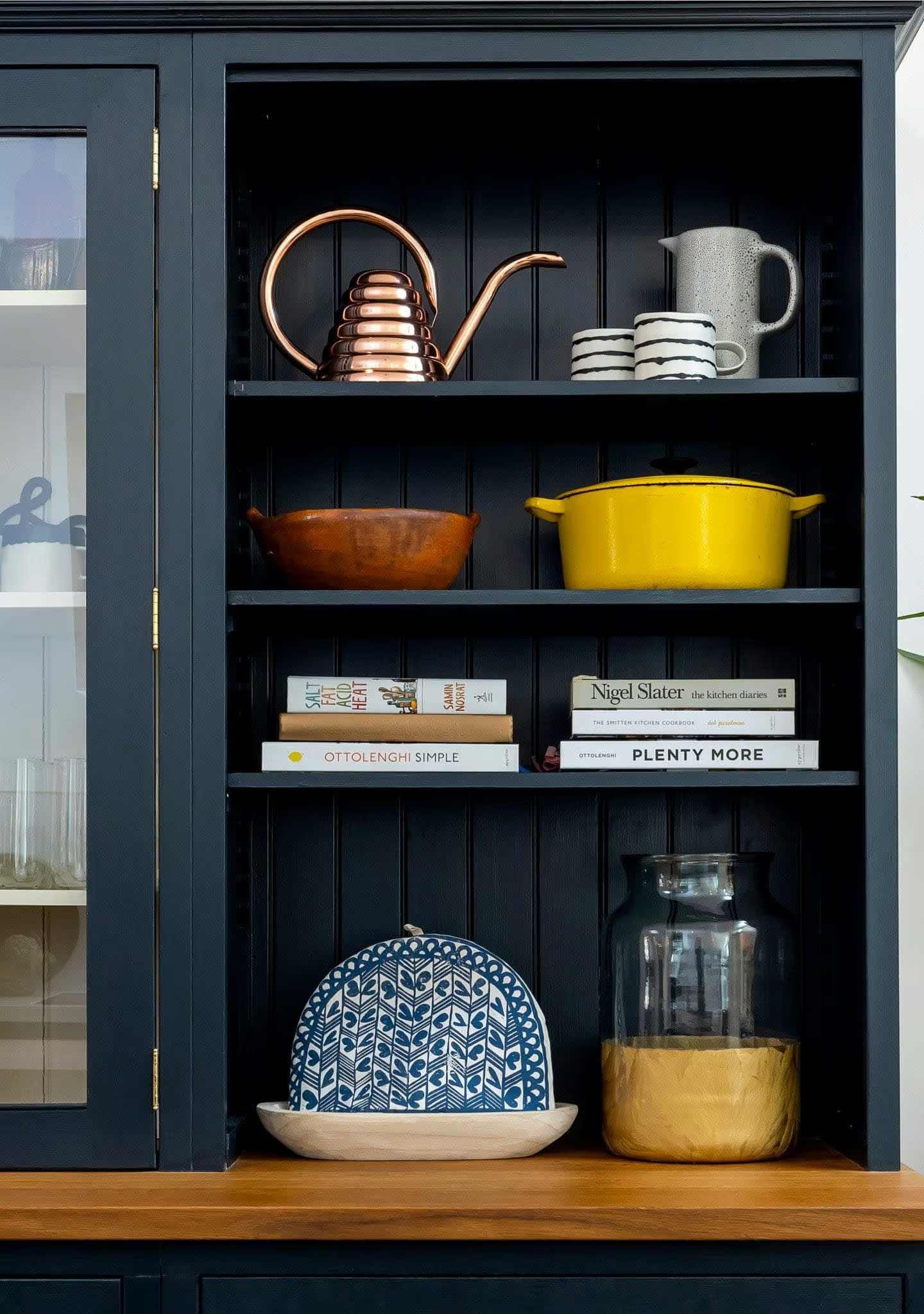
Not all staging is equal. There is a significant difference between staging that is strategic, intentional, and genuinely elevating and staging that ticks a box and moves on. Generic staging does not stop buyers. It does not create urgency. And it does not add to your sale price.
Before you are reassured by an agent who tells you staging is included, ask to see their actual listings. Ask who the stager is and what their process looks like. The quality of staging is visible in every photograph, and photographs are where most buyers decide whether your home is worth seeing in person. Included means nothing if it does not make you money.
We include professional staging in every listing package because we know what it does to the bottom line. It is not an upgrade. It is the baseline.
In most cases, no. Major renovations ahead of a sale are rarely worth the investment. The return is unpredictable, the timeline risk is real, and buyers in the west end often have their own vision for how they want to update a home.
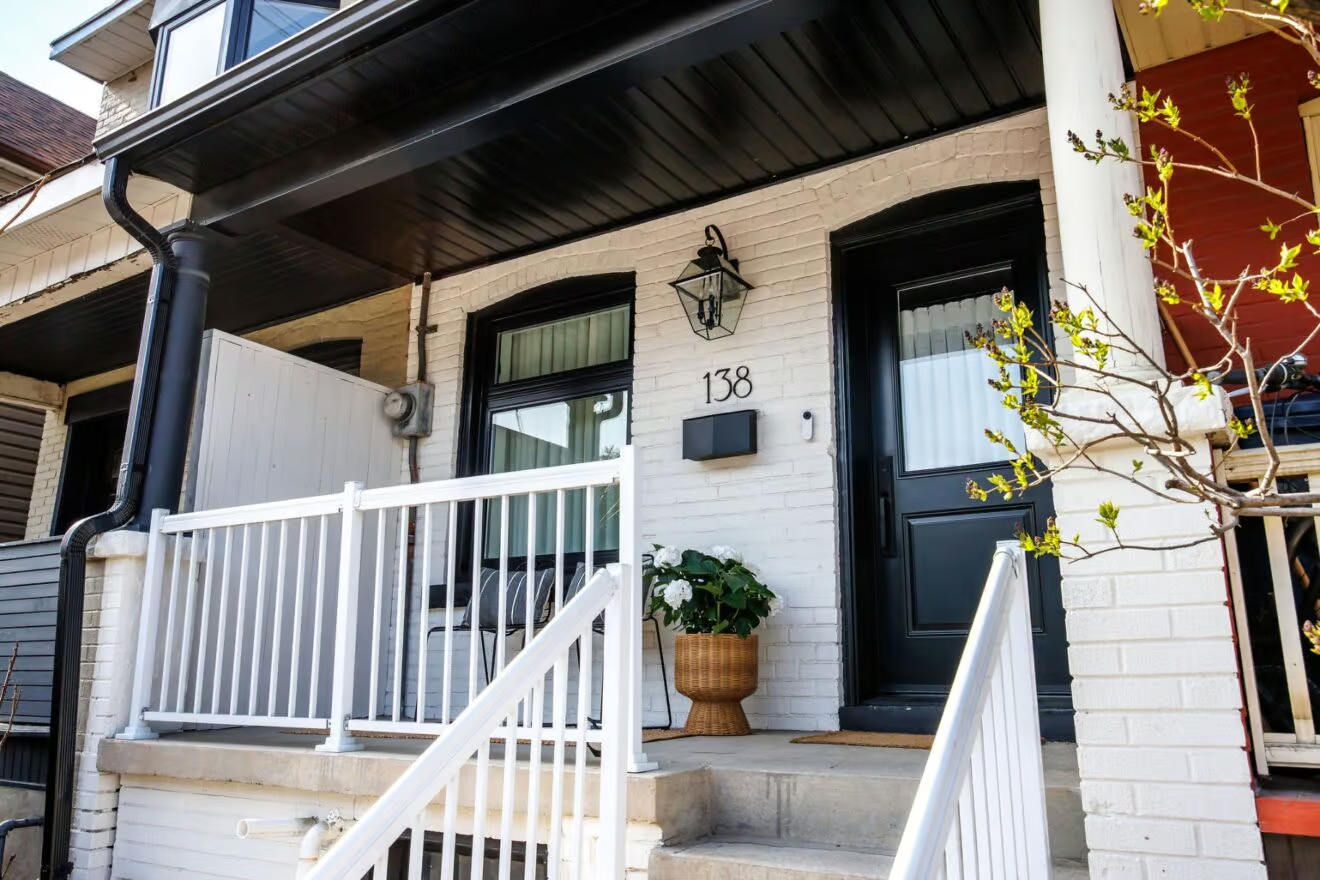
What does pay off consistently are the improvements that directly affect how buyers perceive condition and presentation. A fresh coat of paint throughout, in a clean neutral palette, is one of the highest-return investments a seller can make. Fix what is broken, even the small things. A dripping tap, a sticky door, a cracked tile. Buyers notice, and minor deficiencies add up in their minds and in their offers. Minor cosmetic updates with clear visual impact are generally worthwhile. Updated hardware, fresh caulking, new light fixtures, a freshly painted front door. Relatively low cost, meaningfully shifts how a space feels.
The key is knowing which improvements will move the needle and which won’t. A good west end agent will walk through your property with you, tell you honestly what to tackle and what to leave alone, and help you prioritise by return on investment rather than personal preference. Not every dollar spent before listing comes back to you. The right ones do.
Yes, in the right circumstances. Homes in Toronto’s west end are still selling in multiple offers in 2026, but the conditions that produce them matter more than they used to. When a home is well-prepared, strategically priced, and brought to market at the right moment, concentrated buyer competition is still very much achievable.
The strategy requires careful calibration. Price too high and the urgency evaporates. Price too low and you risk signalling less value than the home deserves, or attracting buyers who aren’t truly qualified for the number the home will ultimately reach. Finding the right hold-back price is a judgement call that requires deep knowledge of your specific street and what is happening in the market right now.
It is also worth knowing that this approach does not work equally well at every price point or in every pocket of the west end. At higher price points, the pool of competing buyers is smaller, and an artificially low asking price can work against you. Your agent should be able to tell you clearly and confidently whether it is the right approach for your home, or whether a different pricing strategy will serve you better.
The goal is never the highest asking price. The goal is the strongest final sale price. Those are very different things.
Understanding your selling costs upfront allows you to plan accurately and avoid surprises at closing.
Commission is typically 4.5% to 5% of the final sale price, split between the listing agent and the buyer’s agent, in line with typical Ontario real estate commission structures. On a $1.8M home, that is approximately $81,000 to $90,000.
Legal fees typically run $1,800 to $2,500 plus disbursements. Your real estate lawyer handles the closing, mortgage discharge, and transfer documents, and engaging them early is worth doing.
Staging, if not included in your agent’s listing package, should be budgeted at $8,000 to $15,000. Photography, floor plans, and a virtual tour should be standard in any full-service listing package.
Inspection and moving costs add up too. A pre-listing home inspection runs $550 to $650+ and is worth doing for most older west end homes. Moving costs typically range from $2,000 to $5,000 for a local professional move.
Here is the most important reframe on costs: commission is not where the money is made or lost in a sale. Marketing quality, staging, pricing strategy, and negotiation skill are.
A skilled agent who achieves a stronger sale price will more than offset the cost of their commission. In the west end, where presentation and strategy can move a sale price by tens of thousands of dollars, the difference between the right agent and the wrong one rarely comes down to commission. It comes down to results. Focus on your net proceeds. That is the only number that matters.
Marketing makes a significant difference, and the gap between a well-marketed home and an MLS-only listing is visible in the final sale price. Most buyers find their next home before they ever contact an agent. Your listing’s first impression is formed online, and that impression determines whether a buyer books a showing or keeps scrolling.
An MLS listing gets your home in front of buyers. A properly marketed home stops them. Professional photography, a floor plan that helps buyers understand the space before they arrive, a virtual tour that builds emotional connection. These are not extras. They are the tools that create the kind of buyer interest that drives strong offers.
The quality of the marketing also signals the quality of the seller’s approach. Buyers and their agents notice. A listing with poor photography and a generic description tells the market something about how seriously the seller is treating the sale. A listing that looks exceptional tells a different story, and buyers respond to it differently.
Nested is a boutique west end team led by Kathy Essery and Pavlena Brown, operating under SAGE Real Estate. We have been selling exclusively in Toronto’s west end since 2012. It is the only market we work in, and that single-minded focus is rare in this city.
We know these streets, these buyers, and the micro-level nuances that separate one pocket of the west end from another. We understand what buyers in Bloor West Village are looking for versus what draws buyers to Roncesvalles or Swansea. That knowledge shapes everything, how we position your home, how we price it, how we time the listing, and how we present it to the market.
Our approach is full-service and deliberate. Strategic staging is included in every listing package because we know what it does to the bottom line. Professional photography, floor plans, and a clear marketing plan are standard, not upgrades. Before listing, we walk through your property and provide a specific, room-by-room improvement plan so every dollar you spend before listing is working toward your sale price.
We are not a high-volume team chasing transaction numbers. We are a boutique practice built around doing fewer things exceptionally well. Our sellers get our full attention, honest advice, and a strategic approach tailored to their specific home and situation. The result is a sale process that feels managed and a final number that reflects the full value of the home.