

June 23, 2026 | Selling
Buy First or Sell First in the West End: What Actually Makes Sense
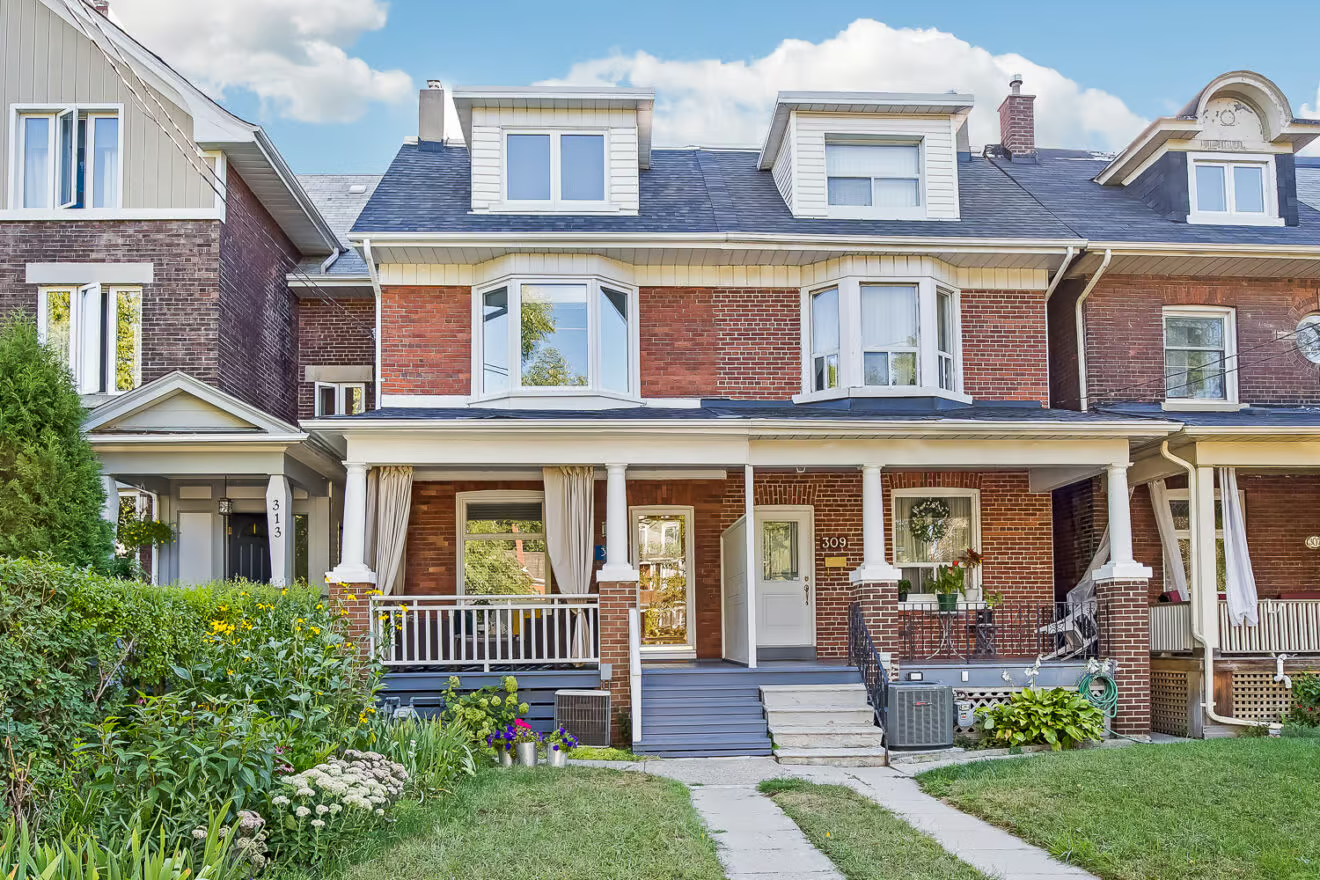
You’re standing in your kitchen with your phone calculator open, trying to figure out if you should sell first or start house hunting first. Everyone around you has an opinion. Your neighbour did it one way. Your sister-in-law swears the opposite is the only smart move. Neither of them was buying or selling your house, in Bloor West Village, The Junction, High Park or Roncesvalles, with your numbers or your timeline.
Here’s the honest answer: there is no universally right choice between buying first and selling first. The right move depends on the type of move you’re making, the type of property you currently own, how much you need from your sale, what type of home you are looking for, and how much you can actually spend on that next home.
Treating these as two separate decisions is the single biggest mistake we see. They have to be assessed together, as one transaction with two sides, or the numbers and the timeline stop lining up.
In a slower or less predictable market, getting this right matters even more. Pricing your current home realistically, anchored to recent comparable sales rather than what you hope it’s worth, is often the difference between a smooth move and a stressful one.
The Goal: Buy and Sell in the Same Market Conditions
The ideal outcome in Toronto or the West End in particular, is always to buy and sell during the same market conditions. If you decide to buy your next home first, you need a plan to sell your existing home quickly after. Real Estate conditions and buyer demand can shift quickly between seasons, and that shift is genuinely hard to time. A fast sale protects you from selling for less than expected if conditions move against you in the meantime.
Choosing whether to buy or sell first depends heavily on your individual situation, and it’s worth being honest with yourself about your own risk tolerance before deciding. This is exactly where an experienced agent earns their value.
In practice, that means the two transactions need to work in tandem, not separately. While you are actively shopping for a new home, your current home should be getting ready to list, ideally within 10 to 14 days of your purchase closing. The goal is to buy and sell in the same market, not two different ones.
What’s the Smart Choice for You?
Here’s where most of this breaks down. Buyers and sellers often have a number in mind for what they need from their sale, and a separate number in mind for what they want to spend on their next home. Those two numbers are connected. If you need $1.4 million from your sale to comfortably afford your next purchase, and recent comparable sales in your neighbourhood suggest your home is realistically worth $1.3 million, that gap is not a detail. It is the entire decision.
Once you know that number, the rest comes down to a few honest questions about your own situation.
1) Know Your Risk Tolerance
If you buy your next home first, you still have to sell your existing one, and there is real risk in that gap. If your closing dates do not line up perfectly, you will own two homes at once, which means two mortgages, even briefly. Are you comfortable carrying that?
It also matters whether the profit from your current home directly funds your next purchase. If the answer is yes, and the idea of owning two homes at once stresses you out, selling first is likely the better fit. Negotiate a longer closing period so you have real time to find your next home without rushing.
Read these additional resources on buying a home:
- Why You Should Take Advantage Of Your Buyer Visits
- The Ultimate Guide To Buying a Home When You Have Kids
- How to Win a Bidding War
- How Long Does it Take to Buy a Home in Toronto?
2) Be Honest About How Specific Your Search Is
How particular are you about what you are looking for? Have you actually been out viewing homes, and have you liked any of them? Have you run the numbers on what your new budget gets you, and are you genuinely happy with that?
If the homes you want come up regularly, you have more flexibility. If you are searching for something rare, a specific street, a pool, a particular layout, waiting for that home to appear and buying first usually makes more sense, since selling first puts you on a clock you cannot control.
Learn more about buying the right home by reading: What’s More Important When Buying a Home in Toronto: Location or Space?
3) Understand How Sellable Your Current Home Actually Is
Does your home have anything working against it? A busy street, challenging parking, fewer than two bathrooms, significant deferred maintenance, or a layout that is unusual for the neighbourhood all affect both price and time on market.
This is where your agent’s input matters most. It is not just about whether your home will sell, it is about how long it will realistically take and whether you can afford for it to sit, or to sell for less than you hoped.
Read these additional resources on selling your home:
- Key Steps To Selling A Home In Toronto
- Top 5 Staging Tips To Help Sell A Home For More Money
- How To Successfully Price And Sell Your Home
- What Not to Fix When Selling Your Home
4) Factor in the Season
If you are considering selling in the summer with the plan to buy in the fall, think carefully before committing to that timeline. Inventory typically drops through July and August, and buyer fatigue tends to be highest during those months as people take a break from house hunting. That often means fewer offers and softer sale prices. Selling into the wrong season can cost you real money if the market is expected to pick up shortly after.
There’s no universal answer here, only the right answer for your specific numbers and your specific home. That’s exactly the conversation worth having before you commit to either path.
We’ve been helping West End families navigate exactly this decision for well over a decade. Get in touch today by filling out the form on this page, calling us, or emailing us directly.
There is no universal answer. It depends on the type of move you’re making, how reliably your current home will sell, and whether the price you need from your sale lines up with what you want to spend next. Both transactions need to be assessed together before deciding.
Buying first carries more financial risk, since you may need to carry two properties briefly. Selling first carries more logistical risk, since you may need temporary housing if your next purchase takes longer than expected. Neither risk is automatically worse, it depends on what you can comfortably manage.
Your agent should provide a valuation based on recent, closed comparable sales in your specific neighbourhood, not list prices or older data. In a softer market, this step matters more than ever, since overestimating your sale price is the most common reason a buy-first-or-sell-first plan falls apart.
Yes. Whether you buy or sell first, negotiating a longer closing period, often 60 to 90 days, gives you more time to complete the other half of the transaction without rushing into a decision.
Treating the two transactions as separate decisions instead of one. The price you need from your sale and the price you can spend on your next home are connected. Deciding without looking at both sides together is how the math falls apart.
Download Our Selling Guide
For everything you need to know about selling a home in West Toronto, download our Selling Guide here.