
November 6, 2026 | Buying
Why West End Buyers Waiting for the Bottom Of The Market Usually Miss It
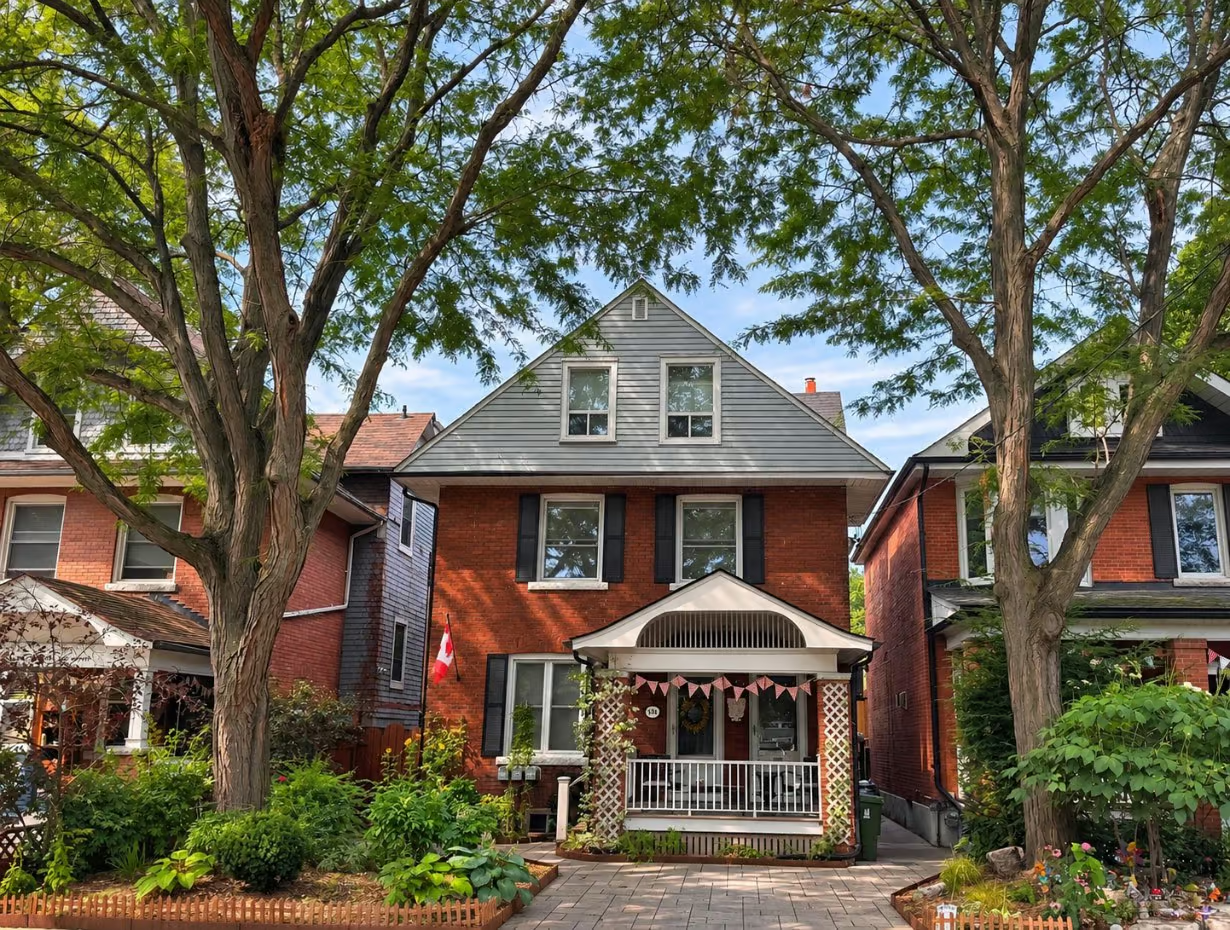
In September, the average detached home across Toronto’s West End sold for about $1.77 million. That’s roughly $150,000 less than a year ago, an 8% drop in twelve months.
That kind of shift gets attention. It also tends to convince buyers that more of the same is coming.
So should you wait for prices to bottom out before buying in Toronto’s West End? If the right house is in front of you, no. Prices are down sharply year over year, and this could very well be the bottom.
Here’s the thing about a downturn like this one. It happened fast. And the turn can happen just as fast. All it takes is a spark of buyer confidence, whether that’s steadier rates, a clearer trade outlook, or simply the arrival of spring. Once buyers who’ve been waiting start to move, they move together, and prices follow quickly.
The new year might be exactly that spark. Prices can rise just as fast as they fall, and by the time the numbers confirm the bottom, it’s already behind us.
Here’s why.
Where the West End Actually Sits Right Now
TRREB literally described September as a holding pattern. GTA sales were down 9% from last year, and the benchmark price was down about 4.7%.
But “the GTA” isn’t your market. Your market is about 40 streets.
Across TRREB’s W01 and W02 districts (High Park, Roncesvalles, Swansea, Bloor West Village, The Junction), the average detached home sold for about $1.77 million in September. That’s down roughly 8% from a year ago, or around $150,000.
Not every part of the market moved the same way. Semi-detached and row homes across W01 and W02 were actually up 1% year over year in September, averaging about $1.3 million. When one segment is already holding its value while another has dropped this far, it’s often a sign the softer market has done most of its work.
So yes, there’s a real discount out there. Which is exactly why so many buyers are asking the next question: if it’s down 8%, won’t it be down 12% by spring?
A softer market is the rare chance to buy into Toronto’s most loved neighbourhoods. Read: Why Are the Best Neighbourhoods in Toronto in the West End?
Will West End Prices Be Lower in the Spring?
Usually, no. Spring is the busiest season to buy a home in Toronto, and more buyers means more momentum. Prices typically rise a little from late winter into May, not the other way around.
That’s not a reason to avoid buying in the spring. It’s a great season, with more listings, more choice, and real energy on West End streets. But if your plan is “let’s see where things land in the new year,” the market you’re waiting for is likely to be a busier one, not a cheaper one.
And fall isn’t over yet. The fall market runs into mid-December, and right now the sellers still listed are serious while many buyers have stepped back. That combination doesn’t come around often in the West End, and it’s worth taking advantage of while it’s here.
Quiet markets are where you get to negotiate. On price, but also on closing dates, conditions, and the details that are hard to ask for when you’re up against five other offers. You have time to book a second showing, bring in a contractor, and get a home inspection done before you commit. Many sellers are open to a longer or more flexible closing, which makes it easier to line up the sale of your current home.
In the spring, much of this might go away. We may very well see a stronger return to offer dates, multiple buyers competing on the same night, and firm offers with no conditions. Spring is a great time to buy, but buying now means you can make your decision on your own terms, not on someone else’s deadline.
Are you ready to take advantage of the current dip in the market? Read: What Are The Key Steps To Buying A Home?
Then Rates Went Up
The Bank of Canada raised its policy rate to 2.5% on October 28. First hike in over three years. And they left the door open to more. That hike pushed variable rates up right away. Fixed rates follow bond yields instead, so they didn’t move, and the lowest five-year fixed rates are still sitting around 4.3%.
Here’s why that matters to anyone waiting for the bottom.
Say you’re buying a $1.77 million detached home in Roncesvalles with 20% down and a 25-year amortization. At a rate around 4.3%, your payment is roughly $7,670 a month. If your rate climbs half a point, that payment is about $8,070.
To get back to the original payment, the house would need to drop around $86,000. Almost 5%.
Read that again. A half-point rate move can cancel out more than half of the past year’s price drop. Buyers waiting for the price bottom are often ignoring the other half of the math.
What Do the U.S. Midterms Mean for Toronto Real Estate?
Then came November 3. American voters handed control of both the House and the Senate to the Democrats, with the new Congress taking over in January. Democratic leaders have said rolling back tariffs on Canada is an early priority, and markets rallied the day after.
Here’s why that matters in Toronto and the West End. The trade war has been one of the biggest weights on Canadian buyer confidence this year. It hasn’t kept West End families out of the market because they couldn’t afford to move. It’s kept them out because uncertainty makes people hesitate.
Nothing is settled. Tariffs don’t disappear overnight, and Ontario’s premier was quick to say the trade fight isn’t done. But a clearer path on trade is exactly the kind of shift that brings hesitant buyers back. If confidence returns over the winter, the buyers who sat out the fall will show up in spring, and they’ll show up together.
That’s one more reason this fall could very well be the bottom.
You Can Only See the Bottom In The Rearview Mirror
The bottom of a market rarely feels like the bottom while you’re in it. The headlines are mixed, rates are in the news, and most people you talk to are waiting to see what happens. That hesitation is often exactly what keeps prices from falling much further.
By the time it’s clear things have turned, there are usually a couple of months of rising sales behind us. The house you liked on Garden Avenue in Roncesvalles, now has four offers.
Market data also runs behind. TRREB’s September report came out on October 6. By the time the numbers confirm a bottom, prices have usually already started to move.
West End Inventory Is Limited
New listings across the GTA were down 14.4% in September. Sellers aren’t flooding the market. They’re sitting tight too.
And in our neighbourhoods, the houses upsizing families actually want (a detached in Swansea near the school, a semi with a real fourth bedroom in Bloor West Village, anything walkable to Roncesvalles with parking) were never plentiful to begin with. There might be a handful a month that fit your list.
Even now, detached homes across W01 and W02 are selling in about 10 days on average. The good ones aren’t sitting. They’re just quieter. When buyers come back, they don’t come back to a fresh pile of inventory. They come back to the same thin supply, all at once. That’s how you go from “we have our pick” to “we lost on offer night” in a single season.
Ready to move when the right house shows up? Read: What Do I Need to Know Before Buying a Home in Toronto’s West End?
What the Turn Looks Like?
In the West End, the best homes on the best streets never stopped selling. Well-presented homes with the features buyers want are still getting multiple offers right now, even in a softer market.
So the turn doesn’t show up there. It shows up in the houses around them. The semi that needs work starts getting offers instead of sitting. Buyers drop their financing and inspection conditions to compete. Fewer listings get cut and relisted lower.
None of it feels like a bottom in the moment. It feels like a good week. A few good weeks later, the buyers who were waiting are the ones competing.
So What Should you Actually Watch?
Rather than the headlines, keep an eye on these:
If you’re also selling, the gap, not the price. Your home and the one you want move together. We broke down that math in The Upsize Gap, so we won’t repeat it here.
Your payment, not the rate. Get a real pre-approval and run your monthly number at today’s rate and half a point higher. If both work, rate timing matters a lot less.
The listings you’d actually buy. If two or three homes that truly fit your family come up this fall and nobody’s competing for them, that’s not a sign to wait. That’s the opportunity.
Your life timeline. Kids starting school in September. A baby on the way. A lease ending. Those deadlines don’t care where the market bottoms.
Our Take
We can’t promise this is the bottom, and nobody can. But with prices down sharply year over year, the fall market still running, and the U.S. midterm results potentially easing the trade uncertainty that’s been holding buyers back, there’s a good chance it is.
What we can tell you, after selling homes here since 2012, is that the families who do best in the West End aren’t the ones who time it perfectly. They’re the ones who know their numbers, know exactly what they want, and are ready to move when the right house shows up. In a quiet market, that’s when you get to negotiate.
FAQ’s
For buyers who are ready, yes. Detached prices across W01 and W02 are down about 8% from a year ago, and the fall market runs into mid-December, when sellers tend to be more open to negotiating on price, closing dates, and conditions. Spring typically brings more buyers and firmer prices.
Not likely. Spring is the busiest season to buy in Toronto, and prices usually rise as buyers return. A sharp downturn can reverse just as quickly once buyer confidence picks up.
The Bank of Canada raised its policy rate to 2.5% on October 28, which pushed variable rates up immediately. On a $1.77 million home with 20% down and a 25-year amortization, a half-point rate increase adds about $400 a month, the equivalent of an $86,000 price drop. Waiting for a lower price can cost more than it saves if rates keep rising.
They could. Democrats take control of both houses of Congress in January and have signalled that tariff relief for Canada is a priority. Less trade uncertainty tends to bring hesitant buyers back, which could support West End demand heading into spring.
Usually only in hindsight. Market data runs about a month behind, so by the time the numbers confirm a bottom, prices have often already turned. Early signs show up on the ground first, like semis holding their value, fewer price cuts, and more competition for homes that need work.
Buying or Selling in the West? We Can Help!
Thinking about making a move? Click here to get in touch and request a Buyer or Seller consultation.