

September 2, 2026 | Selling
Downsizing in Toronto’s West End: What Empty Nesters Need to Know Before Selling

The kids have left, or they’re almost gone, and the house that once felt perfectly sized now has rooms you walk past without opening.
If you’re a West End homeowner starting to think about downsizing, here’s the direct answer. You don’t have to leave the neighbourhood you love. The timeline matters more than most people expect. And the real costs of downsizing rarely show up where people think to look for them.
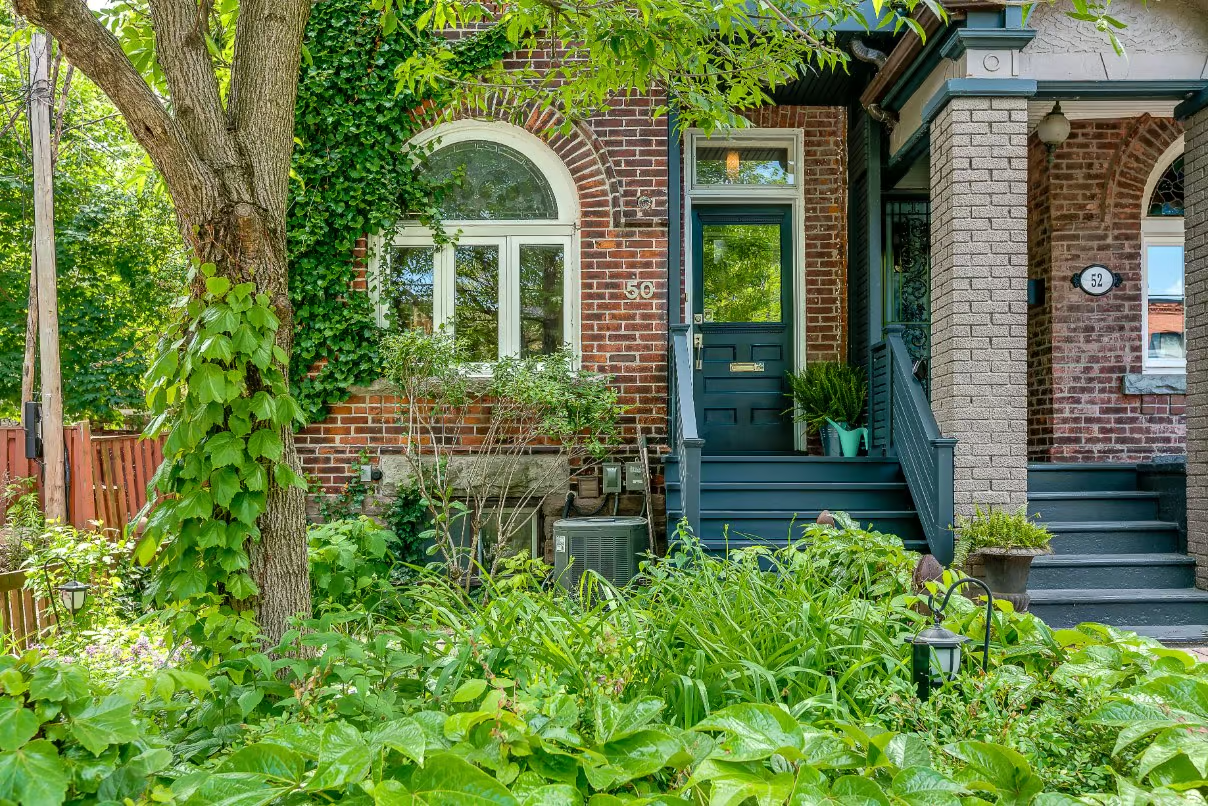
We’re Kathy Essery and Pavlena Brown of Nested Real Estate, and we’ve spent 14 years helping West End homeowners through exactly this transition. Downsizing here usually means weighing a smaller detached or semi-detached home, a freehold townhouse, or a boutique low-rise condo, and many of our clients choose to stay in Bloor West Village, Roncesvalles, High Park, Swansea, or The Junction rather than leaving the community they know.
The single most important thing to get right is timing. Engaging an agent ten to twelve months before you list gives you the runway to prepare properly and understand your realistic budget, long before a sign goes on the lawn.
That’s the short version. Here’s what actually goes into it.
Downsizing is one of the most significant moves a homeowner makes, not because it’s complicated, though it can be, but because it’s deeply personal. You are not just making a financial decision. You are making a decision about who you are now and how you want to live next. That deserves more than a checklist. It deserves an honest conversation, and a bit of time to think it through properly.
Why Downsizing Feels So Overwhelming, and Why That’s Normal
Selling a family home is not like selling an investment property. It’s the house where your kids grew up, where your life happened for decades, where you know every creak in the floor. Even when you are completely ready to move on, the process of letting go can surface feelings that catch people off guard.
You are not alone in feeling that pull. CMHC’s research on housing options for seniors notes that many Canadians weigh staying in a family home against the practical benefits of a smaller space, and there’s no wrong answer. What matters is giving yourself permission to think carefully about what you actually want, not just what makes logical sense on paper.
Curious what other West End sellers say about working with us? Read: Client Reviews & Testimonials
You Don’t Have to Leave the Neighbourhood You Love
Most people who downsize in the West End want to stay in it, and there’s more room to do that than you might expect. A smaller detached or semi-detached home lets you keep a garden and some privacy while cutting the maintenance. A freehold townhouse or row house means no condo fees or shared amenities, with a lighter footprint to manage. A boutique condo, especially the low-rise buildings along Bloor Street West or in Swansea, gives you the lock-and-leave lifestyle some downsizers are after.
Bloor West Village and Roncesvalles are the most established, walkable pockets. Semi-detached homes here start around $1.3M to $1.5M, with condos from the high $800Ks. High Park and Swansea are quieter and more residential, with semis starting closer to $1.4M. If budget is the deciding factor, The Junction and Parkdale sit just outside the core and offer the most accessible entry points in the West End, with semis starting around $1.1M and condos from the $700Ks, without giving up transit access or an easy trip back to the neighbourhoods you already know.
Where Are You Headed Next?
Not everyone downsizing from the West End is staying in the West End, and that’s just as valid a path to take. Maybe your next chapter means leaving the city altogether, moving closer to family, or settling somewhere you’ve been eyeing for years.
And it goes the other way just as often. A lot of our downsizing clients are coming from the suburbs, trading a big house and a long commute for something smaller in a walkable, vibrant pocket like Roncesvalles or Bloor West Village or Swansea somewhere they can leave the car in the driveway and actually walk to dinner. For empty nesters especially, that trade, less house, more life happening outside your front door, is often the whole point.
Wherever you’re headed, the same principle holds. Your family home is likely one of the most significant financial assets you’ve built, and how it’s prepared, priced, and presented shapes what that next chapter can actually look like. That’s where the right guidance matters most, not less.
On the fence about living in Roncesvalles vs. other West End communities? Read Roncesvalles Vs. Bloor West Village: Which is Right For You
The Four Mistakes Empty Nesters Make
After years of helping West End homeowners through this transition, the same mistakes come up again and again. Knowing them in advance is most of the battle.
1. Choosing the Wrong Property Type for the Next Chapter
A downsizer who buys a condo because it seems sensible, then discovers they miss having outdoor space, has a problem that’s expensive to fix. The right property type is the one that fits how you actually live, not the one that looks best on paper.
2. Being Paralyzed by the Process Itself
Deciding what to keep, figuring out where to begin with a house full of decades of life, and searching for something new all at once can feel like too much to hold. The clients who move through it most successfully are the ones who have an agent to help break it down into manageable steps.
3. Not Understanding What Your Budget Actually Gets You
Many downsizers arrive assuming they’ll sell their large home, buy something smaller, and have plenty left over. What surprises them is discovering what smaller actually costs in the West End, and how selling costs eat into the equity they expected.
4. Underestimating How Emotional the Process Is
None of this is unusual, and all of it is worth acknowledging with an agent who understands that this is about more than real estate.
Ready for honest, judgment-free advice on your next chapter? Download our FREE Downsizer Guide
Should You Sell First or Buy First?
For most West End downsizers, the strategic approach is a coordinated, same-season strategy: listing your current home and beginning your search at the same time, with a clear plan for managing the gap between closings. Which side of that plan you lean on harder comes down to your financial position and your risk tolerance.
Selling first gives you complete clarity on your budget before you commit to anything, though you may need temporary housing between closings. Buying first means you can take your time finding the right property without pressure, though it carries the risk of managing two transactions at once.
Not sure whether to sell first or buy first? Read: The Real Estate Debate: Should I Buy First or Sell First?
What Selling Actually Makes Possible
For many West End homeowners who bought in the 1990s or early 2000s, the family home represents an extraordinary amount of accumulated equity. Selling that home and buying something smaller is one of the most significant financial moves available to you. We’ve seen what that equity unlock makes possible: postponed travel finally happening, more time with grandkids without a house pulling at your attention, and a lighter monthly cost load that takes real pressure off.
Give Yourself Time
The mistake we see most often is deciding to sell and then calling an agent. By that point, the preparation window has already narrowed. Our recommendation is to engage an agent ten to twelve months before you plan to list, not to start the transaction, but to get the guidance that shapes it: which season suits your property, what preparation your home actually needs, and what your realistic budget looks like on the other side. That runway makes all the difference. It gives you time to work through staging and marketing properly, and to understand what your home is worth today through a property evaluation, long before a sign goes on the lawn.
Getting the Right Advice
Downsizing clients get a different kind of attention from us, not because the transaction is more complex, but because the decision is more personal. We take the time to understand what you actually want, we’re direct about what your budget realistically gets you, and we don’t rush or minimize the emotional side of selling a family home. You can get to know us and how we work before you ever commit to anything.
If you’re starting to picture that quieter, simpler next chapter, we’d love to help you think it through. Book a complimentary seller’s consultation with Kathy and Pavlena, with no pressure to rush.
Frequently Asked Questions
Yes, if the decision is right for your stage of life. West End inventory in smaller property types, freehold towns, and boutique condos tends to hold steady, and equity built since the 1990s and early 2000s continues to give downsizers strong purchasing power.
The better question isn’t market timing. It’s whether the home still fits how you actually live.
For most West End downsizers, a coordinated same-season strategy works best: listing your current home and beginning your search at the same time. Selling first gives you budget clarity but may mean temporary housing between closings. Buying first removes the pressure to rush but means managing two transactions at once.
Yes, and many of our downsizing clients do. Bungalows, semi-detached and freehold townhomes let you keep a garden with less upkeep, while boutique low-rise condos in Bloor West Village and Swansea offer a lock-and-leave lifestyle without leaving the neighbourhood you know.
More than most people expect. Selling costs, moving costs, and the real price of a smaller West End home all eat into the equity a downsizer assumes they’ll walk away with, which is why understanding your realistic budget early matters more than the sale price alone.
We recommend engaging an agent ten to twelve months before you plan to list. That runway isn’t for starting the transaction. It’s for the guidance that shapes it: the right season, the right preparation, and a realistic picture of your budget.
Buying or Selling in the West? We Can Help!
Thinking about making a move? Click here to get in touch and request a Buyer or Seller consultation.