

May 6, 2026 | Buying
Should You Buy a House That’s Been on the Market for a Long Time?

We get asked about stale listings all the time. The question is always some version of: should I be worried about this one? And the honest answer is, it depends on why it’s sitting. Knowing the difference between a home that has a real problem and one that simply hasn’t found its person yet is one of the most valuable skills a West End buyer can develop.
The default reaction most buyers have is to scroll past. Forty-seven days on market, sixty-two days on market, and suddenly the listing feels like a warning sign. We understand the instinct. But in Bloor West Village, High Park, Roncesvalles, Swansea, The Junction, and Parkdale, writing off a stale listing without understanding why it’s sitting can mean walking away from a genuine opportunity.
What does it mean when a home has been on the market for a long time?
It means something gave buyers pause. The question worth asking is what, exactly. In our experience across Toronto’s West End, the reasons almost always fall into one of these categories.
The most common reason is a seller who is stuck on price. The market has spoken, and they haven’t listened yet. This happens more than people realise, and it can work in a buyer’s favour. Sometimes. If the seller is genuinely dug in and unwilling to move, there is nothing you can do. But if they’ve been sitting long enough that reality is starting to land, there can be room to negotiate in a way that simply doesn’t exist with a freshly listed property generating multiple offers in the first week. You won’t get that opening on a home in High Park North that hits the market on a Wednesday and sells on the following Monday. A home that has been sitting for thirty days is a different conversation entirely.
Learn more about pricing by reading our post: How to Price Your Home to Sell
The second reason is access. There are many tenanted properties in the West End. If a home can only be shown twice a week, or requires significant notice, or has a tenant situation that makes viewings complicated, a lot of buyers simply move on to something easier. That friction can depress interest without having anything to do with the quality of the home itself. There is also the question of what happens after the sale. Buyers want to know whether the unit is vacant on closing, whether a tenant has agreed to leave, or whether they are inheriting an occupancy situation they weren’t expecting. Those unknowns create hesitation. Understanding the full access and tenancy picture before drawing any conclusions about a property is worth the effort.
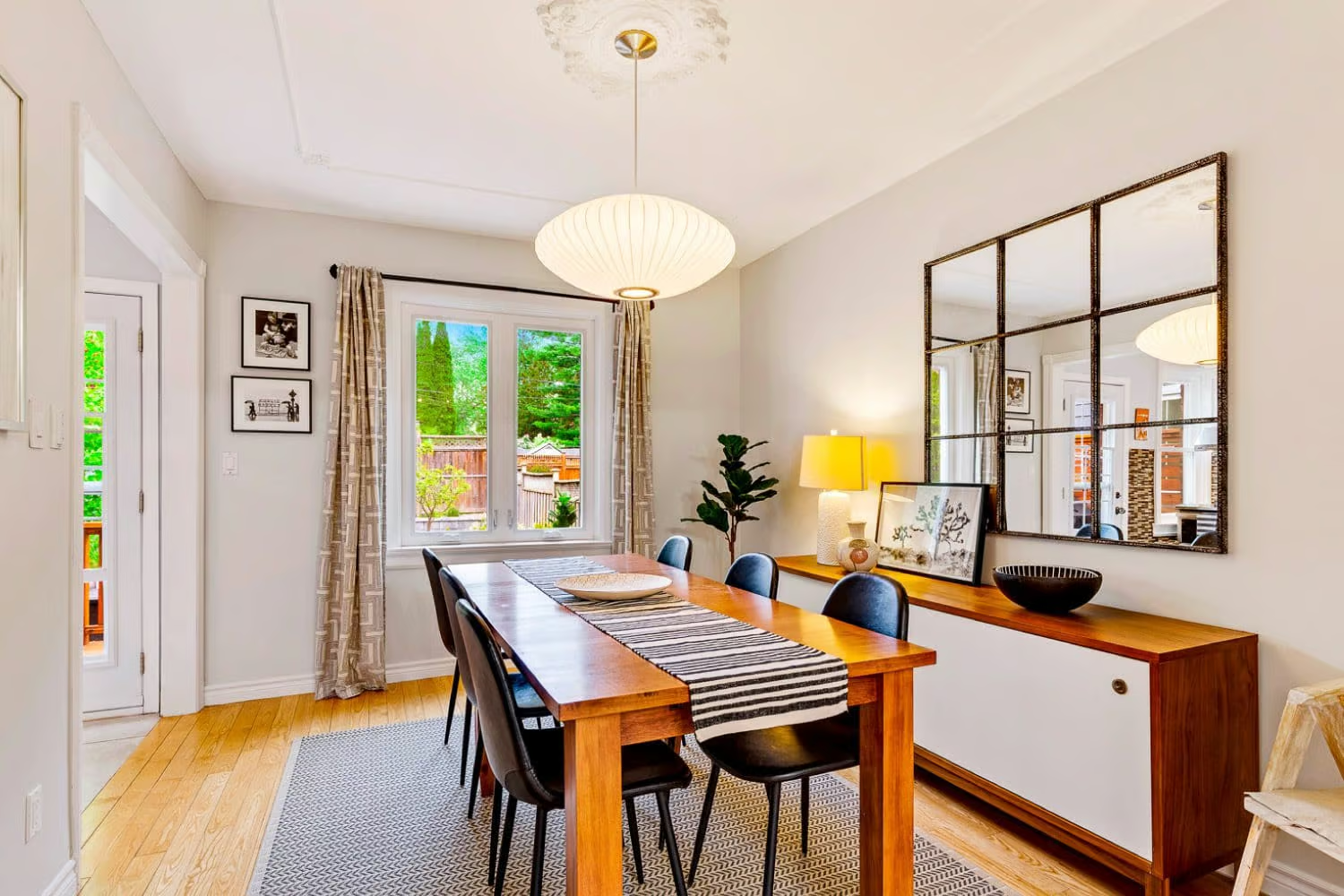
The third reason is home preparation. Home presentation carries more weight than most sellers expect. In softer markets, buyers look harder and they notice the things they would have overlooked when competing against eight other offers. A home that wasn’t properly staged, photographed, or prepared before it listed can sit not because anything is wrong with it, but because the first impression didn’t hold up. First impressions in real estate are almost impossible to recover from. The listing goes stale, the price reduction follows, and suddenly a perfectly good home has a history that makes buyers suspicious. Poor preparation is one of the most fixable reasons a home lingers, and one of the most avoidable.
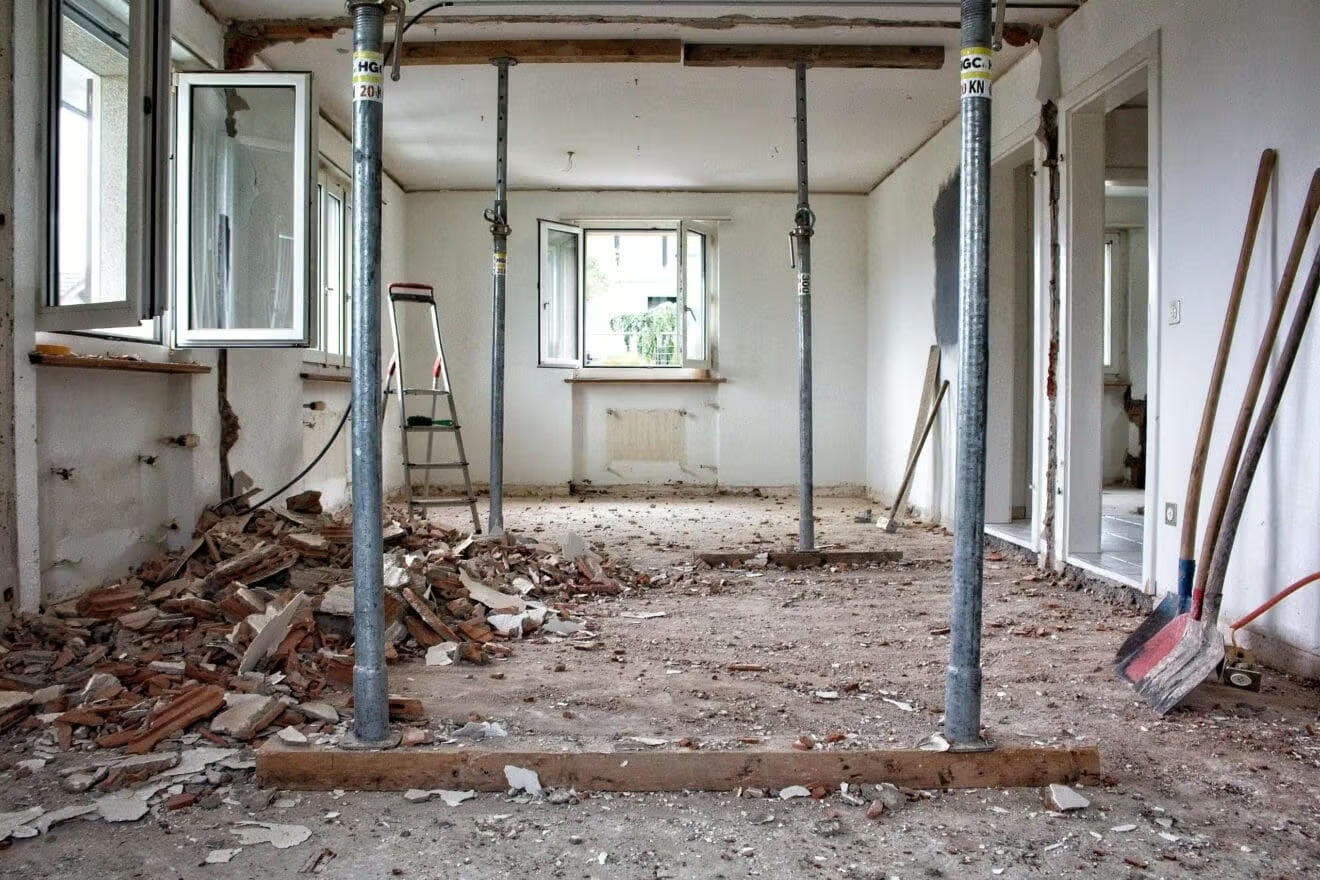
The fourth reason is buyer appetite. There are stretches of the market where buyers are genuinely reluctant to take on work. When confidence is lower and financing feels tighter, the tolerance for renovation projects shrinks. A home that needs a new bathroom, a kitchen or basement update, or a significant mechanical item addressed can sit longer than it would in a hotter market, not because it isn’t worth buying, but because the buyers who would have seen its potential are stepping back. For buyers who do have some vision, and some bandwidth for a project, this is a real opening. The competition thins out. The negotiating position improves. A home that has been sitting because it needs work is often a better opportunity than it first appears.
The fifth reason is an oddity. The fifth reason is an oddity. Sometimes it is the layout, a location detail, a quirk that puts off a certain kind of buyer but genuinely wouldn’t bother another. A home on a busier street or across from a school. A layout that doesn’t flow the way most people expect. A narrower lot. None of these are necessarily dealbreakers. They are just features that don’t work for everyone. For the buyer who isn’t bothered by the thing that’s keeping others away, an oddity can be the reason you land in a better location, a more desirable school district, or closer to transit than your budget would otherwise allow.
When it comes to house hunting in Toronto, there are a lot of “red flags” that might not actually be red flags at all. Don’t panic! Read these posts next to learn the truth about these common real estate misconceptions:
- 5 Facts to Know About Knob and Tube Wiring
- Should You Buy a House with Old Windows?
- Radiator Heating Vs. Forced Air
Is a home that’s been sitting on the market worth buying?
It can be. Especially for buyers who are clear-eyed about their budget and open to a property that isn’t the obvious crowd favourite. Getting into Roncesvalles, Bloor West Village, or Swansea can still be difficult right now if you are competing for the same homes as everyone else. A long-listed property can represent a real entry point, particularly for first-time buyers or anyone who isn’t scared of a renovation and knows they may not land the perfect home on the first try. Getting into the West End and starting to build equity in a neighbourhood you believe in is a legitimate strategy. It has worked for a lot of people. The perfect house is rarely the one that makes you wealthy. The right neighbourhood, bought at the right moment, usually does.
The key is doing your research. Stale listings often come with less information upfront. There may not be a pre-list home inspection. The general info about the property may be thin. That means the due diligence burden sits more heavily on the buyer’s side, and that is not something to skip. It means asking more questions, looking more carefully, and commissioning your own inspection before making a move. The opportunity is real, but it comes with homework.
We have walked through plenty of long-listed homes across the West End that turned out to be genuinely good properties with straightforward explanations for why they sat unsold. We have also walked through homes where it became clear within minutes why nobody had bought it. Knowing which situation you are in requires experience, honest eyes, and a willingness to ask uncomfortable questions of the listing agent.
If you want to sharpen your eye before viewing a property that has been sitting, our post on red flag signs to watch for during a house hunt is a good place to start.
The West End is full of buyers chasing the same listings. Sometimes the smarter move is looking at the one they skipped.
There’s no universal number, but in active West End neighbourhoods like Bloor West Village, High Park, and Roncesvalles, a home that has been sitting for more than 30 days is worth a closer look. Past 60 days, the market has usually sent a clear signal. The question is whether the reason is fixable, circumstantial, or structural.
The most common reasons are a seller who is holding firm on an unrealistic price, access issues like a tenanted property with limited showing availability, or an oddity with the home or its location that doesn’t appeal to the majority of buyers. None of these automatically make a home a bad purchase. They just require more investigation.
Sometimes. If the seller has been on the market long enough that they’re starting to feel the pressure, there can be genuine room to negotiate. But if the seller is firmly attached to their number and unwilling to move, no amount of time on market will change that. It is always worth having the conversation, but go in with realistic expectations.
Not automatically. A home that has been sitting could have a straightforward explanation that has nothing to do with the condition of the property. That said, stale listings often come with less information upfront, so due diligence matters more, not less. Budget for your own inspection and ask the listing agent direct questions about why the home hasn’t sold.
Yes. For buyers who are realistic about their budget and open to a home that isn’t the obvious crowd favourite, a long-listed property can be a genuine entry point into neighbourhoods like Parkdale, Swansea, or The Junction. You may not be competing against ten other offers. That alone changes the dynamic significantly.
If you’re on the house hunt in West End, Toronto, give us a call! Here at Nested Real Estate, we’ve helped countless buyers find their dream home in the West. Simply fill out the form on this page, give us a call, or send us an email to get in touch.
Download Our Buying Guide
Buy smarter in Toronto’s West End by downloading our Buying Guide here.