

March 8, 2022 | Homeowner
DON’T PANIC: 4 Facts To Know About Asbestos
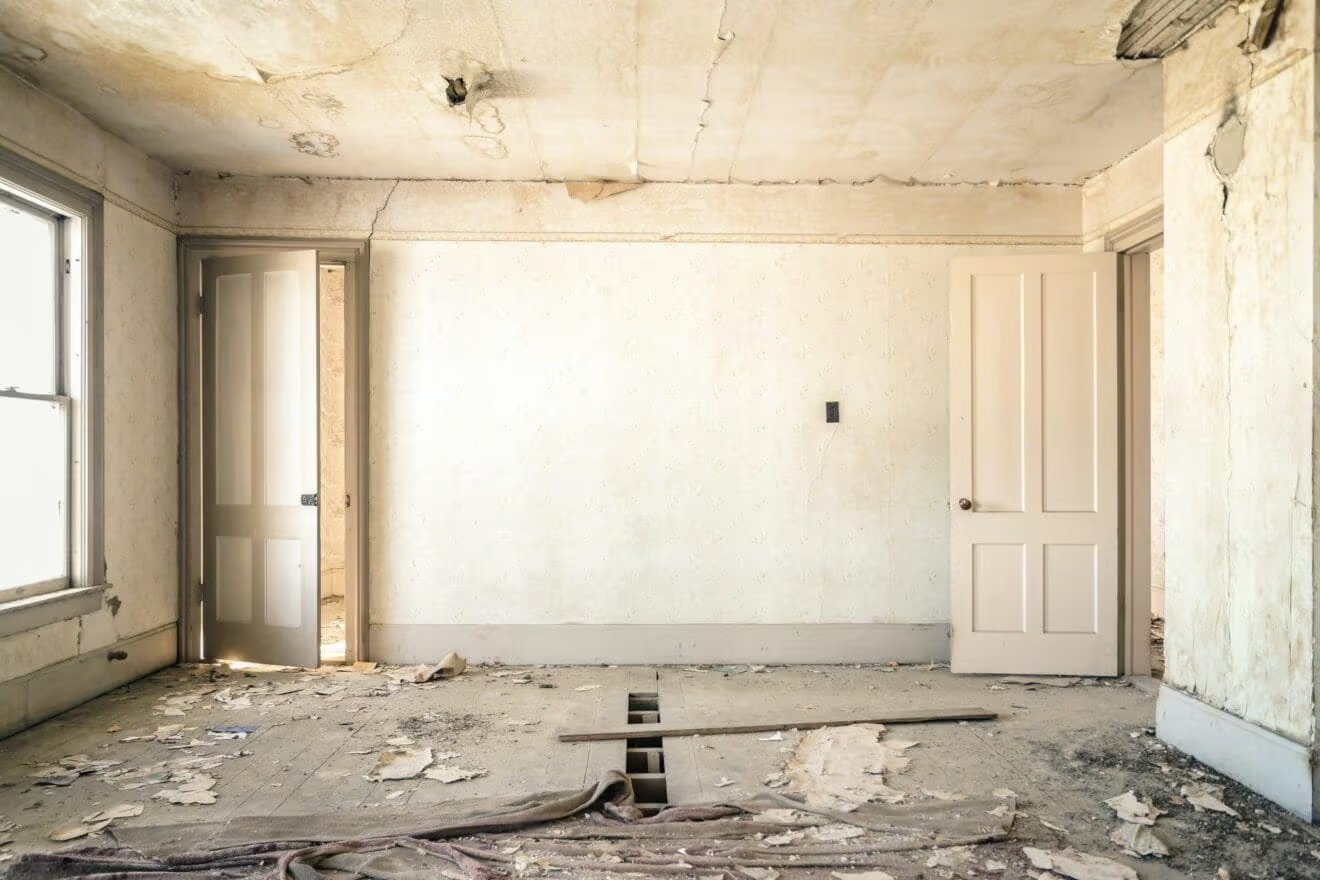
Buying an older home in West Toronto? Here’s what you need to know, and why asbestos isn’t the dealbreaker you might think.
No doubt you’ve heard the word “asbestos.” And if you’re like most home buyers, it probably makes you want to turn and run, but if you’re shopping in prime residential Toronto pockets, including the west end, there is a likely chance you’re going to encounter it. And that’s okay. Many of Toronto’s most charming, character-filled homes were built between the 1920s and 1970s, right in the sweet spot when asbestos was widely used in construction. Knowing how to handle it calmly is part of what separates a confident buyer from a panicked one.
This blog is part of our Don’t Panic series — because real estate is complicated enough without fear doing the driving. Here are four things about asbestos every buyer of an older Toronto home should know.
1) Asbestos Is More Common Than You Think
Asbestos is a naturally occurring mineral fiber that was added to building materials for decades because it was strong, fire-resistant, and cheap to produce. Its use was phased out through the late 1970s and 1980s as health risks became better understood, which means any home built before roughly 1985, and especially those built between 1920 and 1970, may contain it in one or more of the following places:
- Drywall compound (the mud used to finish and tape joints)
- Lath and plaster walls and ceilings
- Popcorn or stippled ceilings (very common in homes from the 1950s through 1970s)
- Old vinyl floor tiles, especially 9×9 inch tiles
- Pipe and duct insulation, including wrapping around old hot water pipes
- Attic insulation, particularly vermiculite
- Exterior siding (transite board) and roof shingles
- Boiler and furnace insulation
Asbestos cannot be identified with the naked eye. The fibres are microscopic and can only be confirmed through lab testing. So if you’re looking at an older home and wondering whether asbestos is in there, the honest answer is: probably, in some form. And that’s completely normal for homes of this age.
Thinking about buying an older home in Toronto? Check out these posts next for more quirks you should know about:
- Should You Buy a Home with Old Windows in Toronto?
- 5 Facts to Know About Knob and Tube Wiring
- Radiator Heating Vs. Forced Air
2) It’s Not Always Dangerous
This is the part that surprises most buyers: the presence of asbestos in a home does not automatically make it a hazard. Asbestos that is in good condition and left undisturbed is classified as “non-friable,” meaning it’s bound within the material and not releasing fibers into the air. Non-friable asbestos poses minimal risk.
The danger arises when asbestos-containing materials become damaged or disturbed with age, water damage, or renovation work. When fibers are released into the air and inhaled, they can lodge in the lungs and over time lead to serious conditions including mesothelioma, asbestosis, and lung cancer. These risks are primarily linked to prolonged occupational exposure, such as construction workers or insulation installers who worked around asbestos daily for years.
For the average homeowner, the risk from undisturbed asbestos is very low. Health Canada acknowledges that brief or incidental exposure to low levels, which we’re all exposed to at trace levels in outdoor air, is not typically a health concern. The key is leaving it undisturbed.
One material worth flagging specifically: vermiculite attic insulation. Vermiculite is a gray, pebble-like material found in the attics of many older Toronto homes, and a large portion of it was heavily contaminated with asbestos at the source. Unlike other asbestos-containing materials that are bound and stable, vermiculite is more friable, meaning it can release fibers into the air more easily when disturbed. If your home has vermiculite in the attic, it should be assumed to contain asbestos and tested before anyone goes poking around up there.
Read more about renovating and maintaining older homes in Toronto with these posts next:
- Cost of Renovations: Read This Before Buying or Selling an Older Home
- Renovate or Move: How to Decide if You Own a Home in Toronto’s West End
- Old Soul, New Style: 5 Ways to Blend Original Charm with Modern Updates
3) For Peace of Mind, Hire a Pro to Test Your Home
If you want further clarity on your asbestos situation, bring in a qualified asbestos inspector or industrial hygienist. This is not the same as a home inspector. A general home inspector may flag suspect materials, but they’re not equipped to test for asbestos directly. An asbestos specialist will take physical samples and send them to an accredited lab for analysis using polarized light microscopy. This is the only definitive way to confirm asbestos is present.
Testing is relatively affordable, often a few hundred dollars for a multi-point assessment. When is it particularly worth doing?
- Before any renovation, even a minor one involving walls, ceilings, floors, or pipes
- If you see visibly damaged insulation on pipes or ducts (crumbling, flaking material)
- If there’s damage to popcorn ceilings or old vinyl floor tiles
- If the attic has vermiculite insulation
- If you’re planning a gut renovation or major structural work
If the materials are found to be in good condition and you have no plans to disturb them, your inspector may recommend an O&M (Operations and Maintenance) plan, with a monitoring strategy rather than removal. Not everything with asbestos needs to come out. That’s an important point many buyers miss.
If you’re in the process of buying an older home, the home inspection is a critical component of your sale. Learn about How to Understand a Home Inspection on an Older House.
4) Professional Asbestos Removal Is Always Required
Let’s be clear: asbestos removal is not a DIY job. Ever. Abatement must be performed by a licensed, trained, and insured contractor as this is both a legal requirement in Ontario (under O. Reg. 278/05 of the Occupational Health and Safety Act) and a matter of safety. Licensed contractors follow strict protocols for containment, removal, disposal, and air clearance testing before a space is declared safe.
Here’s what to expect from the process: the crew seals off the work area with polyethylene sheeting and negative air pressure machines, removes material in full protective gear, double-bags all waste in labeled asbestos bags for disposal at a licensed facility, and performs air clearance testing before reopening the space.
How Much Does Asbestos Removal Cost in Toronto?
- Floor vent removal: ~$150–$300 per vent
- Popcorn ceiling removal (per room): $500–$2,500+
- Pipe insulation removal: $500–$3,000+
- Lath and plaster removal (full room): $4,000–$8,000+
- Full attic vermiculite removal: $3,000–$15,000+
Always get multiple quotes and a detailed scope of work in writing. If you’re renovating an older home, build in an asbestos contingency to avoid budget surprises. And if asbestos is discovered mid-renovation, Ontario law requires all work to stop until a licensed abatement team clears the area, which can delay a project so testing before you start reno’s is always the better call.
The Bottom Line: Asbestos Is Manageable
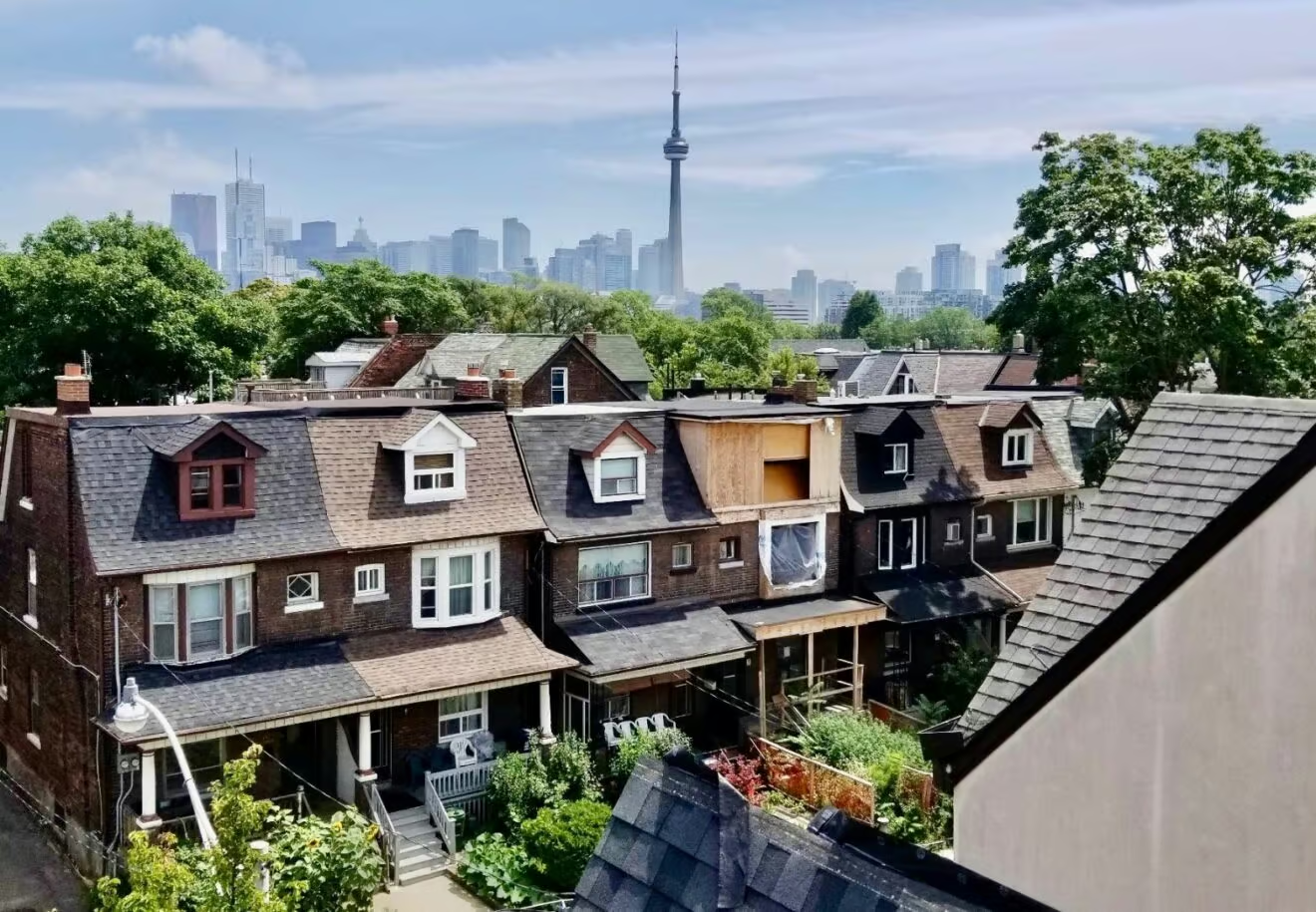
The Victorian semis in Roncesvalles or the craftsman character homes in Swansea and High Park, are some of the most beautiful, well-built properties in the city. They have soul. They have history. And yes, many of them have asbestos. That doesn’t make them bad investments or dangerous places to live. It makes them older homes with older materials, which hundreds of Toronto homeowners navigate successfully every year.
Go in with your eyes open, test before you renovate, hire professionals for removal, and budget for contingencies. And don’t let the word “asbestos” on an inspection report send you running from an otherwise great home. It’s one factor, not a dealbreaker, and with the right information, it’s totally manageable.
Have questions about buying an older home in the West End? We’ve helped countless buyers navigate exactly this. Reach out, and we’re here to help you make smart, confident decisions from offer to closing. Get in touch today by filling out the form on this page, or by calling/emailing us directly. We’d love to hear from you.
This post is part of the Don’t Panic series from Nested Real Estate — practical, no-fluff guidance for buying older homes in West Toronto.
Buying or Selling in the West? We Can Help!
Thinking about making a move? Click here to get in touch and request a Buyer or Seller consultation.