

February 27, 2026 | Buying
How to Buy Smart in Toronto’s West End When Prices Are Down?
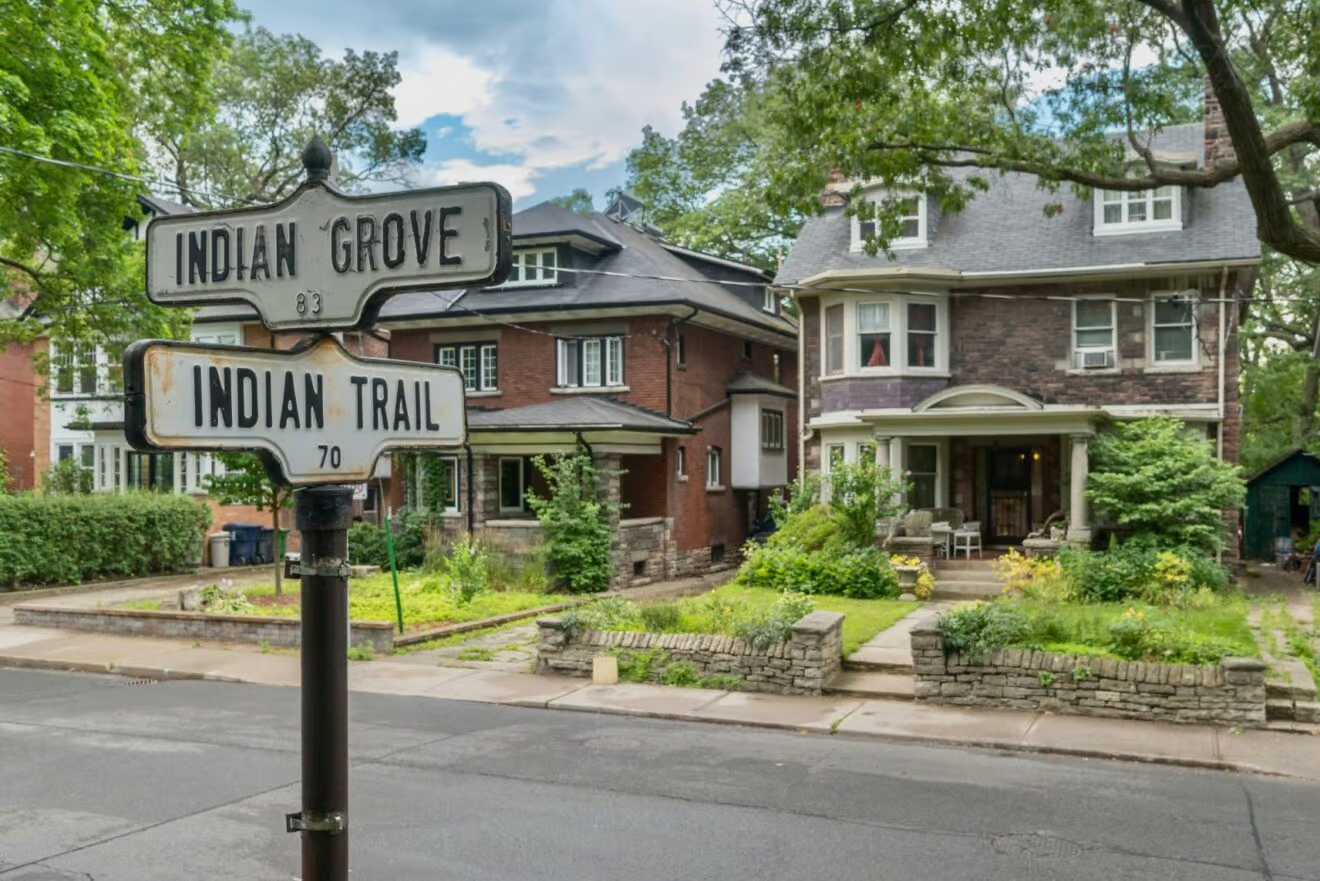
Toronto real estate moves in cycles. It always has. Over the past several decades, we have seen clear waves of rapid price growth followed by meaningful corrections, including the early 1990s downturn and the more recent post-COVID-19 slowdown driven by an overstimulated market, rising interest rates, and shifting buyer confidence. Home values do not rise in a straight line. They respond to economic pressure, lending conditions, and buyer outlook.
Every few years, prices recalibrate, and inventory builds. Even highly desirable West Toronto neighbourhoods feel those shifts, although strong local fundamentals tend to support faster stabilization here and the story is more nuanced than the headline numbers suggest. Neighbourhoods like Roncesvalles, Bloor West Village, High Park, Swansea, The Junction, and Parkdale have always attracted a specific kind of buyer: committed, informed, and buying for the long term. That buyer profile creates a market that is more resilient than the broader GTA but not immune to the current conditions. Well-priced, well-presented homes are still selling fast, many homes even receiving multiple offers. Overpriced homes are sitting. And buyers who understand what to prioritize right now are positioning themselves for strong long-term returns.
Stay ahead of the next cycle by subscribing to our newsletter. Get market insights, neighbourhood news, fresh listings, design inspo, and more.
When That Happens, Buyers Split In Two
This is the moment that separates confident buyers from hesitant ones. The buyers who lean in during periods of price softening, who understand what to look for and what to secure, often end up with the strongest positions when the market tightens again. Others wait. They track headlines, pause their search, and often miss opportunities that do not circle back quickly once the market accelerates again.
Understanding what to look for when buying a house during softer pricing periods gives you a real advantage. This is the time to add longevity into your home purchase. Think ten, even fifteen years ahead. Secure features that will still matter when the next cycle turns.
If you are refining your home buying checklist, these are the factors that protect and strengthen your investment.
Keep reading these posts for more tips and insights on buying a home in Toronto:
- How to Take Advantage of a Balanced Market in Toronto
- Red Flags to Look For on the House Hunt
- What Property Features Actually Matter When Buying a Home?
1) Location First. Always
Location has always been the first principle of real estate. In a softer market it becomes even more important, because the premium micro-locations that felt just out of reach during peak conditions can become more attainable. The quieter street. The stronger school catchment. The block closer to High Park or the Bloor subway line. When prices soften, these locations correct less than surrounding areas and recover faster when the cycle turns.
In the west end specifically, location is not just about the neighbourhood. It is about the specific block within the neighbourhood. In Roncesvalles, a home on Fermanagh or Constance Avenue commands a significantly different price than one a few blocks east toward Dufferin. In Bloor West Village, renovated homes south of Annette St on Evans Ave or Durie St achieve a premium of $200,000 to $400,000 over comparable homes on smaller lots further north. In High Park or Swansea, homes backing onto the park or overlooking Grenadier Pond sit in a different market entirely from homes on standard interior streets. A softer market is your opportunity to access a better version of these locations than you could have achieved twelve months ago.
Upgrade the block. Focus on this when buying a house:
• Walkable access to reliable transit, such as the Bloor Street subway line
• Highly rated school catchments, along with nearby community centres and daycares
• Proximity to meaningful green space like High Park
• Easy access to the shops, cafés, and restaurants that make daily life convenient
• An established community feel
• Quiet interior streets with limited through traffic
Location influences appreciation, shapes daily lifestyle, and drives long term buyer demand. Kitchens can be renovated. Layouts can be redesigned. The address is permanent. When deciding what to look for when buying a house, begin with the neighbourhood. Long term value starts there.
Look for agents with specific experience in your desired neighbourhood; a local expert goes a long way. But what does it actually mean when an agent says they are a neighbourhood specialist? Read our blog to find out.
2) Why Private Parking Adds Six Figures In The West End
Parking in West Toronto carries a financial weight that consistently surprises buyers who are new to these neighbourhoods. In competitive seller market conditions, private parking, whether a legal front pad, a wide mutual or private driveway, a detached garage, or laneway access, can add $100,000 to $200,000 or more to a purchase price depending on the street and neighbourhood. In prime locations like Roncesvalles or Bloor West Village, a home with private parking will almost always attract more competition and sell faster than a comparable home without it.
In a softer market, buyers can sometimes get their hands on homes with private parking that would have attracted more competing offers in the past. That is a real opportunity and one worth taking seriously. Parking in the west end is typically not something you can add later. You either have it or you don’t. And the buyers who secure it now, while prices have softened, are locking in something that only gets more valuable as these neighbourhoods continue to attract the kind of committed, long-term buyers they always have.
When evaluating parking at any property in west Toronto, ask:
- Is the front pad parking legal and registered, or has it been added without permits?
- Is the driveway private or mutual, and can a vehicle actually fit comfortably?
- Is there an existing garage, or is there realistic potential to build one given the lot configuration?
- If there is laneway access, is the laneway maintained and does it allow for parking access?
- Does the parking situation work for your household now and for the next ten years?
Parking is not glamorous. It is one of the most important things to check when buying a home in west Toronto, and one of the most rewarding features to secure when market conditions give you the chance.
3) Use the Softer Market to Upgrade Your Property Type in the West End
One of the clearest opportunities in a price correction is the chance to move up a property category without leaving the neighbourhood you want. During the peak market of 2021 and 2022, many buyers had to accept compromises simply to get into the west end at all. A semi when they wanted a detached. A narrow row house when they needed more space. A condo when freehold was the goal. The price gap between property types narrows in softer markets, and some buyers find that the upgrade they could not justify twelve months ago now makes financial sense.
To give a concrete example from current west end data: in W01, which covers Roncesvalles, High Park, and Swansea, semi-detached homes have been selling in the $1.5M to $2.2M range, while detached homes on comparable streets have been selling between $1.8M and $3M. The gap between a well-located semi and a detached home on the same street can be $300,000 to $800,000, but in a correcting market both categories are softer than they were. A buyer who stretches to a detached home in a slight correction often gets significantly more long-term value than one who buys a semi at a previous market peak.
The critical rule when moving up a property type: never sacrifice location to do it. A better property type in a weaker location almost never outperforms a well-located home of a more modest type over a long horizon. Protect the block first, then elevate the structure if the numbers make sense.
• Condo versus freehold townhouse
• Townhouse versus semi detached
• Semi detached versus detached
Detached homes offer maximum independence and expansion flexibility. Semis often balance affordability with space. Freehold townhouses provide ownership control without condo fees. When thinking through what to look for when buying a house, align the property type with your long term plans. A market shift can open the door to a home style that supports your lifestyle for years to come.
Read more about the pros and cons of different types of homes:
- Is a Detached House Better than a Semi-Detached House?
- What to Look For When Buying an Older Home
- How to Evaluate a Good Fixer Upper in Toronto’s West End
4) Renovation Potential in West Toronto: How to Buy Equity
In west Toronto, fully renovated and turnkey homes almost always command the highest prices on any given street. Buyers pay a premium for convenience. That premium is real and persistent. What it also means is that homes requiring work face more buyer hesitation in a softer market, creating a genuine opportunity for buyers who know how to evaluate potential.
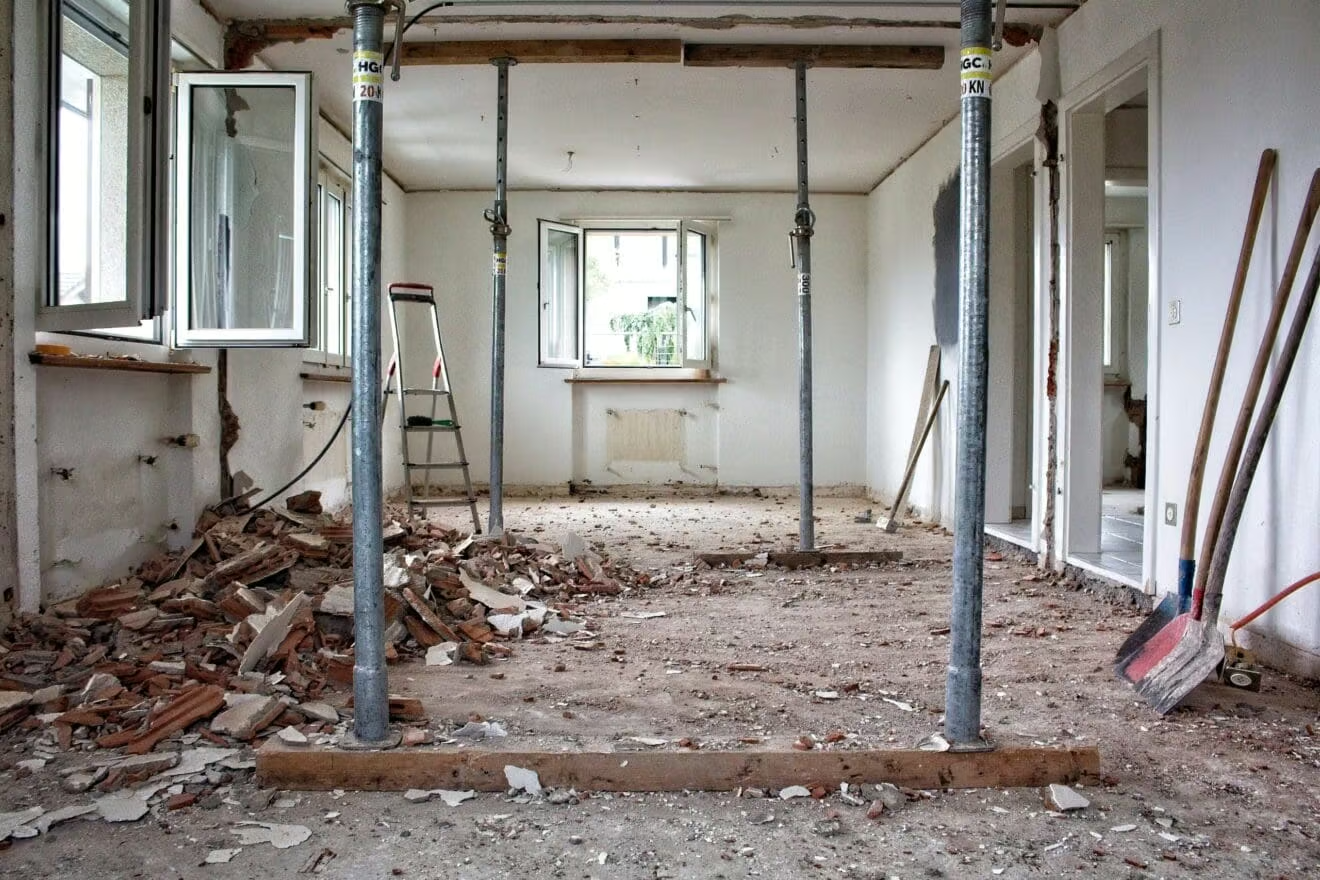
Properties with strong structure and great bones but dated interiors can offer meaningful upside. Fewer buyers compete for them and negotiations feel more balanced. Equity can be built gradually through thoughtful improvements. Renovations also add longevity, especially when the non negotiables like location and parking are already secured.
When evaluating renovation potential in west Toronto, look for:
- Solid structure and foundation with no major water or structural issues flagged
- Generous principal rooms and a layout that can be improved without removing load-bearing walls
- Outdated kitchens and bathrooms that are functional but ready to be updated
- Unfinished basements with good ceiling height, particularly valuable in west end family homes
- Potential for a rear addition, second storey pop-up, or laneway house on the lot
- Evidence of updated mechanicals even if finishes are dated: electrical panels, plumbing, and HVAC matter more than countertops
If you are willing to live through a renovation or approach improvements in smart stages, buying a well located home that needs updates can create stronger long term value than purchasing a finished property at peak pricing. Strategic upgrades allow you to control quality, manage costs over time, and build equity intentionally.
For buyers focused on longevity, renovation potential is not a compromise. It is a strategy.
For more on home renovations, read these posts next:
- How to Slowly Renovate Your Home
- Should You Renovate or Move?
- 5 Ways to Blend Original Style with Modern Updates
5) Lot Size Matters In Toronto’s West End
Lot size quietly shapes long term value and lifestyle flexibility in ways many buyers underestimate.
In a softer market, the premium for larger lots compresses slightly relative to standard lots as overall demand softens. This creates a window to access lot sizes that were generating fierce competition in previous years. A 30-foot frontage versus a 25-foot frontage in Roncesvalles might represent a difference that seemed out of reach at peak pricing but is more accessible now. That five feet of frontage can mean tens of thousands of dollars in resale value, room for a side entrance to a basement suite, space for a proper garden, and a meaningfully better quality of daily life.
When evaluating lot size in west Toronto, consider:
- Frontage width: wider lots offer more flexibility for additions, landscaping, and parking
- Lot depth: deeper backyards provide meaningful outdoor space and potential for a rear addition
- Orientation and sun exposure: south-facing backyards are often more valuable in the west end
- Mature trees and landscaping: adds immediate lifestyle value and is extremely difficult to replicate
- Future expansion possibilities: can the lot support an addition, second storey, or garden suite under current zoning?
- Privacy: separation from neighbouring properties, particularly relevant in densely built west end streets
One of the most overlooked things to check when buying a house is whether the lot allows you to grow without relocating. Can you build an addition if needed. Is there space for a garage. Does the depth support a meaningful outdoor area.
Thinking about relocating to upsize? Read this post to learn how to avoid common move-up mistakes!
The Lifestyle Features West Toronto Buyers Love
Once the fundamentals are locked in, location, parking, property type, renovation potential, and lot size, it is worth considering the character features that distinguish west Toronto homes and consistently perform well at resale. These are the details that attract the specific buyer this market produces: someone who has chosen the west end deliberately, values history and character, and will pay for authenticity.
West Toronto buyers are not looking for cookie-cutter. They are drawn to homes that feel genuine and lived-in in the best sense. Features that perform consistently well in this market include:
- Exposed brick walls, particularly in Victorian and Edwardian homes where the original brick is intact
- Finished basements with ceiling height above 7 feet, especially with a separate entrance for income potential
- Skylights that bring natural light into the rear of deep west end lots where light can be limited
- Mudrooms or main floor laundry, particularly valued by families with young children
- Usable fireplaces, both gas and wood-burning, which add warmth and character to older homes
- Rear additions with proper permits that open up the main floor and connect to the backyard
When building your full home buying checklist, separate essential structural factors from cosmetic preferences. Secure the core fundamentals first and if possible, layer in the lifestyle upgrades next. Understanding the difference between things to look for when buying a house and nice to have features keeps your decision strategic rather than emotional.
West Toronto Moves in Cycles. Prime Streets Hold Their Value
In neighbourhoods like Roncesvalles, High Park, Bloor West Village, The Junction, Parkdale, and Swansea, we see the same pattern repeat. Prices adjust. Buyers hesitate. Then opportunity quietly changes hands.
Buyers who clearly understand what to look for when buying a house during softer pricing periods often secure the strongest long term positions. West Toronto has always rewarded long term thinking. These neighbourhoods are established, community driven, and land constrained. That combination supports value through every cycle.
If you are looking to move, focus on the fundamentals. Revisit your home buying checklist. Clarify your house must haves. Evaluate the key factors to consider when buying a house with patience and strategy.
If you are considering a move in the west end and want a clear, no-pressure conversation about what the current market looks like for your specific situation, reach out. We are here, we know these neighbourhoods inside out, and we would love to help you navigate this thoughtfully. Simply fill out the form on this page, call us at 416-909-1602, or email us at hello@getnested.ca.
★ Nested Real Estate | Kathy Essery & Pavlena Brown | West End Toronto Real Estate Specialists | 639 Annette St, Bloor West Village
Buying or Selling in the West? We Can Help!
Thinking about making a move? Click here to get in touch and request a Buyer or Seller consultation.