

March 29, 2026 | Buying
What’s More Important When Buying a Home in Toronto: Location or Space?
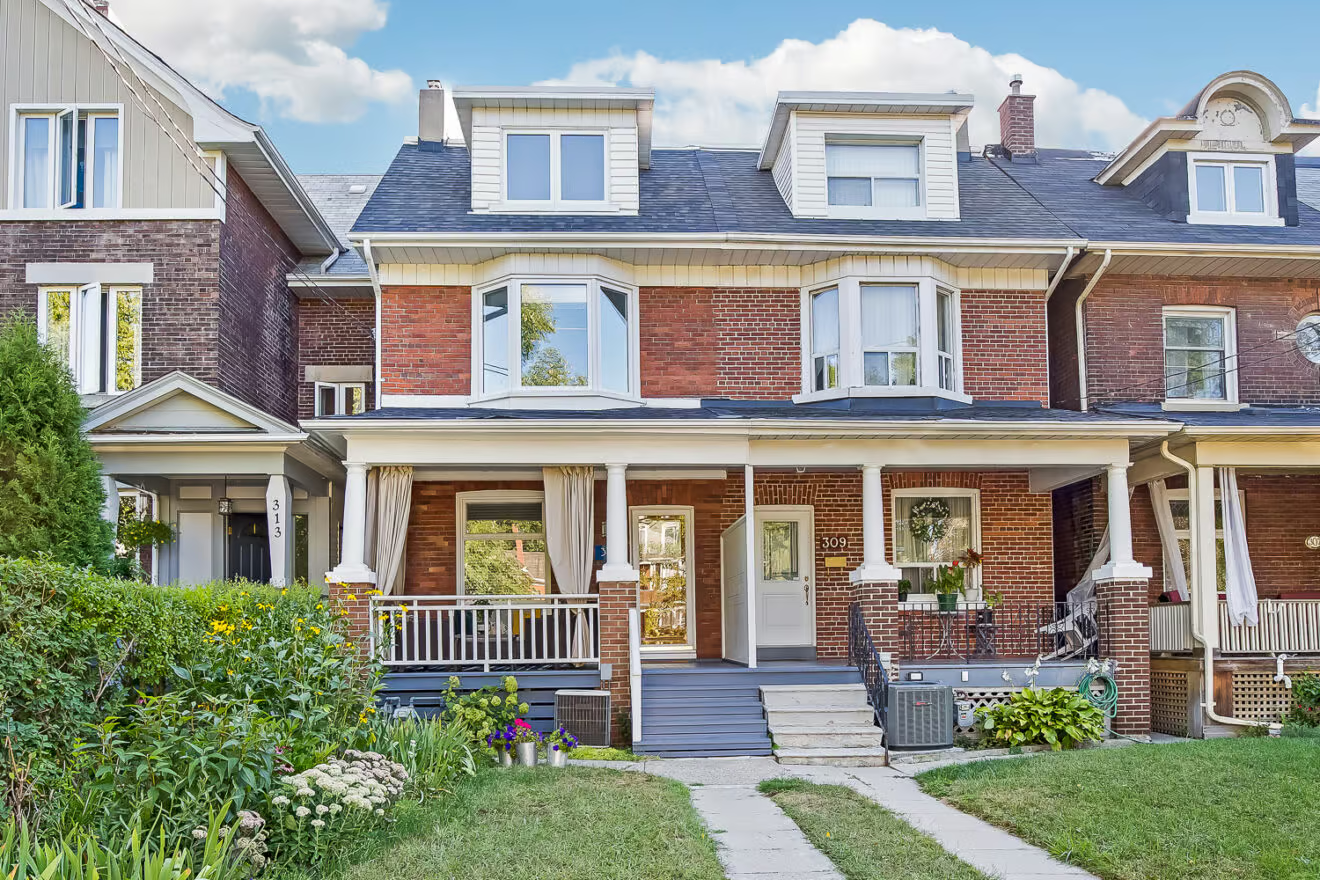
You’ve found two homes. The first one is in the exact neighbourhood you’ve always wanted: great schools, walkable streets, your favourite coffee shop around the corner. But it’s a little tight on space. The second one checks every box on your interior wish list: the chef’s kitchen, the primary ensuite, the finished basement your kids would love. But the location? It’s a stretch.
Sound familiar? It’s one of the most common dilemmas home buyers face, and it comes up constantly when families are looking to upsize to a larger home in Toronto’s west end. There’s no one-size-fits-all answer, but there are some clear principles that can help you make a decision you’ll be happy with for years to come.
Let’s break it down.
Is Location More Important Than the House Itself?
Ask any seasoned real estate professional and they’ll tell you: you can change a house, but you can’t change its location.
This isn’t just a catchy saying. It’s one of the most practical truths in real estate. Almost everything about a house can be changed over time. You can renovate the kitchen, update the bathrooms, finish the basement, or even add another storey if the lot allows it. But no amount of money or vision can move your home closer to High Park, relocate it to a quieter street in Bloor West Village, or place it inside a better school catchment.
Location is the one thing that is truly fixed. And in a market like Toronto’s west end, where neighbourhoods have deeply distinct personalities, community feels, and long-term value trajectories, the location factor matters enormously.
That said, location isn’t the only thing that matters, and for certain buyers at certain life stages, the size and type of home can absolutely take priority. The key to identifying which one matters more is understanding what your family truly needs right now, and being honest about it.
What Makes a Location “Good”? Key Factors to Consider When Buying a Home
Before you can weigh location against space, it helps to understand what separates a genuinely strong location from one that just feels convenient right now. Here are the most important factors to consider when evaluating a location.
School catchments are often the single biggest driver for families with growing kids upsizing in the west end. Being within the boundary for a sought-after public school can meaningfully affect both your day-to-day quality of life and your home’s resale value. For many of the families we work with who are buying a larger home in west Toronto, landing in the Humberside Collegiate Institute catchment is a top priority, and homes that fall within that boundary tend to reflect it in their pricing. This is one area where compromising rarely feels worth it in hindsight.
Walkability and transit matter more than people expect, especially for families with kids. Being able to walk to school, the library, the park, the farmer’s market, and your local café isn’t just a lifestyle perk. It’s a genuine time-saver that shapes how you experience your neighbourhood every single day. Roncesvalles, Bloor West Village, and The Junction all score exceptionally well here for walkability and access to transit.
Street and block character is harder to quantify but easy to feel. A home on a quiet, tree-lined residential street feels different from one on a busy through-road, even if they’re technically in the same neighbourhood. Pay attention to traffic patterns, neighbouring properties, and the overall feel of the block.
Long-term growth and stability is something experienced buyers think about even when they’re not planning to sell anytime soon. Some pockets of Toronto’s west end have seen consistent, sustained appreciation over the past decade. Others have been more volatile. Where a neighbourhood is headed matters as much as where it is today.
Community and lifestyle fit is the softer side of location, but it’s real. Do the people who live there share your values and lifestyle? Are there playgrounds and green space? Community events? A sense of belonging? These things contribute enormously to how much you’ll love living somewhere long after the excitement of buying has worn off.
What Is More Valuable: The House or the Land?
Here’s a real estate truth that often surprises buyers purchasing a home for the first time: in many cases, you’re buying the land more than you’re buying the house.
In Toronto’s prime west end neighbourhoods, land value is a significant driver of price, particularly for detached and semi-detached homes. A larger lot on a desirable street will hold its value and often appreciate independently of what’s built on it, because the land itself is scarce and in demand.
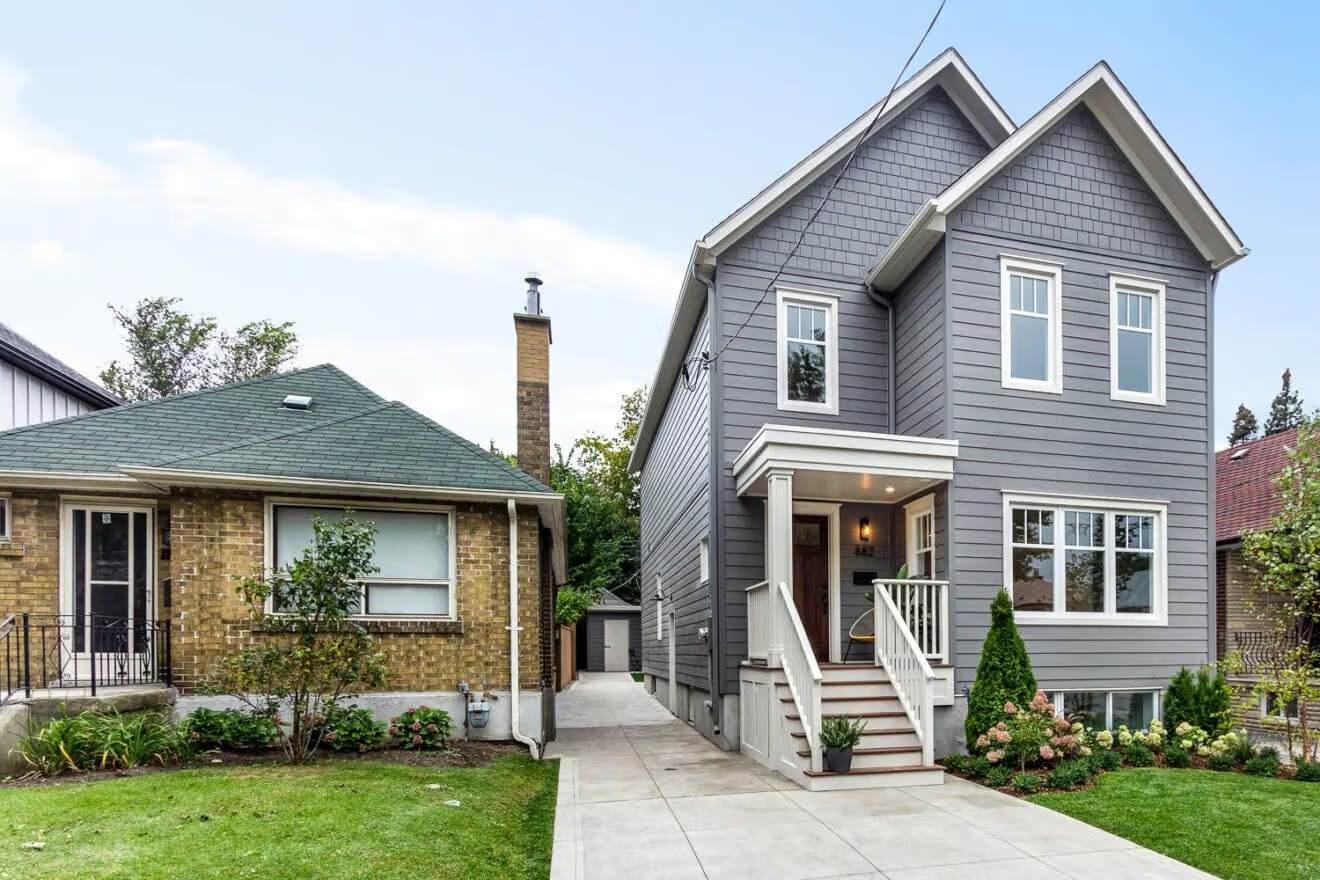
This is why two homes that look similar on paper can be priced very differently. A detached home on a wide 30-foot, south-facing lot in a prime Swansea pocket is fundamentally a different asset than a comparable detached home on a narrow 20-foot lot facing a busy street, even if the interior finishes are identical. When you’re buying a home in prime residential Toronto pockets, you’re increasingly paying for location and lot quality. A home that feels “expensive for what it is” on the inside may actually be a smart buy because of what the land itself represents. Understanding this distinction is one of the most valuable things a knowledgeable west end real estate agent can help you see.
When Should You Prioritize Location When Buying a Home?
In most cases, and especially in Toronto’s west end, location should be your first filter, not your last. Here are the situations where prioritizing location is clearly the right call.
When you’re buying a home for the long term. The longer you plan to stay, the more important it is to be in a place you genuinely love. The inconvenience of a smaller home or a dated kitchen fades over time. The frustration of being in the wrong neighbourhood doesn’t.
When school catchments are a factor. If you have children (or plan to), the school question isn’t optional. Being one block outside a catchment boundary can mean the difference between attending a highly sought-after school or not, and that has real lifestyle and resale implications for your home in Toronto’s west end.
When you’re buying in a high-price market. Premium locations tend to be more resilient when the market softens. Well-located homes for sale in established west end neighbourhoods typically hold their value better than comparable homes in less desirable areas.
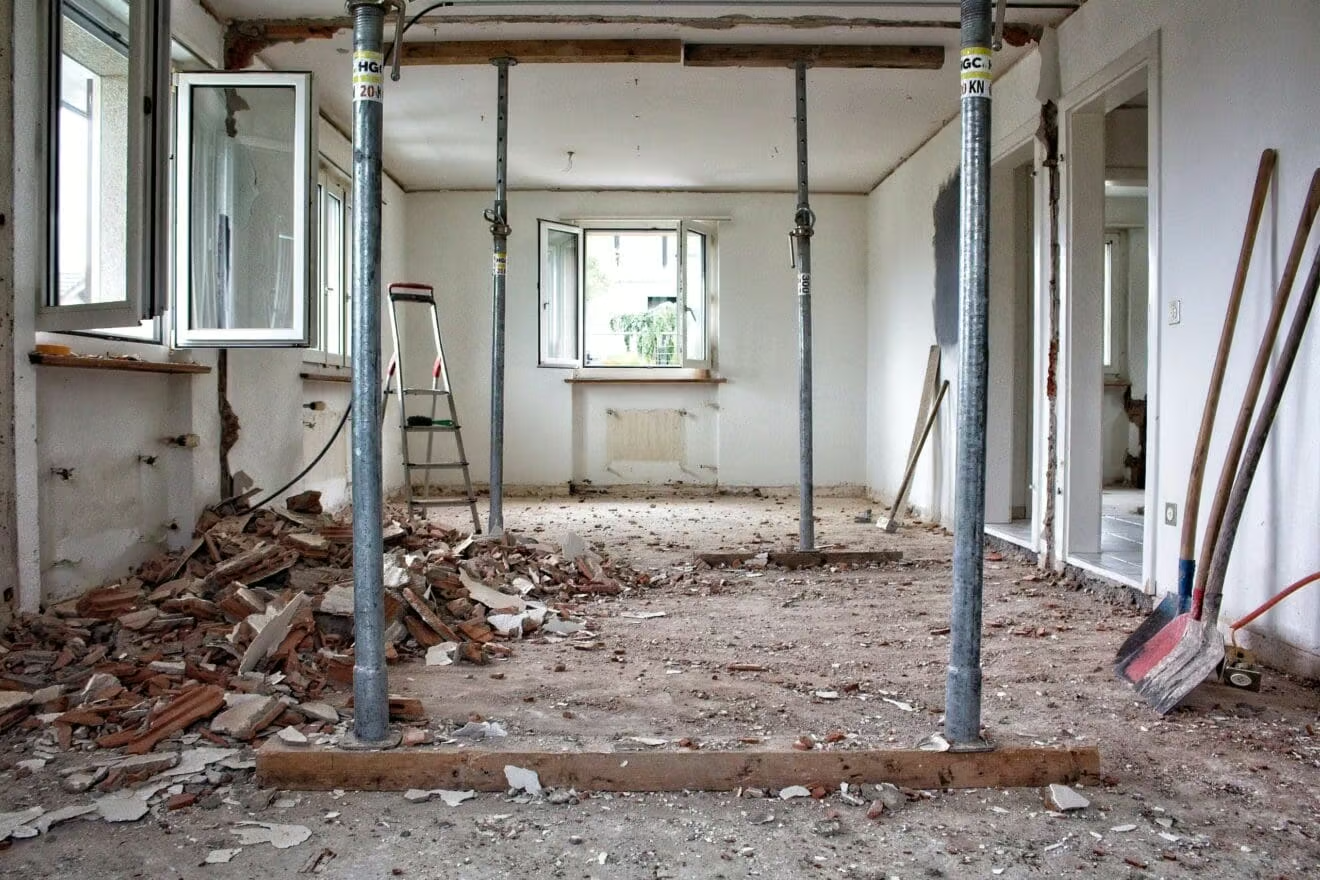
When you can add space through renovation. If the bones of the house are good and the lot allows for additions or a basement build-out, a well-located but smaller home can be a very smart long-game buy. Many families buying a detached home in Toronto’s west end plan a renovation from day one, and a great location makes that investment all the more worthwhile.
When Might the Size or Type of Home Matter More?
There are genuine situations where the size and layout of a home should take priority, or at least share equal weight with location.
When your family’s current stage demands more space. If you have three kids and are living on top of each other, adding another bedroom or a functional family room isn’t a nice-to-have. It’s a quality-of-life necessity right now. Sometimes the most important thing is having a home that works for your family today, not five years from now.
When the location difference between two homes is small. If you’re choosing between two homes in the same neighbourhood, or even just a few streets apart, and the location difference is minimal, then square footage, layout, and finishes become much more meaningful decision criteria.
When your lifestyle is largely home-based. For families who entertain often, work from home, or have hobbies that require space, the interior livability of a home carries more weight than it might for others.
When you have a clear renovation plan and a realistic budget. If you’re buying a smaller home in a great west end location with every intention of renovating, make sure you’ve run the numbers honestly. A major addition or full renovation in Toronto can cost $300,000 to $600,000 or more. Confirm the project is feasible, both structurally and financially, before banking on it.
So What Is More Important When Buying a Home: Location or Space?
Here’s our honest take: for most families upsizing to a larger home in Toronto’s west end, location wins. At the same time, your next home should clearly solve the limitations of your current one, and deliver a meaningful upgrade for everyone in the family.
The sweet spot is a well-located home that meets your minimum functional requirements today, with room to grow either through renovation or simply as your life evolves. Chasing more space in a location you feel lukewarm about is a compromise that tends to show up in how you feel about your home years down the road.
The west end is a market where neighbourhood loyalty runs deep. Families who buy in Roncesvalles tend to stay in Roncesvalles. Bloor West Village homeowners often sell and buy again within the same few square kilometres. That’s not just sentiment. It’s a reflection of how much these neighbourhoods give back to the people who live in them.
When you find a home in the right location that checks enough of the boxes, that’s when you move.
Work With West End Real Estate Agents Who Know the Difference
Knowing how to weigh location against space is something that comes with genuine, on-the-ground market knowledge, and it’s one of the things we take most seriously at Nested Real Estate.
We’ve spent almost 15 years working exclusively in Toronto’s west end. We know which streets hold their value. We know which pockets are up-and-coming and which are already at their ceiling. We know which homes have renovation potential and which have hidden constraints. And we know how to help families selling their home and buying a larger one in the west end make a decision that feels right not just on closing day, but years from now.
Whether you’re ready to start searching for your next home or still figuring out what your next move looks like, we’d love to talk it through with you.
Book a buyer’s consultation with Nested Real Estate and let’s find the home and the location that’s right for your family.
Nested Real Estate specializes in buying and selling homes in Toronto’s west end, including Bloor West Village, High Park, Roncesvalles Village, The Junction, Swansea, and Parkdale. Our experienced west end real estate agents help families upsize, sell their current home, and find the right property in one of Toronto’s most sought-after markets.
Buying or Selling in the West? We Can Help!
Thinking about making a move? Click here to get in touch and request a Buyer or Seller consultation.