

February 12, 2026 | Homeowners
Should I Renovate My Home or Move? Here’s How to Decide in Toronto’s West End!

At some point, most homeowners hit a crossroads. The house that once felt full of potential now feels too small, too outdated, or just not right. That’s when the big question shows up: should we renovate or move?
It’s a big decision, and never an easy one. Renovating can breathe new life into your home, but it comes with a serious investment of time, money, and patience. Moving might solve the space or location challenge in one go, but it also means letting go of what you’ve built. Between land transfer tax, real estate commissions, closing costs, and the intensity of Toronto’s market, the price of starting fresh can add up fast.
If you’re staring down this choice, you’re not alone. And while the right answer depends on your situation, there are clear indicators that can help you figure out what makes the most sense for your future.
Want to stay ahead of the real estate market? Sign up for our monthly newsletter and get the West End Scoop delivered right to your inbox.
Renovating Makes Sense When You Love Where You Live!
If you’re lucky enough to own a home in one of Toronto’s west end neighbourhoods, such as Roncesvalles, High Park, Swansea, or Bloor West Village, you already know how hard it is to replicate that mix of community, charm, and walkability.
When your location is dialed in, you love your neighbours, and your kids have friends close by, but the house itself is falling short, a renovation can be a powerful solution. Many older homes in these neighbourhoods were built with solid bones, charming architectural details, and surprisingly generous lots. They simply were not designed for modern living, often filled with too many walls, limited storage, undersized bathrooms, and layouts that no longer suit today’s lifestyles.
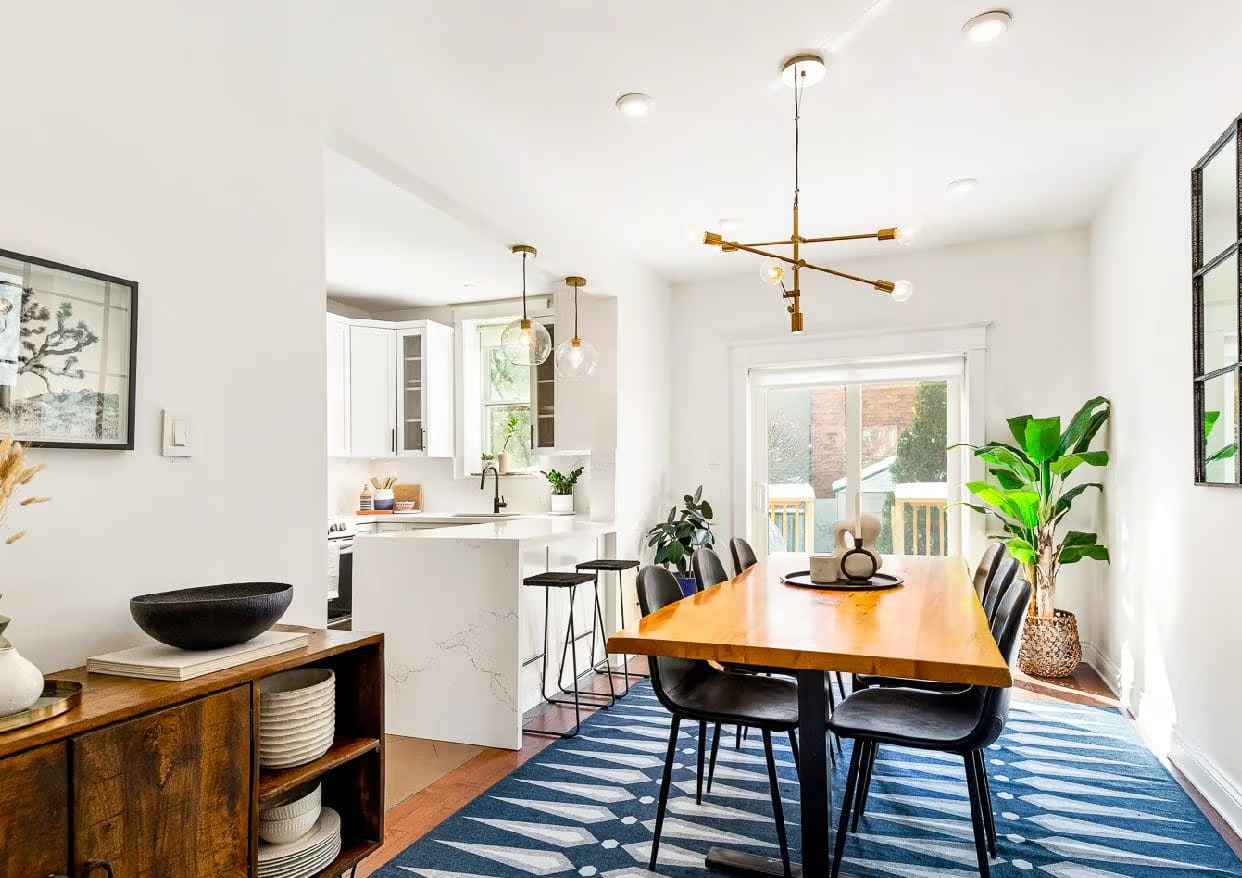
Reconfiguring the layout, updating the kitchen or bathrooms, finishing a basement, or even adding an addition can completely change how your home functions. With the right renovation team, your existing space can become your dream space.
Renovating also lets you sidestep the emotional and logistical upheaval that comes with moving. Less packing (depending on the scope), no listing your home, no school changes, and no saying goodbye to neighbours you love. If you can live through some dust or find a temporary place to live, you get to keep everything you like and simply improve what you don’t.
West Toronto is rich with beautiful older homes. But is it a good idea to buy one? What should you do if you need to sell one? Read these posts next to learn more about the market for older homes:
- 5 Ways to Blend Original Charm with Modern Updates
- DON’T PANIC: Buying a Home with Old Windows is Not as Bad as You Think
- How to Understand a Home Inspection on an Older House
But Will a Renovation Really Make Sense?
A renovation is only worth considering if the structure has solid potential, the scope is realistic, and the investment makes sense for both the neighbourhood and your specific street. It also depends on your starting point. Does your home have private parking? A decent backyard? Are there any unusual features that would be difficult or impossible to change through renovation, like awkward layouts or structural limitations?
Over-improving is a real concern. Even in highly desirable areas, not every street can support the kind of budget a major renovation requires when it comes time to sell. If you’re imagining a large transformation but dealing with a small lot or tight zoning restrictions, your vision may not be achievable.
Cosmetic updates such as kitchens and bathrooms can often deliver great value. But when you’re looking at a full gut renovation, costs rise quickly. Before diving in, it’s important to assess whether your home is truly the right candidate for that level of investment.
Whether you’re planning small upgrades or a full facelift, here are a few more posts about home renovation:
- How to Slowly Renovate Your Home
- The Cost of Renovations: Read Before Buying or Selling an Older Home
- How to Increase Your Home’s Value by $50,000 (Without Losing Your Mind)
Knowing When To Move…
Sometimes your current home simply can’t keep up with your life. Maybe your family has outgrown the space. Maybe you’re dreaming of a detached home with a bigger yard, instead of squeezing into a semi with limited outdoor space. Perhaps your priorities have shifted, and your neighbourhood no longer feels like the right fit, especially if you’re tired of circling for parking or living on a street that never quiets down.
When your must-haves aren’t achievable through renovation, like adding more bedrooms without a major addition, gaining a bigger backyard, finding a quieter street, easier parking, or a functional garage—moving often becomes the most practical and effective option.
A new home offers a fresh start without the stress of managing construction, permits, or endless design decisions. It gives you the chance to reflect on what you truly want and find a space that better supports your lifestyle today and in the years ahead.
In Toronto’s most desirable pockets, like the west end, making a move takes careful planning. Detached and family-sized homes are still in high demand and short supply. Finding the right fit may take time, flexibility, and the guidance of a trusted real estate team. But when it all comes together, the change can be truly transformative.
It is also worth considering the emotional side of the decision. Even when the move makes sense financially and practically, leaving a home you have invested in can be hard. Be honest with yourself about what you are prepared to give up and what you hope to gain in return.
Read more on our blog to learn more about whether detached homes are truly better than semi-detached.
Is It Cheaper to Renovate or Move?
Many people assume renovating is the more affordable option, but it really depends on the scope. A full gut renovation in Toronto can easily run into the six figures, especially if you’re moving walls, upgrading mechanical systems, or adding square footage with a large addition. And the expenses do not end there. You will likely need to account for design fees, temporary housing, and the inevitable surprises that come up once construction begins.
Moving, on the other hand, comes with its own expenses. Realtor fees, land transfer tax, legal costs, moving costs, and possibly renovations or updates in your new home too. Depending on your price point, upgrading to a larger or better-located home could require a significant financial stretch.
If you’re renovating for the purpose of resale down the road, be careful not to over-improve for the area. A kitchen renovation might add value, but a high-end addition that prices your home out of the neighbourhood could mean you don’t get that money back, especially in a softer market.
Working with a real estate professional and a trusted contractor can help you evaluate the true financial impact of either decision, not just in the short term but over the next five to ten years.
Working with the right professional can make a world of difference. Find out what makes a great real estate agent in Toronto’s West End to ensure you make the right choice.
Lifestyle Considerations Matter Just As Much
Renovating can be incredibly rewarding, but it is also stressful. If you and your partner are not aligned on design, layout, or overall vision, decision-making can quickly become a challenge. Renovations require quick thinking, flexibility, and a high tolerance for the unexpected. You will face surprises. You will need to make dozens of choices, often on tight timelines. Ask yourself honestly—are you that person? Can you confidently handle a renovation that is costing hundreds of thousands of dollars?
Beyond cost and space, there’s your lifestyle to consider. Renovating is a project, plain and simple. Even with a great design-build team, it is disruptive. If you thrive on control and creativity, you might enjoy the process. But if you are already stretched thin or craving calm, moving may offer the clarity and fresh start you need.
Time is another key factor. Renovations can take months, even a year or longer. While moving is not without its stresses, it comes with a clear end date. If time is your most limited resource, a move may actually be the more efficient path.
Still, there is something powerful about staying put. If your home holds history, character, or emotional value you are not ready to give up, transforming it can be deeply satisfying. Investing in a space that already holds your story and shaping it to fit your future is a meaningful choice, and one that can make every design decision worth it.
Where Do You Start When Making the Decision?
Start with your values. What matters most to you—location, layout, outdoor space, design, community? Then take an honest look at your lifestyle. Can you realistically manage a renovation, or are you ready for a fresh start?
Next, look at the numbers. What would it cost to turn your current home into what you want? And what could you afford if you sold and bought something new?
There is no right or wrong answer, only what is right for you. Both moving and renovating come with challenges, but also with the potential for something better. The goal is to land in a home that supports your life and truly feels like home.
Do you have more questions about whether or not you should renovate and stay or buy new and move? We’d be happy to talk you through it! Get in touch today by filling out the form on this page, calling us at 416-909-1602, or emailing us at hello@getnested.ca.
Buying or Selling in the West? We Can Help!
Thinking about making a move? Click here to get in touch and request a Buyer or Seller consultation.