

July 30, 2021 | Buying
Climbing The Toronto Property Ladder: What West End Toronto Homeowners Get Wrong About Moving Up.

Most West End homeowners who upsize don’t plan to make a costly mistake. They just don’t plan. Something in their life shifts. A second child, a dog that needs a yard, a home office that has swallowed the dining room, and suddenly they’re searching listings at midnight and calling us the next morning. We understand it completely. But upsizing reactively instead of strategically is one of the most expensive things a West End homeowner can do. And we’ve watched it happen enough times to know exactly where things go sideways.
The good news: the West End property ladder is genuinely one of the most rewarding to climb in Toronto, if you approach it with intention. The neighbourhoods hold their value. The demand is consistent. And for homeowners who bought a semi-detached in Roncesvalles or High Park North five or six years ago and stayed deliberate about their equity, the move up to something larger can feel almost inevitable. The window exists. The question is whether you’re positioned to step through it.
Why Do West End Homeowners Upsize at the Wrong Time?
The short answer: because they let life make the decision instead of making it themselves.
There’s a pattern we see consistently see. A family buys a small semi-detached in Upper Bloor West Village or Swansea, loves the neighbourhood, puts down roots. Then circumstances change faster than expected, and the home that felt spacious suddenly doesn’t. The emotional pressure of needing more space right now overrides the strategic question of whether this is the right moment in the market cycle to be selling their current home for a larger one.
The problem with reactive upsizing is that it often compresses your timeline in the worst possible way. You’re selling under pressure, which can mean accepting less. You’re buying under pressure, which can mean paying more. And you’re navigating both at once, in a West End market where well-positioned homes in High Park or The Junction attract serious competition. That combination is manageable with the right plan. Without one, it’s expensive.
The homeowners who come out ahead start thinking about the move 12 to 18 months before they need to make it. That lead time is everything. It gives us room to build a proper plan, track the market cycle, and position you to act when conditions align rather than scramble when life forces your hand.
- How to Take Advantage of a Balanced Market in Toronto
- When Does the Spring Market Actually Start?
- How to Make the Real Estate Market Work For You in Toronto?
What Does Strategic Upsizing Actually Look Like in the West End?
It looks like patience applied with purpose. Not waiting indefinitely, but waiting for the right conditions while actively preparing.
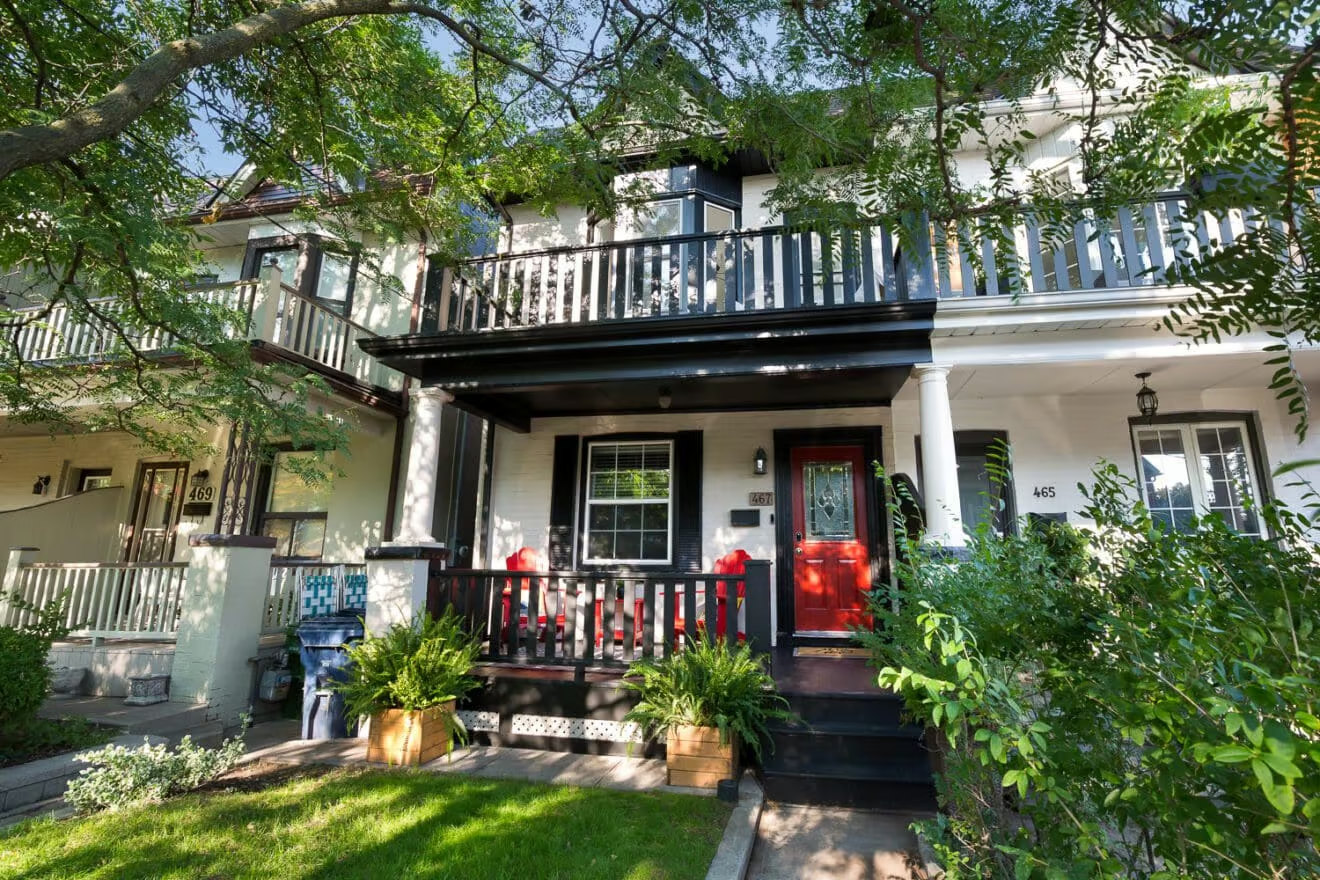
We’ve worked with many clients who bought their first West End home as a modest semi-detached, put genuine care and sweat equity into it over six or seven years, and then moved up to a larger detached home when the timing was right. What made those moves work wasn’t luck. It was deliberate: maintaining the property well, making considered improvements that added real value, and staying in close contact with us about where the market was heading. When the right opportunity appeared, they were ready because they’d done the groundwork years earlier.
That’s the West End ladder working as it should. The equity built in a Parkdale semi or a Junction row house is real and it’s meaningful. Treated strategically, it becomes the foundation for the next move.
These are the moves we find most meaningful. The clients coming back to us for their second transaction already trust how we work. They know our advice has their long-term interests at its centre, not the deal itself. And because we’ve been tracking their situation for years, we’re often thinking about their next opportunity before they’ve started thinking about it themselves. That’s the relationship we build with every West End homeowner we work with.
The specific steps matter. A home evaluation 12 to 18 months out gives you a clear picture of what your home is worth and what, if anything, is worth improving before you sell. Understanding the gap between what you’ll net on your sale and what you’ll need to spend in your target price range tells you whether you’re actually ready, or whether another year of equity growth would change the equation significantly. Which West End neighbourhoods are outperforming right now, where buyer demand is concentrated, where days-on-market are tightening: all of that intelligence shapes both your selling strategy and your buying one.
Get more timing tips by reading: How Long Does it Really Take to Buy a Home in Toronto
The Equity Mistake Most West End Homeowners Don’t See Coming
Here’s the thing about equity: it doesn’t automatically translate into buying power unless you understand exactly how to deploy it.
We regularly speak with West End homeowners who have built substantial equity in their current home but haven’t modelled out what the full transaction actually costs. Land transfer tax in Toronto is significant at the $1.5M to $2.5M price point that characterises much of the West End detached market in 2026. Legal fees, moving costs, potential bridge financing if the timing between your sale and purchase doesn’t align cleanly, and any immediate work the new home requires all add up faster than most people anticipate.
The homeowners who are genuinely ready to upsize have done this math. They know their net sale number, they’ve stress-tested their budget against the actual all-in cost of the purchase, and they’ve talked to their mortgage broker about what their financing looks like in the current rate environment. Coming to those conversations prepared is what separates a smooth transition from a stressful one.
In 2026, detached homes in core West End neighbourhoods like High Park, Bloor West Village, and Roncesvalles Village are generally trading between $1.8M and $2.8M, with condition, size, ease of parking and location doing a lot of the work on where a specific property lands in that range. At that price point, walking in unprepared is costly in ways that go well beyond stress. It affects your negotiating position, your net proceeds on the sale, and what you can realistically afford on the other side of the transaction. The gap between a prepared upsizer and a reactive one is not just emotional. It is financial.
Not sure what type of house is right for you? Check out these posts next:
- What’s More Important When Buying a Home in Toronto? Location or Space?
- Is a Detached House Better than a Semi-Detached House?
- What Property Features Actually Matter When Buying a Home?
Is It Better To Upsize In A Slower Market Or A Competitive One?
This is one of the most common questions we get, and the honest answer is: it depends far less on the market than most people think.
The logic of upsizing in a slower market is appealing on paper. If prices have softened, you’re buying at a relative discount on the way up. But the same conditions that make your purchase more affordable also affect what you’ll get for your sale. In a balanced or slower West End market, your semi-detached in Swansea or The Junction may sit longer and sell for less than it would have in a tighter cycle. The spread between what you net and what you spend doesn’t necessarily improve just because the market has cooled.
What matters more than overall market conditions is the relative positioning of your sale property versus your purchase target. If you’re selling a semi and buying a detached, a market that narrows the price gap between those two categories works in your favour regardless of the broader cycle. That’s a nuanced read, and it’s the kind of analysis that requires someone with genuine West End expertise, not just a general sense of Toronto market trends.
Kathy Essery and Pavlena Brown of Nested Real Estate have been working exclusively in Toronto’s West End since 2012, under SAGE Real Estate. That depth of neighbourhood-specific experience, across more than a decade of market cycles, is exactly what allows us to give homeowners a precise read on timing rather than a general one.
The Neighbourhoods Where the West End Ladder Works Best in 2026
Not all rungs on the West End property ladder are equal, and understanding the current dynamics of each neighbourhood matters when you’re planning a move up.
Roncesvalles continues to attract strong buyer demand, particularly from young professional couples and families who want the vibrant Roncy strip, walkability, and access to the lake. 2 storey and 3 storey semi-detached homes here have held their value well, making them strong sale assets for homeowners looking to buy a bigger home.
High Park North and High Park remain among the most sought-after detached home destinations in the West End, with larger lots, quieter residential streets, and proximity to the park itself driving consistent demand. For homeowners upsizing from a semi in a neighbouring pocket, these neighbourhoods represent a natural and financially sound step up.
Bloor West Village offers a combination of community rootedness, exceptional walkability along Bloor Street West, and a school catchment that resonates deeply with families. Demand from both local move-up buyers and arriving families keeps this market deliberate and well-supported.
The Junction has matured significantly over the past decade and now attracts a buyer who values character, community, and a vibrant local retail corridor. Homeowners who bought here early have built meaningful equity. The move up to a larger Junction home, or across to High Park North, is one we’ve helped navigate successfully many times.
Swansea is quietly one of the West End’s most consistent performers. Tucked between Bloor West Village and the lake, with excellent schools and a genuine neighbourhood feel, it draws serious buyers who have done their research.
How Do You Know When You’re Actually Ready to Upsize?
Ready isn’t just a feeling. It’s a set of conditions that either exist or they don’t.
You’re ready when your current home has been positioned, maintained, or improved to the point where it will perform well on the market. You’re ready when you have a clear picture of your net sale proceeds and a realistic budget for your target price range, inclusive of all transaction costs. You’re ready when you’ve spoken to your mortgage broker and confirmed what your financing looks like. And you’re ready when you’ve identified, at least generally, the neighbourhood and home type you’re moving into, so that when the right property appears, you can move with confidence rather than scrambling.
What you don’t need is certainty about every variable. No move ever has that. What you need is preparation, and a team that knows the West End market well enough to help you read the moment when it comes.
That’s exactly what we do at Nested. We work with West End homeowners who are thinking about their next move, not just their current one. If you’re somewhere in the middle of that process, the best thing you can do is start the conversation early.
Frequently Asked Questions
What’s the biggest mistake West End homeowners make when upsizing? The most common mistake is letting a life event, a new baby, a growing family, a need for a home office, drive the timing of the move rather than market conditions and financial readiness. Upsizing reactively compresses your timeline and often means selling under pressure and buying under pressure simultaneously. Starting the planning process 12 to 18 months before you need to move changes everything.
How much equity do I need before upsizing in the West End? There’s no universal number, but in the current West End market, where detached homes in core neighbourhoods are generally selling between $1.8M and $2.8M, homeowners upsizing from a semi-detached need to factor in not just their net equity but the full cost of the transaction: land transfer tax, legal fees, potential bridge financing, and immediate costs in the new home. A clear-eyed look at the full financial picture, done with your agent and mortgage broker, is the essential first step.
Is 2026 a good time to upsize in Toronto’s West End? For well-prepared West End homeowners, 2026 offers a relatively balanced market environment with motivated sellers in the detached segment and stable demand from qualified buyers. The homeowners who will benefit most are those who have done their financial modelling, understand their net equity position, and have a clear target neighbourhood. Timing matters less than preparation.
How long should I stay in my first West End home before upsizing? Seven to ten years is a reliable general frame, long enough to build meaningful equity, weather a couple market shifts, and make considered improvements that add real value. Some of the most successful upsizing stories we’ve been part of at Nested involved clients who bought a West End semi, committed to it for eight or more years, and moved up into a detached home with equity doing the heavy lifting.
Do I sell first or buy first when upsizing in the West End? The honest answer is that it depends on your financial position, your risk tolerance, and the specific conditions in the West End market at the time of your move. What we generally caution against is selling before you have a clear sense of where you’re going. In a market where well-priced semis are moving quickly, finding yourself without a purchase target after a fast sale creates exactly the kind of pressure that leads to compromised decisions.
Buying or Selling in the West? We Can Help!
Thinking about making a move? Click here to get in touch and request a Buyer or Seller consultation.